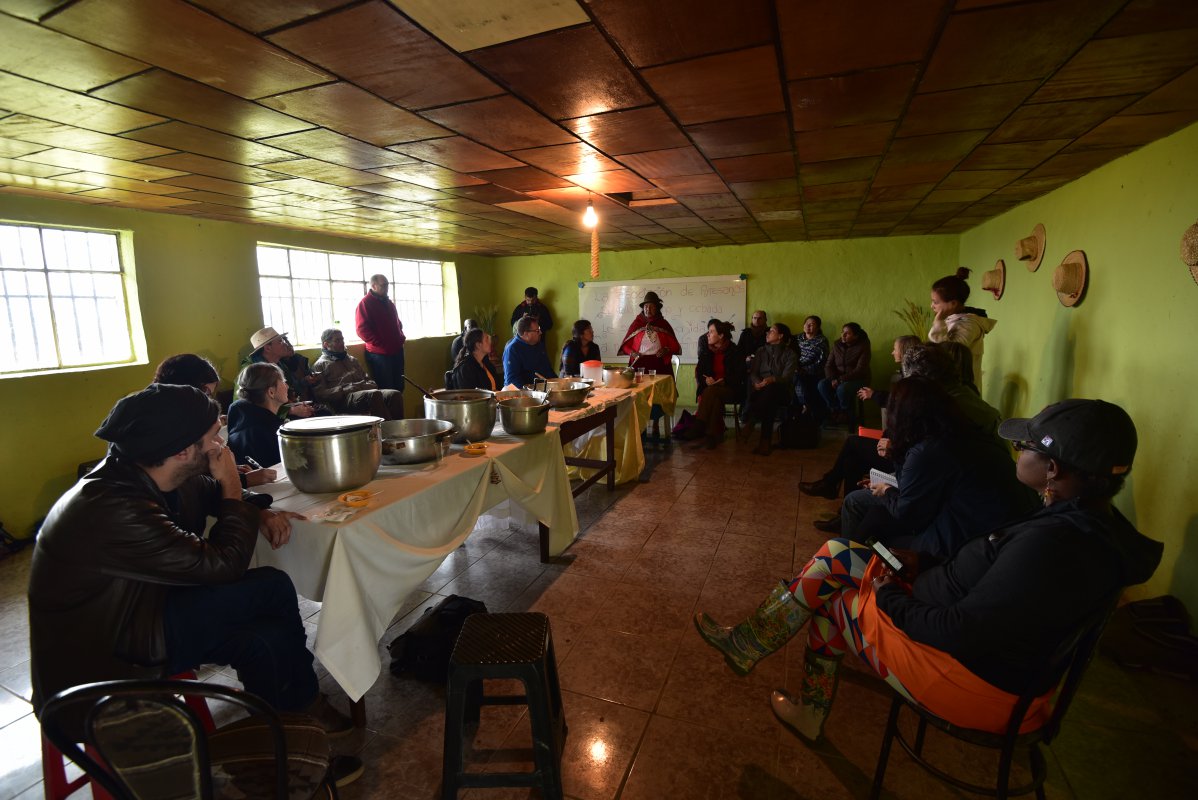
The graduate program of Latin American Cultural Studies from the Universidad Andina Simón Bolívar in Quito Ecuador, in cooperation with the Rosa Luxemburg Foundation organized the international conference “World in crisis. Alternatives from the five continents ” with participants of the Global Working Group Beyond Development on May 18th 2017.

Program

10h30-10h50 Opening

Jaime Breilh, Rector of the UASB
Claus-Dieter König, Deputy Director Rosa Luxemburg Stiftung Brussels
 
10h50-11h10
Miriam Lang, Universidad Andina Simón Bolívar
Civilizational crisis and alternatives – reflections on the challenges of the present. This paper will address some assumptions, hypotheses, and theoretical and political challenges surrounding the civilizational crisis and the construction of alternatives.
 
Table 1: Europe 11h10-12h20
Maxime Combes, Attac France
Post-election and resistance scenarios in France.

While in France the extreme right is encouraged by the implosion of political and institutional frames of reference, the winners of globalization try to save ‘the system’ and a new left finally incorporates ecological aspects, following socio-ecological struggles that have influenced its visions.
 
Mauro Castro, Polytechnic University of Catalonia and Collective the Cooperative Hydra, Catalonia
Seizing Institutions: The Barcelona Communist Municipal Movement
The victory of “citizen platforms” in the 2015 municipal elections in Spain has been a milestone of electoral democracy in the recent political history of Europe. In this presentation some analysis keys about Barcelona en Comú, a movement-party that has governed the city of Barcelona for 21 months, will be exposed.

Moderator: Beatriz Rodríguez-Labajos, Institute of Environmental Science and Technology, Autonomous University of Barcelona
 
Table 2: Asia 12h20-13h30
Mary Ann Manahan, Focus on the Global South, Philippines
In Defense of the Commons: Resistances and Alternatives in Southeast Asia Land and resource appropriation, commodification, and privatization are major challenges for popular and social movements in Southeast Asia that practice shared access, collective use and governance of natural resources as a common form of tenure. The defense of these commons, however, opens spaces for social mobilization, resistance and the construction of alternatives.
 
Maduresh Khumar, National Alliance of People’s Movement, India
Social movements and resistance to capitalist expansion in India. With the current market-based neoliberal growth strategy, India’s 1.2 billion people will soon be faced with a massive ecological and social crisis. The talk will focus on the resistance of various social and environmental movements, the State’s response and the challenges of articulating an alternative discourse to the dominant forms of development.
 
Moderated by: Ivonne Yánez, Acción Ecológica, Ecuador


13:30 – 15:00 Break
 
Table 3: Americas 15:00 – 16:30

Edgardo Lander, Central University of Venezuela
Learning from the progressive cycle in Latin America. This paper will present a reflection on what the experience of the so-called progressive governments has been based on a key question: To what extent have these experiences brought us closer to overcoming capitalism and have opened gaps in the direction of exit to the deep civilizing crisis that humanity faces today?
 
Irma Velásquez, Permanent Forum on Indigenous Issues and Duke University, Guatemala
Latin America today from the perspective of indigenous women In Guatemala, after a 36-year-old armed conflict, women survivors of the genocide, who also faced sexual violations and servitude, seek justice using national courts. The case of Ixil and Sepur Zarco Guatemala women will be briefly addressed.
 
Elandria Williams, Highlander Research and Education Center, USA
Building transformative solutions in the belly of the beast: socio-economic and organizational dynamics in the southern United States. The United States faces a frontal right-wing attack that is not limited to Donald Trump, but is part of a cycle related to the 400-year heritage of colonialism, imperialism and capitalism rooted in genocide and slavery. In this moment of setback, the left in the United States is fighting and laying the foundations for a reconstruction based on the principles of community self-government, the solidarity economy, reparations, and sustainable and healthy communities.

Moderator: Karin Gabbert, director of the Rosa Luxemburg Andean Region Foundation
 
16:30 – 17:00 Coffee
 
Table 4: Africa 17h00-18h15
Mabrouka M’Barek, Middle East Institute Washington D.C./ Tunisia
Perspectives to six years of the Arab spring. Mabrouka will give an overview of the current situation in the Arab region, focusing on the Maghreb and Yemen. Several cases of civil resistance will be discussed in the areas of climate justice, economic justice and transitional justice.

by Larry Lohman

Soumitra asks: What creates the oppositional “non-state non-capital” knowledge “that makes movements both necessary and possible” (p. 2)? And that ensures that they have “political continuity” rather than being mere “singularities fixed in time and space” (p. 2)?

In part, Soumitra’s answers are negative. Transformational social movements are not built just by participating in fixed organizations, spectacular events or, for that matter, purely reactive exercises in un-organizational horizontality (p. 11). None of these things really has what it takes to challenge the “state-capital” hierarchies (p. 2) he describes.

I sympathize with Soumitra’s polemic. But I’m wondering if – maybe with a little help from Gustavo’s paper on “New Political Horizons” – there might be ways of identifying the objects of his criticism more clearly. The idea would be to limit the collateral damage that his critique might otherwise inflict on what I reckon are not his real targets. And maybe to find better-defined ways forward through the critique.

Organizations

Reading Soumitra, I found myself (maybe wrongly) associating his organizations with representationalism, vanguardism, statism, parties, NGOs, unions, military structures, maybe even classes (insofar as classes are misleadingly defined as structures instead of processes).[1]

But I also sensed a well-justified fascination with the part that some orthodox institutional structures have played in moments of wider revolutionary change. For example, Soumitra asks whether the encounter with old leftist rigidities was not a key part of the ancestry of the “oppositional knowledge” of contemporary Zapatista indigenous movement-building (pp. 9-11). He also writes that “it is surely not a coincidence that the municipalist revolution in Rojava by the stateless Kurds, led predominantly by women,” was also “initiated by what originally was an orthodox Marxist-Leninist formation” – “supported by an armed militia” to boot.

I reckon there are plenty more examples, whether from the Indian subcontinent, the Andes or wherever. I think of rural Thailand, where – countering all the prevailing nationalism, royalism and authoritarianism – one can still find today the marks of the thinking of the grassroots militants who, incognito, journeyed on foot back and forth across the borders of all the countries of the region 50 years ago and more, helping to make a history that remains mostly unrecorded. Many of those revolutionaries, for sure, were deeply in the grip of those dread “vanguardist” and statist ideologies. Yet their legacy was a resolute left internationalism that is one of the few political currents in the country that remains immune to the exceptionalism, chauvinism and racism that the country’s elites have successfully used to prop themselves up since colonial times.

Maybe the interesting topic is not so much the potential of structured organizations themselves as that of the sparks that are thrown off when they rub up against swiftly-moving processes of historical resistance.

Events

Soumitra is understandably impatient with things like “Twitter revolutions” (p. 6), which he sees as shallow, easily commodifiable reactions devoid of political content, unrooted in either past or future. But here too I see signs, heartening to me, that he might draw back from an unqualified dismissal of the importance of any transient event that might seem on the surface to be spontaneous, merely anarchic, or not built to last (p. 11). 

Of course, Soumitra’s overall suspicions about “spectacles” (pp. 6-7, 9) are well-founded. And there’s nothing historically new about “spectacular” events of “opposition” actually ending up reinforcing that old “state-capital.” I remember Ashish Nandy’s descriptions of how colonialism produces “not only its servile imitators and admirers but also its circus-tamed opponents and its tragic counterplayers performing their last gladiator-like acts of courage in front of appreciative Caesars.”[2]

Still, I would love to encourage any hesitations Soumitra might have about rejecting out of hand the significance of supposedly “spontaneous” events. Such a rejection, I think, would run the risk of overlooking the genuinely thick, “oppositional” substance in the recognizable type of spectacular political event exemplified by the Russian Revolution, the fall of the Berlin Wall, Tahrir Square, Gezi Park, Standing Rock, the election of a black US president, or the sudden demise of a Soviet state that “was forever, until it was no more.”[3]

Not to mention the importance of more everyday outbursts in which oppositional “hidden transcripts” of the oppressed,[4] underground legacies accumulated over centuries,[5] or crystallizations of long experience around the dust grain of a fresh concept like “sexual harrassment” (to take an example from the early 1970s)[6] suddenly become public, often triggering startling new mobilizations.

And maybe even, at the extreme, the significance of, say, certain seemingly super-trivial Hollywood-type spectacles, like the scene in the homophobic, male-stupidity movie Dude, Where’s My Car? in which the hetero character played by Aston Kutcher “delivers the lingering tongue” to his buddy Seann William Scott. One stunned gay activist critic claimed that this scene “did more to advance the cause of homosexuality than 25 years of gay activism.”[7]

All these events – wildly diverse as they are – share the “peculiar characteristic of being unthinkable even as [they happen].”[8] In many of them, a “dimension explodes from within a particular context” or “lifeworld” that “is directly experienced as universal”.[9] Just because they are “spectacular” and fleeting doesn’t mean they have no relation to what is “organized,” enduring, or irrevocable (p. 11). Often the fruit of months or decades of officially unrecorded experimentation and rehearsal in the “arts of not being governed,”[10] they can be key moments in political struggles.

Skeptics might well remind us that the collapse of the USSR was followed ultimately by Vladimir Putin; Tahrir Square by the rise of the Muslim Brotherhood; the fall of the Wall by a neoliberal surge and a resurgence of neo-fascism; the election of a black US president by increased inequality, more drone strikes and Donald Trump; and so on and so forth.

All true. But does it follow that spectacular “events” are never more than froth on the surface of “real” resistance? Or that such events cannot be moments in the formation of Soumitra’s “oppositional knowledge”? Doesn’t their official “unthinkability” itself suggest how political they are, how imbued with past and future time? Doesn’t the temptation to dismiss their significance run the risk of simply parroting the capitalist incantation according to which future events of this kind are impossible and past events of this kind never “really” happened?

Like Soumitra, I fear a future in which oppositional politics is reduced to gladiatorial contests, fantastical gestures, analysis-free declarations, state-friendly festivals of “alternatives,” and demonstrations that see no need for slow, error-filled, often tedious long-term alliance-building. But I fear equally any movement that disrespects the power of the unexpected breakthrough event as one form of distillation of and stimulus to revolutionary change.

Horizontality

I find Soumitra’s questioning of programmatic horizontality equally provocative. But this time I feel like I might want to invite him to be maybe even more provocative than he already is.

To get a preliminary observation out of the way: I don’t imagine that Soumitra’s somewhat allergic reaction to the fetishization of “horizontal” structures comes about because he is a big fan of hierarchy. I don’t think he has any nostalgia for the caricature rigidities of Leninism and Stalinism. I don’t believe that he would be very tolerant, either, of long-established “leftist” hierarchies like patriarchal anti-racism, white supremacist feminism,[11] or technocratic, anti-indigenous environmentalism.

In fact, I would like to think that Soumitra’s critique is due at least in part to the fact he senses, as I do, yet another state-capital hierarchy – although a hidden one – right inside many ostentatious celebrations of “horizontality”.

For me, the problem with horizontality is that it is too much like verticality. Verticality means that somebody stands over somebody else. But horizontality does too, insofar as the “matrix” or “tapestry” that enables people to be “horizontally” related is defined and validated from above. If we’re looking to do our bit to support the formation of Soumitra’s “oppositional knowledge,” the last thing we want to do is to try to subsume, replace or devalue the myriad complex relations among resistance movements encountering and trying to respect one another in favour of a blanket relation of “horizontality.”

Groups or movements related “horizontally” are on the same plane. But who made and manages that plane, and who reduces those movements – whether ubuntu, ecofeminism, buen vivir, or degrowth – to dots, threads or bits of embroidery that can fit together properly on it? If we don’t watch out, the master weaver of this “tapestry of alternatives” may become invisible. So too may all sorts of already-existing possibilities of revolutionary solidarity among movements that the state and capital are already trying to reduce to just such dots and threads. The techno-politics of “information” that dates from the mid-20th-century computer revolution is an additional, but usually unacknowledged, force linking this invisibilization with the rhetoric of “horizontality.”

Pretending to react against hierarchy and universalism, in short, horizontality tends in some ways to reinforce both. Most of us seek to avoid the unconsciously authoritarian presuppositions of cultural relativism, but mightn’t we be risking a return to the same path by going all out for “horizontality”?

A Hint from Gustavo

Gustavo’s allusion to the struggles of the Tojolabʼal people of Chiapas in his paper “New Political Horizons: Beyond the ‘Democratic’ Nation-State” (p. 22) offers an opportunity to make some of these points more concrete.

Bringing Tojolabʼal practice into imaginary dialogue with Soumitra’s paper might be a fertile move for several reasons. First, the Zapatista territory that Tojolabʼal and many other practices help shape is a place that much occupies Soumitra’s thoughts. Its relevance to big questions about social movements is obvious to him, as it is to Gustavo and many of the rest of us as well.

Second, the Tojolabʼal as Zapatistas arguably represent a living retort to a particular kind of old-leftist mythology that falls obediently into line with standard rightist fantasies involving development, progress, and bogus political “realism.” According to this mythology, we shouldn’t waste too much time thinking about “little” resistances like that of the Tojolabʼal because, however picturesque and praiseworthy they may be, they are after all just residual “pockets” of opposition[12] fated to be absorbed soon by the state or wiped out by the invincible onslaught of capital’s Other. One variant of this narrative – call it the Jared Diamond drama – goes looking for “collapsed” or “extinct” civilizations that can demonstrate how futile it is to resist humankind’s inevitable penchant for war against nature unless you deploy the understanding of “ecological limits” that is now fortunately provided by modern capitalist science. The ancient Mayans are one of the bit players called up from Central Casting to play this tragic role of a “disappeared” people. No doubt much to the amusement of living Mayans like the Tojolabʼal.[13] 

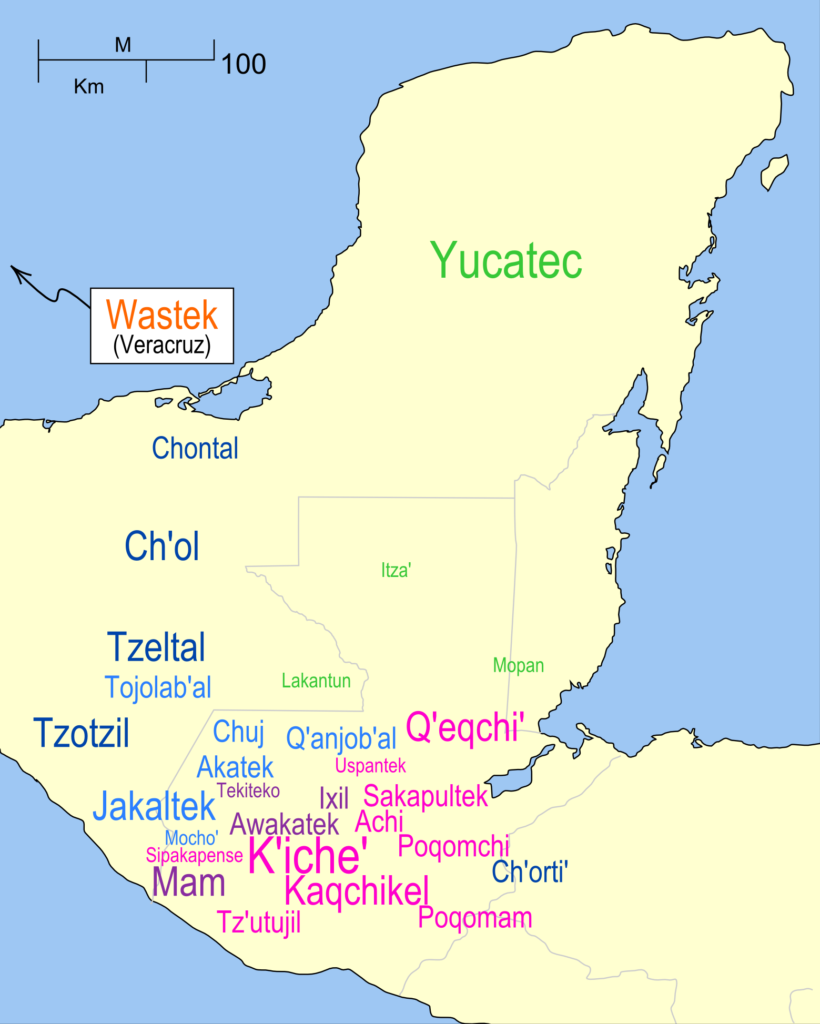
A map of Mayan languages in Central America. Zapatista anticapitalism
calls on the evolving experience of Maya speakers/listeners. Source:
Wikipedia.

Third, the “oppositional knowledge” of Tojolabʼal arguably speaks directly to Soumitra’s issues of organizations, events, horizontality and the state. As I understand it, Tojolabʼal does not offer itself to capital, the state, or the intelligentsia as a “countable” organization, system, community, “language” or “alternative” located among “items” of similar status on the post-17th-century “international” plane of horizontality generated largely by the imperial nation-state.[14] Instead, as became increasingly evident to the rest of the world after the notably spectacular “events” of January 1994, Tojolabʼal and similar practices resist the state as a long, continually-evolving process that involves subsistence and survival but also organizing (as opposed to organizations), alliance-building, and a particular kind of respect.

It’s usually in the details of particular cases that the texture and potency of what Soumitra calls “oppositional knowledge” become perceptible. It seems to me relevant to an understanding of Zapatista anticapitalist resistance that you are not tojolabʼal by race or community. You’re not tojolabʼal because the language is your mother tongue. Instead, being tojolabʼal signals a commitment and an expectation. Because the concept ʼabʼalsignifies “heard” language, and tojol “fulfilling its vocation,” you fulfill your vocation as tojolabʼal when you know how to listen in a particular way.[15] European practices of “speaking” a language are implicitly opposed here. In tojolabʼal you can’t say “I speak” without at the same time saying “you listen (and will recast and correct me from the perspective of another, which I take account of in advance).”

Carlos Lenkersdorf stresses the “linguistic” aspect of this politics: instead of a sentence consisting of a subject, an object and a verb, you have two sentences with two subjects, two verbs and no objects, and so on.[16] But for me what this aspect of tojolabʼal also calls to mind is a wider global vista of practices that have also come to be “oppositional” in Soumitra’s sense. One example is what the Japanese critic of nationalism Naoki Sakai calls the “heterolingual address”: a stance that enables one to relinquish final authority over “what one oneself means.”[17] With the heterolingual address, you come to grasp your own meanings or beliefs through engaging in dialogue with others, facilitating a solidarity that is grounded not on homogeneity but on a process that allows for distance, including distance from oneself. This stance opposes what Sakai locates in modern history as the “homolingual” regime of translation[18] entrenched by 18th century imperialism, which is today reproduced in the “international world” consisting of commensurable nation-states. Another example of such “oppositional knowledge” capable of linking different movements is what the Brazilian anthropologist Eduardo Viveires de Castro identifies as a distinctively Amazonian mode of translation that “produces difference” in a process of “controlled equivocation” – “controlled in the sense that walking is a controlled form of falling.”[19]

Naoki Sakai has elaborated a profound critique of the imperialist picture
– often blindly reinforced by campaigns that fancy themselves
“oppositional” – of countable, reified languages, nations, cultures, or
“alternatives” arrayed on a horizontal plane. Source: Cornell University.

Closely connected with oppositional Tojolab’al “listening” is the “we-ification” of the “I” that Gustavo refers to. At the centre of medicine as practiced in the Zapatista context are the “names of our (living) body” – “our head”, “our eyes” – and not the “parts of the (dissected, individual, dead) body.” The habit of visiting and listening/speaking to our cornfield daily and being in our house is an aspect of health and human anatomy. As in many indigenous and peasant societies, similarly, it is not the individual criminal but rather “one of us” who commits the crime, and it is a collective responsibility to restore the integrity of a community that strives to include the “criminal.”[20] By the same token, the fact that “everything lives”[21] – including pots, clouds, stones, fire, and in a generalized way, “dead” ancestors – and have familial “we-ized” relations (with indigenous Mesoamericans commonly referring to themselves as the “children of maize”) is profoundly oppositional to commodification processes pursued by Mexican and US state-capital.[22] If, as Soumitra suggests, old-style Marxist thinking forms an indispensible part of the evolution of Zapatista practice, so, arguably, does the oppositional listening of tojolab’al.


References

[1]     E. P. Thompson, “Eighteenth-Century English Society: Class Struggle without Class,” Social History 3 (2), 1978,pp. 133-165.

[2]     Ashish Nandy, The Intimate Enemy: Loss and Recovery of Self under Colonialism, second edition, Delhi: Oxford University Press, 2009 [1983]. Nandy’sidea was to refocus studies of colonialism on the nonspectacular “non-players, who construct a West which allows them to live with the alternative West, while resisting the loving embrace of the West’s dominant self” (p. 14).  

[3]     Alexei Yurchak, Everything Was Forever, Until it Was No More: The Last Soviet Generation, Princeton: Princeton University Press, 2005.

[4]     James C. Scott, Domination and the Arts of Resistance: Hidden Transcripts, New Haven: Yale University Press, 1990.

[5]     Nick Estes, Our History is the Future: Standing Rock versus the Dakota Access Pipeline, and the Long Tradition of Indigenous Resistance. London: Verso, 2019.

[6]     Miranda Fricker, Epistemic Injustice: Power and the Ethics of Knowing, Oxford University Press, Oxford, 2010, pp.159-60; Susan Brownmiller, In Our Time: Memoir of a Revolution, Dial Press, New York, 1990.

[7]     Judith Halberstam, The Queer Art of Failure, Durham: Duke University Press, 2011, pp. 58-69.

[8]     Michel-Rolph Triollot, quoted in Susan Buck Morss, Hegel, Haiti and Universal History, Pittsburgh: University of Pittsburgh Press, 2009, p. 50.

[9]     Slavoj Zizek, Violence, Profile Books, London, 2009, pp.129, 133-34, 217-18. See also Zizek, First as Tragedy, Then as Farce, London: Verso, 2009 and Zizek, Event: A Philosoophical Journey through a Concept, London: Melville House, 2014.

[10]   James C. Scott, The Art of Not Being Governed: An Anarchist History of Upland Southeast Asia, New Haven: Yale University Press, 2010.

[11]   Kimberle Crenshaw, “Mapping the Margins: Intersectionality, Identity Politics, and Violence against Women of Color,” Stanford Law Review 43 (6), 1991, pp. 1241-1299.

[12]   This pernicious, militaristic idiom (“occupying army units mopping up remaining pockets of resistance”) can be heard at one time or another during nearly every leftist or environmentalist gathering in the global North. It is misleading and undialectical especially in that the supposedly vanishing “pockets” it refers to are in fact indispensible to capital as the source of all surplus value.

[13]   Patricia A. McAnany and Norman Yoffee, eds., Questioning Collapse: Human Resilience, Ecological Vulnerability, And The Aftermath Of Empire, Cambridge: Cambridge University Press, 2009. See also Liza Grandia, Enclosed: Conservation, Cattle, and Commerce Among the Q’eqchi’ Maya Lowlanders, Seattle: University of Washington Press, 2012.

[14]   Naoki Sakai, Translation and Subjectivity: On Japan and Cultural Nationalism, Minneapolis: University of Minnesota Press, 1997, p. 7 and Sakai, “Translation”, Theory, Culture and Society 23 (2-3), 2006, 71-78. On countability see also Donald Davidson, “A Nice Derangement of Epitaphs,” in Ernest Lepore (ed.), Truth and Interpretation: Perspectives on the Philosophy of Donald Davidson, Oxford: Blackwell, 1989, pp. 433-446.

[15]   Carlos Lenkersdorf, Aprender a escuchar: Enseñanzas maya-tojolabales, Plaza y Valdés, Mexico, D. F., 2008, pp. 60-61.

[16]   Ibid., pp. 62-63.

[17]   Sakai, Translation and Subjectivity: On Japan and Cultural Nationalism, p. 7.

[18]   This is a “regime of someone relating herself or himself to others in enunciation whereby the addresser adopts the position representative of a putatively homogeneous language society and relates to the general addressees, who are also representative of an equally homogeneous language community.” People can “believe themselves to belong to different languages” yet “still address themselves homolingually” (Sakai, op. cit., pp. 3-4).

[19]   Eduardo Viveiros de Castro, “Perspectival Anthropology and the Method of Controlled Equivocation,” Tipití 2 (1), 2004, pp. 3–22, p. 18.

[20]   Lenkersdorf, op. cit., pp. 123-24.

[21]   Ibid., pp. 126-29.

[22]   This resistance does not amount to the proposal of “alternatives” to anybody, and may be incompatible with such proposals. Obviously, tojolab’al is not an “alternative” for Tojolab’al themselves. But neither can it be an alternative for capital, which is compelled to try to treat it as a source of surplus value from which it must in time move on. Nor can tojolab’al be an alternative for the state, as it rejects, for example, the practice of “resources” on which the state is based. Nor is tojolab’al a harbinger of “another world” that is “possible” along the lines of the slogan of the World Social Forum. Tojolab’al is not possible, but actual. Nor is tojolab’al a theory in the sense of an “alternative for intellectuals.” No such effort to promote tojolab’al as part of a “horizontal” tapestry, however well-intentioned, could ever do much to shed the legacy of the very statism that the Zapatistas resist.

One danger of “horizontalist” campaigns is that they risk erecting restricted kinds of supposedly “non-hierarchical” political relation between reified versions of this reality and reified versions of otherwise unrelated processes, including even commodification processes. Such improvised political relations are likely to be in tension with the much more complex, historically-rooted non-horizontal political relations that sustain resistance such as that of the Zapatistas. For example, some ecosystem service exchange proponents have learned to insist that their project is designed to respect the “rights of nature.”


by Arie Salleh

Sydney January 10th, 2020.

Gustavo Esteva writes with the sincerity and simplicity of one deeply experienced in the politics of everyday life. He rarely calls on academic terms, unless there is good reason. So his essay opens by tracing the idea of democracy from Ancient Greece, through the Treaty of Westphalia, French Revolution, and on to the US Constitution. At every turn, he shows the practice of democracy has been incoherent and exclusionary of class, race, and sex-gendered others. But as the article continues, Esteva does visit a couple of philosophic themes that may be worth looking at more closely. 

Esteva explains that the class structure of neoliberal capital is characterised by what Giorgio Agamben has called a ‘surplus population’ with no place in the economy. This precariat is a global labour class who cannot labour. But a further class of disposables, beyond Agamben’s original focus, is not even designated a ‘class’ in Left analysis. This is because it is not seen as part of the production sector. Women worldwide mainly inhabit the re-production sector – and women as bodies are regularly disposed of. 

In the small affluent nation of Australia, an average of one woman is murdered each week in the home by her life-partner. In India, young men often follow a gang rape by incinerating the woman’s used body. In Argentina, the law forbids abortion even if the mother is too ill to carry the child to term. Her life is disposable; the newborn is not. The same logic applies to commercial surrogacy ‘womb rentals’ entered into by poor Thai women. Again, the body of the prostitute provides men with the convenience of disposable sex. 

The point of these remarks is not to criticise Esteva in any way at all. He is rare among radical thinkers for his sensitivity to the international epidemic of violence on women. Rather, I want to suggest that the concept of surplus population and human disposability might be more widely applied in discussions of democracy. 

A second academic theme introduced by Esteva is the subtle yet authoritarian governance by ‘the dispositive’. As Agamben would say: ‘anything that has in some way the capacity to capture, orient, determine, intercept, model, control, or secure the gestures, behaviors, opinions, or discourses of living beings.’ 

A case in point could be the privately funded Earth System Governance project, administered from Lund, and aiming to rationalise environmental law so as to administer it through new transnational state agencies. Or for another example, consider the ambitious 2015 United Nation’s Sustainable Development Goals, which are full of good intentions, yet embedded in the ecologically contradictory eurocentric premise that global economic growth is a precondition for ‘the good life’. 

Esteva points to a further dispositive in the form of the United States’ project for the full militarisation of daily life by means of the Internet of Things. This involves people becoming internet dependent for the management of every conceivable activity from baby monitoring to refrigerator defrosts. Thousands of space satellites, some already in place, will furnish 5G telecommunications technology in this classic instantiation of the dispostitive. There will be routers along every street servicing homes and electric cars; and trees may need to be removed where these interrupt the weak 5G signal. 

The Internet of Things as latest incarnation of ‘progress’ will call for a massive increase in mining and industrialisation; a rise in energy consumption and global warming; other ecological and human health impacts of 5G technology are contra-indicated; there are privacy implications; and whole societies will be vulnerable to hacker attack. In deliberating on the nature of 21st century democracy, the Working Group Beyond Development might give serious attention to these political impacts of information technology. 

By contrast, Esteva, in the fine tradition of Ivan Illich, has pioneered arguments for commoning and local eco-sufficiency. And he enjoins the ‘global tapestry of alternatives’ project called for by recent post-development thinkers. As Esteva says: 

Instead of trying to construct dispositives or organizations of national or international scope, autonomous initiatives take care of what is within their reach. They construct collective and communal agreements that recover a sense of limits and proportionality. They are increasingly certain that global thinking is impossible. Only destruction can occur on a global scale. 


Ariel Salleh is an Australian sociologist in the Department of Political Economy at the University of Sydney who writes on humanity-nature relations, social change movements, and ecofeminism. 

Which democracy for systemic transformation, or how to cope democratically with a dying civilization?

A critical global dialogue on democracy

by Miriam Lang

We are currently experiencing the most serious crisis today’s dominant civilization has brought about. A civilization that is modern and colonial simultaneously, deeply marked by patriarchy, built on the invention of race, caste and a specific form of state, and capitalist class relations, as well as on the destruction of nature. COVID-19 has not only killed hundreds of thousands and brought a frenetic, it has halted the globalized capitalist economy in what economists call as the most severe recession since capitalism exists. If we want to go on living together on this planet, as human societies sharing one habitat with all other species, we simply cannot pursue the same path.

One of the biggest challenges the Corona-crisis highlights is around democracy. Democracy not understood as a set of institutions or procedures, but as the means we create for ourselves to make collective decisions about our lives and the lives of those generations who follow. The pandemic has boosted and legitimized top-down solutions, highlighting the role of national governments and international institutions as the World Health Organizations, but at the same time, it has shown the advantages that organized communities at the grassroots have if they practice self-rule (variously called autonomy, self-determination, etc.) and food/water/energy/health sovereignty.

Before the COVID-outbreak, the Global Working Group Beyond Development had already decided to dedicate a longer period of work and reflection on the topic of democracy. Or to the question of how, under the current conditions in different parts of the world, different dimensions of democracy could be deepened, in order to regain control over our own lives that seemed increasingly appropriated by the 1%. The coronavirus has added urgency to this collective challenge in a world ruled by 21st century capitalism. Thus, we invited thinkers and activists from around the world to contribute to a critical global dialogue around democracy. 

Here are some of the questions which motivated this initiative: Is democracy a stronghold of social struggles, or is it rather an institutional framework imposed by neo-colonial statism and capitalism? Why are fascism and different kinds of authoritarianism coming back through elections? How can the scandalous inequality that characterizes contemporary capitalism and severely limits democratic decision-making, be strongly dealt with? What do we understand by democracy and what not, in our respective contexts? How can we strengthen processes of collective self-determination, including different languages of dignity and self-rule (swaraj, buen vivir, ubuntu, etc) that exist in different cultural/socio-historical/civilizational contexts of the pluriverse, which might differ from the dominant language of liberal democracy?

To nourish our collective reflection, a theoretical contributions from Gustavo Esteva (Mexico) brings to the fore Ivan Illich’s intellectual heritage, while Soumitra Gosh (India) asks about the role of social movements in democratic radical transformation.

We also wanted to shed light on ongoing struggles in different parts of the world and ask about the role of different scales in systemic transformation. For instance, how can local struggles irradiate toward regional or national changes? What examples do we have for this? Neema Pathak Broome, Shrishtee Bajpai, Mukesh Shende and Mahesh Raut from India look into a fascinating case of scaling out transformation instead of “scaling it up”, as is so often proposed. Raphael Hoetmer from Peru explores the experience and impact of local consultations against mining that have proliferated in Latin America. Maxime Combes analyses the challenges of the Yellow Vests movement in France. These articles will be released progressively.

We have invited comments from other parts of the world to these contributions, which you will find in the sidebar on the right.

Our series includes short case studies, in text and video, which highlight concrete experiences of democratic transformation in different aspects or realms of life. For example, Ibrahima Thiam shows the resistance to a power plant in Senegal, Kitti Baracsi shares her insights about transforming European school education. Iokine Rodriguez and Mirna Inturias describe the kind of democracy practiced autonomous indigenous territories in Bolivia, and Arturo Guerrero Osorio shows how a reconstruction process after an earthquake in Mexico was transformed in a democratic manner. Beatriz Rodriguez-Labajos will finally analyse how artistic activities can power anti-mining struggles in different contexts.

We warmly invite you to read and share these pieces, which were produced to contribute to collective learning processes around systemic transformation.


Miriam Lang teaches at Universidad Andina Simón Bolívar, Ecuador. She uses decolonial and feminist perspectives to study political ecology.

As the world reels from historically unprecedented socio-economic and political impacts of the coronavirus (COVID-19), many governments are rolling out emergency measures and guidelines for physical distancing, lockdowns, and quarantines, closing of borders, and restrictions of people’s movements in an effort to flatten the curve.

Of great concern among social and labor movements, civil society, and people at large is how this global health emergency reshapes democratic institutions and democratization processes, for better or worse. This also affects the possibilities of social and systemic transformation. The current moment seems to contain very contradictory dynamics: Intense social protests that marked the second half of 2019 in many parts of the world have come to an abrupt halt and people are being stripped of their most common means of collective expression; at the same time, deep structural reforms toward more equality and, hopefully, a more reciprocal relation with nature are being put on the agenda by rather unlikely actors. The potential of territorial grassroots self-government is being deployed in places where public infrastructure fails to adequately respond to the multidimensional crisis COVID-19 has provoked.

New threats to democracy and civil rights

To collectively discuss the implications of the crisis on our daily and future lives as well as on the fate of the planet and humanity, the Global Working Group Beyond Development organized a virtual meeting. Invited activists and scholars tackled how the COVID-19 crisis is affecting democracy in different parts of the globe. Democracy here is taken as a contested and evolving praxis that spans public liberal institutions but also instituent power from below. It has local/communitarian/territorial dimensions; covers cultural, political, and economic spheres, and spans political units vis-à-vis ecological boundaries. The meeting gathered experiences and analyses from Latin America, Asia, Africa, North America, and Europe. Besides sharing our radical uncertainties, our discussion revolved around the question: how the ‘new normal’, a term which has been used multiple times to signify dramatic changes as normal fixtures of life (e.g. climate change) expose embedded structural inequalities and fissures within the dominant global capitalist model and cause devastating consequences, particularly for the poorest and most vulnerable communities. But while impacts differ across countries, neighborhoods and communities along gender, ethnicity, class, race, place, geopolitics and intergenerational lines, we are witnessing common occurrences that connect us.

Many governments exploit the crisis to roll out measures to repress citizens and control public spaces, ramp up state propaganda, deploy security forces and expand digital surveillance through tracker apps and facial recognition technologies. The United Nations, for instance, has called out a dozen countries for a ‘toxic lockdown culture’ against the pandemic marked by heavy militarization and repressive measures such as arrests of 120,000 people and 26,800 people for violating curfew and stay-at-home guidelines in the Philippines and Sri Lanka, respectively. In several parts of the world like Chile, Colombia and Algeria, governments are using COVID-19 to curtail on-going social movements’ activities. Parliaments in countries like Tunisia grant their chief executives special emergency powers, which many fear result in de facto dictatorship. Countries already in turmoil such as Venezuela continue to see increased military control, resulting in stark polarization that makes it impossible for the government and opposition to work together to address the crisis. In India, the Hindu nationalist government of Prime Minister Narendra Modi has been using the lockdown as an opportunity to further marginalize the Muslim minority and aggravate inter-religious animosity. New surveillance tools deployed by Norway, China and Israel, among others, monitor the population’s smartphones and use millions of face-recognizing cameras that not only check body temperature and medical conditions, but also track people’s movements and identify anyone they come into contact with. In some countries, constitutional rights are suspended, human rights are pitted against ‘public health’ and ‘national security’, and a culture of impunity is reinforced in the name of solving the pandemic.

The crisis has also increased the precarity of migrants, peasants, urban poor, workers, and refugees. Millions of workers are estimated to have been affected as various countries enforced lockdowns, and some of the hardest hit are stranded migrants who are forced to walk hundreds of miles to their hometowns, many starved to death and got beaten along the way by police forces for alleged violations of the quarantines. Most laborers cannot switch to ‘work from home’, instead they rely on ‘no work, no pay’ regimes, and do not have social protection. The rural poor, too, are severely affected where governments have prioritized the survival of global value chains over local ones. Many countries have favored big food retailers while shutting down small peasant or neighborhood markets, generating further concentration in the food sector.  However, there are a few hopeful spots. Initial successes of South Korea’s and Taiwan’s responses to curtail the spread of the virus provide lessons and stress the centrality of universal healthcare,  public health emergency services, and improved working conditions and training of health workers. In Europe, Greece has kept death rates exceptionally low, partially owing to a working public healthcare system.

The return of the nation-state?

This pandemic appears to have brought back the nation-state and the importance of public institutions and services to the forefront. In former discussions, we already tried to tackle the ambiguous character of the state and its role in social transformation. Some of us are advancing that bottom-up democracy, and the building of confederationalist alliances between spaces of self-governance, might have the biggest democratic potential. This entails constructing new spaces of decision-making, which are not centered on the structure of the nation-state. At the same time, others insist that the struggle for democracy must also be fought within existing national and global structures, as urgent issues like the ecological crisis – or COVID-19 – need to be dealt with on these higher levels.

The importance of quality public infrastructure, free of profitability imperatives, has been brought to fore by huge disparities in the capacity of different public health systems to respond to the pandemic.  Global inequalities also seriously undermine the potential of nation-states to provide quality public health infrastructure. On average, a vaccine reaches the global South seven years later after reaching the global North. Low capacities of public health systems like that of Guayaquil, Ecuador’s result in hundreds of unattended deaths. Here, foreign debt burdens matter, as they minimize the fiscal space for governments to respond. Public calls for debt cancellation get louder like the recent call of peoples, organizations, movements and networks in North Africa and the Middle East for the cancellation of debts and free trade agreements.

The civilizational crises exacerbated by COVID-19 seems to have opened paths for other deep structural changes around the economy that involve important dimensions of democratization. Global trade unions call for the introduction of a universal basic income coupled with social policies to guarantee decent work conditions, quality labor employment, adequate and comprehensive social protection, and wealth redistribution, a stark difference with habitual trickle-down policies. Unlikely actors like the IMF have called governments to introduce a  progressive tax reforms to tackle inequality.  Even ideas of nationalizing certain strategic industries have been put into circulation. All this points to the nation-state recovering a more Keynesian role in regulation and redistribution, which had been demonized by neoliberal ideology.

The potential of the state for transformation, however, remains contested as other dynamics suggest opposing trends. With world leaders vocally fearing the inevitability of a global recession and financial markets crash, the state— ‘big government’— is now expected to roll out stimulus packages, pump huge sums of public monies to restart the economy, and rescue corporations deemed important and sectors at risk. In the US, COVID-19 is used to shore up and strengthen Capital through massive injection of money from the Federal Reserve Board. The ‘Coronavirus Capitalism’ as noted by Naomi Klein has led to the rise of the stock market by 12%, while almost 20% of the population has plunged into unemployment. Across the Atlantic, German trade unions, critical scientists, and social movements emphasize that the bailout of aviation, automotive, and other dirty industries should be linked to socio-ecological criteria, particularly the conversion of these industries as part of efforts to decarbonize society. Democratizing society-nature relations is one of the big challenges we face today, as both carbon emissions, and more generally pollution, are highly unequally distributed in the world. In many countries of the global South, the lockdown is used by national and transnational elites to further deepen extractivism. In Ecuador, for example, environmental regulations are weakened to attract new mining projects, and mining and oil companies are given tax breaks, while the burden of austerity remains on the people’s shoulders.

Even in countries with relative successful responses, like Taiwan or South Korea, public discourse takes a ‘technocratic and/or scientific’ approach— ‘let us leave the decision making to the experts, the medical community, and scientists because they know what’s best’. This presents dangers— political leaders can conveniently hide discriminatory, unethical, and unsound policy decisions behind the science and technical evidence. Such approach also undermines a democratization of knowledge beyond western/scientific knowledge. Equally disconcerting is the lack of mechanisms for greater transparency and participation to facilitate public scrutiny, avoid blind spots, and recognize the limits of evidence-based policy. In a crisis or under a state of emergency, it is much harder to deliberate about our common future, gather a critical mass of public opinion or make protest count especially under physical distancing measures.

Transformative action at different scales

While some political actors, especially from the global North, push for a Global Green New Deal, the coronavirus has also forced a relocalization.  This opens paths for a different understanding of the economy, one that puts the reproduction of day-to-day life, instead of capital accumulation, at the center. Strategic and systemic transformative processes and people’s solidarity initiatives for genuine democracy, people’s sovereignty over their material conditions, collective self-determination, and self-rule (swaraj in Sanskrit) are proceeding amid the direst conditions. In many places of the Andes, for example, communities democratically exercise self-governance quarantining themselves collectively and strengthening bonds of reciprocity, as a prevention strategy beyond individualization and confinement to the household. They enforce prevention measures by applying community justice. Black-led cooperative movements in the US such as Cooperation Jackson that have created their own means of production – as described in the upcoming Global Working Group’s book “Cities of Dignity”- have been better prepared to cope with the lack of protective personal equipment (PPE) by providing mutual aid for production of 3D printed PPE masks for the community.

Food sovereignty has also become a crucial issue for many rural and semi-urban communities. Revival of local food systems and open localization to strive for local self-reliance are being practiced by many communities. Indigenous peoples in the upland town of Sadanga, Philippines rely on built-in and indigenous social structures, values, and practice of taking care of neighbors and kin in distress (kailyan) during crisis, where richer community members are socially and culturally expected to provide support and share their wealth to needy relatives. In India, thousands of Dalit women farmers, extremely marginalized by the caste-patriarchal system, have organized themselves to realize food sovereignty and community health by employing organic farming methods, saving traditional seeds, local knowledge and solidarity. They have also donated their seeds for COVID-19 relief. Local solidarity initiatives in the face of hunger due to the forced discontinuation of informal economic activities have proliferated throughout the world, increasing people’s relations and rootedness in their neighborhoods and villages.

Global solidarity is also being redefined by new North-South relations based on decolonized perspectives and mutual trust with various social movement-led solidarity fundraising and relief operations. Multiple advocacy initiatives call for public accountability, feminist degrowth to democratize the caring economy and all dimensions of life, and the revitalization of income guarantees, equivalent to minimum wage for all workers, to name a few. At the heart of these demands is the articulation of progressive alternatives that seek to end inequality, ecological devastation, exploitation, and conflicts produced by global capitalism, patriarchy, and statism.

As the crisis continues to unfold, if we collectively fail to make the right choices now or to push for them to be realized, the immediate and long-term consequences could be devastating. Will we succumb to a future which historian Yuval Noah Harari predicts as between totalitarian surveillance or citizen empowerment, or nationalist isolation or global solidarity? Or do we heed the counsel of Indian novelist and activist Arundhati Roy and use the pandemic as a gateway to a better, new world, one that breaks from the past and embraces a world in harmony with nature’s generative power and free from all forms of domination? 

This civilizational crisis challenges us to rethink our economy which ultimately will shape new societal institutions in a way that allows us to live together with all other species on this planet. As African sociologist Alpha Amadou Bano Barry points out about Africa, “to be radical is to grasp things at the root, but the root, for humankind, is humankind itself […] (we) must take advantage of this pandemic to simply recover all sovereignty, which begins with thinking about ourselves and (our) own development.”

Our collective and on-going debates point to the necessity of forging a post-pandemic future marked by new pathways and social relationships built on compassion, equity, justice, and radical democracy.


Mary Ann Manahan is a feminist activist researcher from the Philippines who works with social movements to demand equity, social and environmental justice and redistributive reforms.


Miriam Lang teaches at Universidad Andina Simón Bolívar, Ecuador. She uses decolonial and feminist perspectives to study political ecology.

by Ibrahima Thiam

A fisher community leaving in Bargny at 15km from the city of Dakar is facing the consequences of an industrialization program of the Senegalese state praised to be the way for economic emergence. The socioeconomic change and mutations resulting from the series of projects have deep impacts on the community’s livelihoods.

The economy of Bargny employing more than thousand fishermen and at least one thousand women drying, and packaging fish products is threatened. The SOCOCIM Cement industry was granted of 241 ha land, the creation of the Bargny-Sendou mineral and bulk port occupies 650 ha and the urban Pole of Diamniadio stands on a1,644 ha. The installation of the future mining port stands as a real threat for the fishermen. Bargny is also hit by the global warming and its coasts belong to the most impacted in Senegal with a sea rise level of 2 Meters. Families are affected while some of them are displaced and their family structures are destroyed.

Today a main part of the youth sees the illegal migration as the alternative. The skepticism of the communities is based on the contradiction between economic growth praised by the State and the threatening of their livelihoods. When land grab and Meer grab meet the no involvement of the communities to the decision-making processes, there is no democratization’s process.

A resistance movement is organized to defend the rights of the communities through campaigning and denouncing the industrial aggression and the luck of respect of their economic, social and cultural rights. Their complain to the African Development Bank (ADB), the West African Development Bank and BOAD and the Dutch Development Bank (FMO) have been approved and todays in spite of the construction of Sendou power plant, the Senegalese government has decided to stop the coal project.


Ibrahima Thiam is with Rosa Luxemburg Stiftung in Dakar and works on natural resources, vulnerabilities and alternatives, and Climate change.

by Kitti Baracsi

If we imagine democratic education as entire school communities practising participation, to what extent can schools escape the current approach taken in the public education system? What if they encounter hostility and restrictions? Can we learn democracy through transgressions and resistance? This article tells the story of three school communities where participation and solidarity are growing under pressure.[1] Examining democratic practices on the ground and the conflicts that arise gives us insights into what is at stake in state schools.

Having a say, feeling part of a community

“When your kids attend a state school, you usually just take them there and pick them up. Nobody ever asks you how to do things, so in return, you do nothing[1] . That’s it; somehow you become too unconcerned. But this school was different. We had to think about what was important to us”, says Katalin Walter, whose daughter attended Vadgesztenye school in Pécs-Somogy, on the outskirts of Pécs, Hungary.[2] This small, previously pretty much unknown state elementary school made national news following the rise and fall of a community-based project launched in 2017.[3] It all began with an idea by Erika Csovcsics, who at the time ran the group of institutions to which this small school belonged.[4] Radical methodological changes had been introduced, e.g. working in mixed-age groups, with some teaching done outdoors, in nature for instance. Many of the introduced practices emphasised the importance of the community. Accordingly, a number of middle-class families decided to enrol their children at this school, which was already caught up in the segregation process.[5] They could have chosen to send their children to another school, but felt they would get an exceptional education there. The initiative counted on the participation of families, with working groups formed to reach decisions about educational issues and to closely monitor what went on at the school.

Protest, Granada, 2018 (Photo by Kathryn Palmateer)

“You know, the principal reason for enrolling my children at this school was the organic canteen”, was something that parents of kids attending the Gómez Moreno elementary school in Albayzín, a district of Granada in Spain, would often say.[6] The issues here are not simply the importance they attach to their children’s eating habits and health, or teaching food sovereignty. Since the school canteen has been managed by the families’ association for 17 years now, parents’ direct involvement and collective decision-making in assemblies, like the organisation of a wide range of programmes in addition to the canteen, give the families involved a sense of community and agency.[7] This provided a perfect ground[2]  for initiating the learning communities (comunidades de aprendizaje)  project[8] back in 2015.[9] This project focuses on joint educational actions designed to foster social and educational transformation based on two key factors: interaction and community participation.  Among other things, it entails direct involvement in so-called ‘interactive groups’, lessons where families and other volunteers play curriculum-related games with the children in small groups. According to María Dolores López López[10], the school’s chief of studies and volunteer coordinator over the last 4 years, this project enabled better collaboration between the families’ association and the school and also contributed towards the school’s significant improvement, as reflected in the rising number of enrolled students and greater public recognition. The families warmly welcomed the project. As she put it: “The best moment was the so-called dreaming when families talked about the school they’d aspired for their children. It was a[3] [4]  moment of faithfulness”.

Solidarity in action

For nine years, Marisa Esposito has been the head teacher at the Stefano Barbato elementary school in the 69º teaching district in Barra, a neighbourhood of Naples in Italy, where she has taken several initiatives aimed at enabling families and the community as a whole to play an active role. Talking about the importance of community and the fight against the territory’s disintegration, she mentioned a ‘time bank’, a grandparents party, events with local artists and a project on neighbourhood legends, in which mothers found a narrative space to talk about their life, suffering and childhood. “We believe in the idea of the[5]  educational community. Whatever we teach children, they must find it at home, too”, she said in an interview in 2018.[11] According to Marisa Esposito, the neighbourhood where she was brought up has changed over the years, turning into a place where fear and individualism dominate due to the presence of organised crime. She therefore sees the main purpose of the school as being to restore cohesion in the local community. According to her, though, families do not see how education could offer their children a better future. Still, the school is almost their only reference point, since the neighbourhood has no other cultural spaces. Marisa’s mission through the years has been to include Roma students. Thanks to her approach, based on her experience as a social educator, [6] children felt free to go to her office and ask for advice or support.[12]

Similarly, the changes introduced at the Vadgesztenye school were drawn from extensive experience and seemed to work, transforming it from an establishment with few, mainly underprivileged pupils into a place where middle-class pupils and poor, mostly Roma children met.[13] “I guess there’s no need to explain how important it is to reduce social inequalities and raise underprivileged children by educating them in Pécs. Likewise, it’s unnecessary to say why it is important for well-fed middle-class children to learn how to communicate with them and be sensitive to their needs. Because as adults, they will live together”, writes Judit Szentendrei, a mother whose children went to this school.[14] She explains that her family, along with others, consciously decided to face this challenge, taking tiny steps and facing many failures along the way. The families treat the school and local environment as a place in which to act for solidarity. Indeed, according to Judit Szentendrei, the biggest success story has been that her children learned how to live alongside others.

Vadgesztenye, Pécs, 2018 (Photo Antal Szentendrei)

Learning how to live together is also a central issue in the Gómez Moreno school, which has children of approximately 25 different nationalities, some from foreign middle-class families (referred to as guiris by the locals), and others from local foster homes, with very diverse backgrounds. The learning communities include participation in classroom activities and decision-making, among other things. The work on participatory processes and solidarity seems less deliberate than it is in Vadgesztenye, but encountering different people and other realities is part of everyday life for the children and their families. A transformation is under way, but progress is slow. This project, as in Barra, crucially hinges on the presence of teachers previously trained in specific methods as well as on the dedication of the school’s management team.

Encountering hostility

The school canteen in Gómez Moreno is the only organic one run by an association of families in Andalusia. So its struggle is also symbolic. Unlike some other regions in Spain, in Andalusia there is no law giving priority to family-run organisations, so they have to compete in the same tenders with huge catering companies offering lower prices but also inferior quality, since they do not operate a kitchen on site (e.g. use local ingredients), but transport food over fairly large distances. In 2018, this prompted families − and not for the first time − to take to the streets, shouting ¡No me toques la olla! (Don’t touch my cooking pot!) and then barricade themselves inside the school for a week in a display of resistance. A major caterer won the tender, which was published and closed earlier than usual, without the association being informed or invited to take part in it.[15] But their protest was successful, and the catering company decided to hand over its contract to the association. However, their victory was only partial, because for two school years the association have t[7] o run the canteen for the price set in the tender whilst at the same time trying to adhere to their organic and environmentally friendly principles.[16] The association of families, along with other associations and platforms[17], is now calling for a change in the regulations, Clara Bermúdez Tamayo explained.[18] That said, the demonstrations seem to have helped to build a sense of community, one mother, Raquel Hernández Benítez, describing them as “exercising a collective struggle, teaching children through first-hand experience that when something is not right, we organise ourselves to fight it. This is fundamental to active, critical and intelligent citizenship”.

In the case of Barra, as explained above, it is the overall context that makes change difficult to achieve, especially introducing the idea of Roma inclusion. Even those who agreed that Roma children also need an education did not defend the head teacher when other parents attacked her views.[19] As she went on to point out, people are more prejudiced against Roma than against criminals, to whom they have become more accustomed. After many years of collaboration between the school and the Association N:EA[20], families seem to be accepting the presence of Roma children, admittedly with a degree of resignation, but as something increasingly commonplace[8] . Also, thanks to Roma inclusion projects[21] introduced in a few classes, Roma and non-Roma children have access to improved teaching methods [9] and are involved in a wider range of activities. For instance, some teachers have been trained in cooperative learning. In this regard, notwithstanding their genuinely problematic aspects[22], these projects benefit the entire school community, partly due to the head teacher’s commitment to use them to realise her vision.

is lentejas me las dejas! (Hands off my lentils!) Protest, Granada, 8 May 2018 (Photo Kathryn Palmateer)

In 2018, Erika Csovcsics’s application to become[10]  the head teacher at the Vadgesztenye school was unsuccessful, and the new head teacher’s arrival has changed everything, returning to the ‘traditional’ approach despite the families’ efforts to reach an agreement. When families started to protest, they were accused of wanting a school where studying was unnecessary and told that administrative failings were the reason for bringing in a new principal. In the end, the families managed to find a semi-private solution: learning groups were formed with the children enrolled in a school in a nearby village, based on a special agreement. “For me, the main achievements were that we managed to find a way out and succeeded in keeping the group together. You know, we were the very families who could have looked for another school, but we resisted for a really long time because we didn’t want to leave others behind who might have had no other option”, added Katalin Walter. However, this arrangement only ended up lasting a year.[23]

This was no isolated case. Many alternative schools and learning group initiatives are not exactly welcomed by the Hungarian government. The recent amendment of the public education law[24] introduced changes in how home schooled status can be obtained[11]  and to curriculum requirements affecting private alternative schools.[25] The teachers and families see this as an attempt to restrict projects that go beyond the centrally imposed agenda and have hitherto been a refuge for families who did not want to comply with it.

Resistance and devotedness

The examples described above feature different agents of resistance, but power relations within communities are another important aspect to consider. In the case of the Vadgesztenye school, reversing the spiral into segregation by bringing in middle-class families seemed the only way of saving the school. A similar situation began to take shape at the Gómez Moreno school, which had also seen fewer pupils enrolling over a number of years. However, in the Albayzín district, the presence of Spanish and foreign middle-class families in the school must be seen within the overall local context, characterised by gentrification and the conflicts deriving from it.[26]

Still, the stories in this article show how resistance by a school community, albeit fleeting in some cases, and devotedness, can change children’s education. The three examples depicted here show that transgressing the dominant bureaucratic, methodological or ideological approach can prove effective for a while, though repressive dynamics kick in again when conflicts emerge. Flexibility and initiative are key factors in enabling such projects. But hostility on the part of the public administration also seems to inspire families and activists to some extent to take control of their kids’ education and call for change in the state education system. These initiatives are often tolerated and sometimes even supported (co-financed or recognised) by the authorities, but when it comes to conflicts of interests, bureaucratic arguments take precedence. Still, resistance enables these communities to create, learn and relearn democratic processes, think about their local context and take action based on their conclusions. A situated pedagogy works with critical interventions that incorporate the particularity of a place: it understands and combats structures of oppression with reference to the immediate context.[12] [13]  (Gruenewald 2003, Kitchens 2009). After all, thinking in these terms, what better way could there be of learning democratic resistance through first-hand experiences than fighting for local initiatives and adopting a solidarity-based approach?


References

Gruenewald, D. (2003). Foundations of Place: A Multidisciplinary Framework for Place-Conscious Education, in: American Educational Research Journal, 40(3), 619–654.

Kitchens, J. (2009). Situated Pedagogy and the Situationist International: Countering a Pedagogy of Placelessness, in: Educational Studies. 45(3) Critical Geographies in/of Education, 240–261.

INCLUD-ED Strategies for inclusion and social cohesion in Europe from education. Final report, (2012) Available at:    https://www.comunidaddeaprendizaje.com.es/uploads/materials/13/7a62b64132b4508ba1da8cbcc2043ac6.pdf  Final report. 2012.

Zolnay, J. (2018). Commuting to segregation. The role of pupil commuting in a Hungarian city: between school segregation and inequality, in: Review of Sociology 28(4), 133–151. Available at: http://szociologia.hu/dynamic/szociologia_2018_04_133_151_oldal.pdf.


[1] The author carried out research projects at each of the described schools. See for instance Fare rione, fare scuola, a project run by the Orangotango Collective under the Schools of Tomorrow programme of the House of the World’s Cultures (HKW) in Berlin. The author is also involved in the learning communities at the Gómez Moreno school.

[2] The interview for this article was conducted in September 2019.

[3] For instance: https://index.hu/belfold/2019/01/02/pecs-somogy_vadgesztenye_altalanos_iskola_csovcsics_erika_tankerulet_klik_pava_peter_hatranyos_helyzetu/

[4] Erika Csovcsics previously ran the Gandhi High School in Pécs, the first Romani high school, founded in 1992.

[5] The segregation process referred to here entailed non-Roma families starting to send their children to other schools, other families doing the same and the number of new enrolments dwindling. To learn more about the situation in Pécs, see a recent study on commuting and segregation (Zolnay J., 2018).

[6] http://www.easp.es/blogmsp/2018/06/04/el-comedor-ecologico-gomez-moreno-un-espacio-de-promocion-de-la-salud-infantil/.

[7] AMPA Gómez Moreno Amigos de una Escuela Mejor https://ampagomezmoreno.wordpress.com/

[8]  For more information about the learning communities project in this particular school: https://www.observatoriodelainfancia.es/participanda/proyecto-comunidades-de-aprendizaje-del-ceip-gomez-moreno/

Information and methodological support in Spanish:  http://comunidadesdeaprendizaje.net/,  Actuaciones Educativas de Éxito https://www.comunidaddeaprendizaje.com.es, or the report of the INCLUD-ED project https://www.comunidaddeaprendizaje.com.es/uploads/materials/13/7a62b64132b4508ba1da8cbcc2043ac6.pdf

[9] The project was devised by a group of teachers in collaboration with the head teacher, Isabel López.

[10] The interview was conducted in September 2019 for this article. María Dolores López López continued to work as a volunteer coordinator under new leadership starting from the 2019/2020 school year.

[11] The interview was conducted by Paola Piscitelli in 2018.

[12] She worked as a maestra di strada (social educator).

[13] The number of newly enrolled pupils rose from five in 2014 to 25 in 2018.

[14] From the open letter to Péter Páva (head of the Pécs school district), written by Judit Szentendrei, one of the mothers. Date: 12 December 2019. Translated by the author.

[15] https://www.ideal.es/granada/ceip-gomez-moreno-20180605194140-nt.html

[16]  https://www.elsaltodiario.com/educacion/familias-gomez-moreno-recuperan-comedor-acuerdo-empresa

[17] Plataforma por una Alimentación Responsable en la Escuela (Comedores responsables), Escuelas de Calor AMPA de Sevilla, Confederación Andaluza de AMPAs, FAMPA Granada

[18] Interview conducted in September 2019 for this article.

[19]An hepatitis A epidemic triggered a violent conflict between some families and the head teacher. The families accused the Roma pupils of being the source of infection, while the head teacher defended her position on including Roma children. https://ponticelli.napolitoday.it/barra/epatite-scuola-genitori-accusano-rom.html

[20] Associazione N:EA (Napoli: Europa Africa)

[21] The school is one of a number taking part in the ministerial project Progetto per l’inclusione di bambini e adolescenti rom, sinti e caminanti (Project for the inclusion of Roma, Sinti and Caminanti children and adolescents).

[22] Such projects have been criticised by professionals and researchers, among others, for the discontinuity of their funding and for focusing on intervening at the level of education without offering real solutions for Roma people’s exclusion from the labour market and housing, thereby sustaining their long-term marginalisation.

[23] When another head teacher was appointed to run the village school, there was no way of maintaining the former agreement, so children had to start the current school year dispersed across various schools.

[24] 2019/LXX, amending national public education law 2011/CXC.

[25] Until recently, this status had offered a way of participating in small, hitherto non-institutionalised learning groups, while staying within the state education system.

[26] To learn more about the neighbourhood’s problems, as seen by the children and other habitants, see the information on the  Albayzín, Human Heritage project, involving collaborative ethnographic research carried out in the school since 2018 by Kitti Baracsi, Gloria Calabresi, Dario Ranocchiari and many other volunteers committed to the learning communities project. http://lefthandrotation.com/museodesplazados/ficha_ceipgomezmoreno.html https://www.youtube.com/channel/UCpZzLK42XzjdMaeXVzPi0Lw/videos


by Gustavo Esteva

In these pages, I explain why it is not possible to eliminate the despotic nature of the “democratic” nation-state. Recognizing its limits opens up the exploration of many options for the people to rule themselves.

Democratic despotism

Small groups of people have ruled themselves, freely formulating the norms of their ways of living and dying in their localized settings. This democratic idea has been in fact used as a principle of social organization from time immemorial in human history, in the most diverse cultures and circumstances. However, when any group begins to operate at a scale that is no longer proportionate to its political capacities, such a democratic idea transmogrifies into its opposite: despotic imposition.

Modern institutions are counterproductive to their stated aims, because they operate at a scale that leads inevitably to the betrayal of its raison d’etre, as Ivan Illich warned half a century ago. What he anticipated is entirely evident today. However, every betrayal is misconstrued: as mere defects of these institutions or their operators that can be corrected with techno-fixes or marginal reforms. The evidence that the health system produces illness and death, for example, is attributed to errors or to the need for reforms or improvements, not to the system itself.

“Democracy” illustrates well such counterproductivity. Today, corporations and politicians at their service, not the people, make primarily all social and political decisions everywhere. Corporations are in fact ruling the world. For Illich, political majorities are fictitious groups of people with very different interests, unable to reasonably express the common good. He explained why democracy will not be able to survive the use that corporations can give to law and democratic procedures to establish their empires. According to him, the modern nation-state has become the holding corporation for a multiplicity of groups, each of which serves its own interests; periodically, political parties gather shareholders to appoint a board of directors. In the face of disaster, institutions lose respectability, legitimacy and the reputation of serving the public interest.

Disasters are now the order of the day. The world we knew is falling apart around us every moment. Increasingly we are immersed in sociopolitical and environmental chaos, taking us beyond naked horror. Until recently, most people believed that the electoral procedure expressed—with honesty, transparency and effectiveness– peoples’ collective will. They also believed that representatives elected through the dominant procedures of the day were at the service of the people: their interests and well-being. The fact –almost always evident – is that things do not work that way. That fact was commonly attributed to circumstantial failures. Just as with every ritual, failures increase faith in the myth, rather than weakening it. If it does not rain, those who participate in the rain dance will dance with more intensity and fervor, without doubting the validity of the ritual. The ritual generates faith, not vice versa. Such has been the case, until recently, with “democracy”. Although some people still trust electoral procedures and their outcome, no longer do the majority. As Illich warned, most institutions have lost legitimacy, respectability and reputation of serving the public interest.

Two centuries ago, particularly in Europe, to substitute unbearable monarchies for a softer and more disguised despotism won out as more attractive. Out of a tacit acceptance of a lesser evil, however, a certain fascination gradually emerged in many places; the belief that the modern nation-state was truly democratic grew among a great number of people. They also believed that certain adjustments would remove its despotic expressions. Today, no one would seriously argue that in any democratic nation-state people rule their own lives. Today, the idea that this kind of sociopolitical organization is truly democratic appears as a gigantic hoax, a foolish illusion and an instrument of domination. It produces the opposite of what it promises.

The original sin and its consequences

The kind of “democracy” born in the West was openly contradictory with the democratic idea. “Democratic” Greek men fiercely discriminated against women and had slaves; they considered barbarians all people who neither spoke a Greek tongue nor had “moral qualities” similar to their own. For Aristotle, democracy, like tyranny or oligarchy, could never seek for the common good. He offered several arguments against any government by the majority.

The political regime that became the universal model for the modern nation-state was not conceived as democratic. The Federalists explained that it would be irresponsible to put the government of the American Union in the hands of “the people:” even if this category alluded only to white men. If “the multitude” had the power, the country would be controlled by demagogues who would, for their own interest, produce fragmentation: a group of small states instead of a Union would likely arise. Sharing Aristotle’s preoccupations, the American Founders conceived a regime, a republic, which kept power in the hands of a small elite group, with only certain limited functions granted to some sectors of “the people.” This republic began to be called democracy half a century later, when slavery was formally abolished. But neither the change of name nor the amendments to the original U.S. constitution eliminated the racist, sexist, classist character or the despotic nature of the regime.

The colonial seal of Western tradition was added to these traits to shape the nation-state. Particularly after the Enlightenment, Westerners assumed they had a “civility” of which certain classes and peoples lacked. They should thus be “civilized” for their own good, even through violent, brutal means.

 In the democratic nation-state, the power of the people is usually transferred to a small minority of the electorate, whose votes decide the party that will exercise the government. (No more than 25% of the electorate appoints the president of USA). A tiny group promulgates laws and makes all major decisions. “Political alternation” or “democratic checks and balances” cannot remedy such despotic operations.   

The undemocratic elements of all versions of “indirect” democracy constructed after the American model inspired in the 20th-century initiatives to make it less despotic. What has been called “participatory” or “direct” democracy, and many consider “populism”, include the initiative (that citizens directly submit bills), the referendum (the direct approval, by popular vote, of laws, policies or public decisions), the recall, consultations and other dispositives[1]. In certain cases, such as in Switzerland or California, USA, the number of issues on which they must vote, often without sufficient information or knowledge, annoys citizens. In other cases, as in Hungary, those dispositives are openly dictatorial instruments of “illiberal democracy”.

 The experience demonstrates the limits of this political regime. In no “democratic” nation-state are people actually ruling their lives, regardless of which “democratic” dispositives are introduced. The rule of a few prevails in all of them.

The despotism inherent to every form of “representative democracy” has thus become undeniable.

[1] I am using the Foucauldian notion of dispositive, a heterogeneous set of elements with a strategic function. For Agamben, it is “anything that has in some way the capacity to capture, orient, determine, intercept, model, control, or secure the gestures, behaviors, opinions, or discourses of living beings.” See the note in the Appendix.

The extinction of the nation-state and the exhaustion of capitalism

The modern nation-state took shape in 1648, with the Treaty of Westphalia. The concept acquired its conceptual and political force during the French Revolution by combining it with nationalism, displacing or disqualifying previous concepts of state and nation. The nation-state, moreover, was soon perceived as the fullest embodiment of the industrial mode of production, which in turn was presented as the natural culmination of humanity: the zenith of progress.

Throughout the nineteenth century, the modern nation-state, the political form of capitalism, both the idea and its practical implications, were strongly criticized. However, no critique broke its hegemony over academics, intellectuals and large sections of the society.

In the course of its evolution, capitalism operated in all sorts of dictatorial regimes, but the democratic nation-state was preferred for the operation of the “free market”. In spite of the worldwide vocation of capitalism, expressed in all forms of colonialism, the nation-state always was the main arena for its expansion.

In the latter part of the 20th century, however, national borders increasingly became an obstacle for capitalist expansion. Macro-national structures, designed for the free movement of capital and commodities, did not solve the problem. As a consequence, the substance of the nation-state began to dissolve. The main function of its governments, the administration of the national economy, became impossible: all economies are exposed to transnational movements that are beyond the control of each nation. While national rituals and the nation states themselves still persist as a general referent, their raison d’être along with the material substance giving them reality have disappeared.

The progressive dissolution of the democratic nation-state is also a consequence of the fact that capitalism has come up against its own internal limits. The political dispositives launched since the 1970s, as well as the technological “revolution” accelerated since the 1980s, dismantled social conquests accumulated over 200 years of workers’ struggle, affecting jobs, salaries, benefits and public services as well as economic growth. The highly concentrated and unprecedented accumulation of “wealth” in the last 40 years killed the goose laying the golden egg. The majority of what is produced today in the world still has a capitalist character, but capital can no longer resort to the mechanism that defines it: to invest profits in the expansion of production through purchasing labor and to compensate every increase in productivity that reduces labor through an equivalent increase in production. For these and other factors, the world reproduction of the capitalist system is no longer feasible.

Since the last decade of the 20th century, economic and political leaders began to talk about a 20/80 world: once the technological revolution is completed, only 20% of the population would be necessary for production. This is a highly controversial statement. But what seems to be a reality is that a new social class has been created: disposable human beings. In the past, the unemployed fulfilled functions for capital: its industrial reserve army. Now and forever, the new class has no use for capital. Political and economic leaders are continually redefining the “surplus population”, accommodating in it new social categories. They continue asking themselves, time and again: “what can be done with the disposable 80%?” In increasing numbers, for the time being, they are exterminating many of them.

The system has slipped into barbarism. Speculation, dispossession and compulsive destruction are replacing production as a source of accumulation of wealth and power. The democratic façade no longer remains useful. From the old design of the nation-state, only the dispositives for direct or indirect control of the population remain. New technologies give to them previously unimaginable shapes.

The rule of law in democratic nation-states was the condensation of 200 years of struggle for civil rights and democratic freedoms. It is today being replaced by a declared or undeclared state of exception (emergency). Everywhere, new laws are used to establish illegality as a general norm and to guarantee national and international impunity for crimes that multiply. Instead of the rule OF law –common norms properly enforced- we are increasingly under the rule BY law.

 The dominant irresponsible forms of production and consumption have brought environmental destruction to extreme abuses of the most basic common sense. “Global warming” or “climate change” become mere euphemisms. The planet is on fire, not only the Amazon. The climate we had has been destroyed. We know nothing of the compatibility between human life and the emerging climate.

New forms of political domination are emerging. Fascism was a phenomenon bounded in time and space. It is no longer a “problem” of our time; labeling as fascist new authoritarian regimes like Orbán (Hungary) or Bolsonaro (Brazil), only creates confusion. We can now, however, derive relevant lessons from the fascist experience – as many of its features reappear in a different historical context. The appeal to patriotic emotions as a “raison d’Etat” has been reborn, across Europe and the United States. New nationalist discourses are no longer linked to authentic national projects; “Hungarian sovereignty”, Brexit or “Make America great again” are good examples of the new political use of patriotic emotions. The formation of a survivor consciousness is encouraged, with an implicit acceptance that there will be groups of people hopelessly doomed to disappear; everywhere, that role of the “to-be-disappeared” is being assigned mainly to migrants. People now cling onto leaders to whom messianic abilities are attributed—those singularly equipped to steady the ship—within a storm now dooming all. Trump, Orbán, Bolsonaro, Modi or Johnson illustrate this process. People cling desperately to fundamentalisms—spiritual, religious, or political—as the ideas and institutions in which they trusted dissolve before their disbelieving eyes.

Political leaders with an open anti-democratic vocation and even fascist propensities are currently elected or re-elected, or at least ascendant. They pretend to embody the general discontent, promising to dismantle “the system”…  They fulfill their promise, once in power, by dismantling whatever “democratic” elements remained. They count upon a broad social base, especially among those most affected by the state of affairs, after convincing them that the authoritarian option is the best hope for remedying all their ills and discontent.

Almost everywhere, democracy is being “democratically” dismantled.

Radicalizing discontent

The 21st century is now characterized by the proliferation of discontent, appearing in the most unexpected places. No space of social reality is immune. Even those who have concentrated an obscene proportion of wealth recognize the instability and dangers of the current state of affairs.

The rebel “spirit of the 1960s” appeared in many mobilizations of the 1970s and 1980s, particularly in Europe. The Alternative Forum in Berlin (1988), the Campaign of 500 years of Resistance (1992), the Counter-summit of the Earth (Rio, 1992), and the creation of Via Campesina (1993) illustrate reactions against the globalization of neoliberal capitalism and the New World Order. Most anti – systemic movements celebrate today the Zapatista rebellion (Chiapas, Mexico, 1994) for their awakening. The European marches of the 1990s, the creation of the People Global Action Against Free Trade and the WTO (Geneva, 1998), and popular movements like Reclaim the Streets, in England, illustrate the political climate of the period.

The 1999 “Battle of Seattle”, when nearly 40 000 protesters converged against the Millennium Round of the World Trade Organization (WTO), is often used as a reference point for the anti-globalization movement. Thereafter, all meetings of the WTO and many other international organizations face “counter-summits” strongly challenging them.

In the wake of the Battle of Seattle, new waves of popular demonstrations articulately expressed a diversity of discontents with the dominant system; particularly with representative democracy. “Let them all go!” said the Argentines in 2001. Ten years later, the Indignados, in Spain, pointed out sharply: “My dreams do not fit into your ballot box,” while the Greeks announced that they would not leave the squares they occupied until “they” were out. Occupy Wall Street stood strong in New York: “You have demands when you trust that governments can meet them. That’s why we don’t have them.” Since October 2018, the “yellow vests”, in France, radically reject all systems of representation.

Grassroots insurrections

For sheer survival or in the name of old ideals, common women and men at the grassroots, the salt of the Earth, are adopting new political horizons beyond the dominant political mentality. They are diverse expressions of societies in movement. The term that can better express what people are weaving at the grassroots is “radical democracy”. Going to the root of the democratic idea, “radical democracy” rejects equally the great paternal Leviathan and the great maternal society. The root of all legitimate democratic power can only be the people themselves. No dispositive that transfers or concentrates such power in any form of representation can be truly democratic.

While it remains impossible to characterize and classify effectively all initiatives being birthed, most of them share a common rejection of patriarchal, statist, capitalist, racist, sexist, caste-ist and anthropocentric roots of the dominant regime. Its common “NO!” opens to a plurality of “YESs!”, to radically diverse paths and life choices. Grassroots initiatives usually start in areas or aspects of everyday life in which the people can no longer get what they were getting before and where they can do something by themselves to deal with the new challenges. Those areas are conventionally associated with names that generate dependence and allude to contemporary “needs”: food, education, health… Common women and men are now recovering verbs that refer to personal and collective agency. Eating, learning, healing, dwelling…allude to autonomous ways of living, juxtaposing old traditions with contemporary innovations. Their attitude implicitly acknowledges that modern “needs” have been created by the dominant systems, in the tradition of the enclosure of the commons that gave birth to capitalism: the commoners, deprived of their commons to create private property, immediately need food, dwellings, jobs… They have become models of  modern “needy man”.

Eating

In these times of global fear, wrote the Uruguayan poet Eduardo Galeano, “Whoever doesn’t fear hunger is afraid of eating.”[2] Hunger is again amongst us as almost one billion people are currently going to bed with an empty stomach. Famines forgotten since the middle ages are reappearing. More and more people are currently afraid of the toxic foods offered to everyone.

No solutions can be counted upon from the market or the State, the main perpetrators of both mass hunger and food toxicity. People need to do something to avoid starvation or to eat without fear… and they are doing it. People are taking back their kitchens and intestines from the control of corporations. Since 1996, Via Campesina, the largest people’s organization in human history, redefined food sovereignty: to define by ourselves what we eat … and to produce it. They defend these ideas in relevant fora, influencing public policy, while advancing autonomous food production and self-sufficiency. Small producers, mainly women, feed 70% of the world’s population today. Agribusiness, which controls more than half of the planet’s food resources, feeds only 30%.

There is an impressive multiplication of community gardens. Community spaces producing and distributing food for free proliferate. Havana illustrates well the potential of urban farming: 60% of the food consumed in Havana is produced right there. Arrangements between urban consumers and farmers, which apparently started in Japan and Germany, are now everywhere.

These examples are just the proverbial tip of the food iceberg. Grassroots initiatives with very modest beginnings are coming together and begin to have collective expressions that reflect an increasingly relevant conceptual and political shift. Old agrarian claims are retaken, next to a renovated relationship with Mother Earth, no longer transmogrified into a marketable commodity or “resource,” currently desecrated by public and private developers.

Learning

60% of children currently entering schools will not reach the level that their countries define as compulsory education; consequently suffering permanent discrimination. Those who manage to accumulate certificates after great effort and debt will face high unemployment rates. The market, moreover, doles out jobs with little or no relation to what has been studied. Dispersed and chaotic forms of education, through new technologies, severely affect the formation of children and youth.

People are resisting everywhere the dismantling of the education system that the governments call “education reform”. Countries that started their reforms long before the current wave –such as Finland- show interesting advances, while alternatives IN education also proliferate. Yet, alternatives TO education–autonomous forms of learning in freedom–are advancing even further. Millions of people, even billions, participating in such efforts, are not part of a movement in the conventional sense of the term. They are just courageously enjoying learning opportunities they create beyond the school system and the media, while generating new knowledge in non-conventional ways and participating in the generalized insurrection of disqualified knowledge.

Healing

The obvious failures of the health system and its iatrogenic effects are already supported with statistical evidence: doctors, medicines and hospitals produce more diseases than those they cure; prescription drugs are the third leading cause of death in the US and Europe. Every family has suffered cases of iatrogenesis. Such facts have intensified the efforts to reform the system, but fail to get very far. Even the “pursuit of health,” for many, has a pathogenic character.

The most interesting and effective initiatives are breaking from the dominant notions of health and disease and even body and mind, while nurturing autonomous healing practices and recovering familial and communal therapeutic traditions — avoiding any rigid fundamentalisms. Gradually they are shaping new institutional arrangements …while healing from “health.”

Dwelling

Public and private developments, producing urban and environmental disasters continue unabated; gentrification grows; homeless people multiply.

Simultaneously, self-construction practices are consolidated and strengthened; “cities in transition” proliferate; squatter movements are extended and new struggles bring to the city the spirit of those enacted in the countryside. Very diverse movements and initiatives resist the inertia of urban life and change dominant patterns. By reorganizing daily life, people recover self-mobility: on foot or by bicycle, restablish family life, strengthen communal spirit…and live again their own lives.

In all spheres of everyday life, people are manifesting new attitudes, well rooted within their physical and cultural contexts. An increasing number of people are adopting new political horizons as they change their habits and attitudes of exchanging, playing and loving. Practices such as the “social and solidarity economy”, still embedded in the dominant dispositives, contain organizational and conceptual elements with potential to generate radical change. These are efforts that gradually break with the dominant regime, although they remain exposed to continuous harassment; are still forced to use legal procedures and practices of the democratic nation-state; and depend on it in various contextual and practical aspects, like taxes, public services, traffic regulations…

Many of these grassroots initiatives go beyond “ecological conscientiousness”. They express an experience of relationship with Mother Earth associated with principles of respect and reciprocity. A new sense of responsibility is continually transforming producing and consuming habits, catalyzing the recovery of moral principles that have long been abandoned.

Friendships are being re-claimed, as their political nature becomes evident in the formation of new cells of social organization. Cariño becomes a political category, with a central place within new social relations that reject both the patriarchal and economic frames of society.

The Global Tapestry of Alternatives, an initiative that was made public in May 2019, aims to identify and link initiatives that challenge the dominant system at local, regional and national levels, encouraging mutual learning, solidarity, and political articulation. It intends to contribute to the formation of a critical mass of initiatives that are rebuilding everywhere collective life under new principles.

Reformulating democratic ideals

Grassroots initiatives all over the world are already a form of social existence that radically reformulates the dominant democratic ideal.

Beyond patriarchy

There is an increasing awareness that the very root of all dominant systems is to be found in thousands of years of patriarchy. Our patriarchal ways of being and thinking, expressed in our behavior patterns, have been “normalized”. It is necessary to challenge them in all their manifestations.

Patriarchy has always implied a hierarchical order, established by men, in which their control and domination operate under their assumption that their artificial constructions are better than living expressions; the latter must thus be destroyed and replaced. Ongoing initiatives recover a different narrative. They put the care of life at the center of social life and insist on the elimination of every hierarchy, every system of command, control and subordination, dismantling democratic despotism from its base.

Beyond development and the economic society

Many initiatives were born as forms of resistance or response to specific development projects since the 1950s. Today they are already beyond development itself — in all of its meanings. There is a rejection of the universal definition of the good life and the paradigmatic American way of life that defined the development enterprise since its birth. Since the 1980s, when international institutions declared a decade lost for development in Latin America, many people got the point. Based on the official figures of the World Bank in 1988, it was possible to estimate that the “poor” countries will catch-up with the rich in 497 years; that is, never. Alternative ways of thinking, like those associated in South America with the notion of buen vivir, lead to fully recovering your own ways; while challenging commodification and homogenization endemic within economic societies and the industrial mode of production. Initiatives beyond development leave behind the conventional notion of “needs” and “consumption”, aware of its modern, patriarchal and developmentalist root; reformulating in contemporary terms the spirit of the commonsin community entanglements in very different configurations. They establish a respectful and loving relationship with Mother Earth at the center of social life.

Economic societies are a quintessential expression of the patriarchal world. They have been organized on the logical premise of scarcity, assuming that the desires/needs/ends of humans are unlimited while their means/resources are limited. Therefore, a dispositive is required to allocate those limited means/resources to unlimited ends, to choose between butter or weapons…. The function of allocating resources is entrusted to the market in capitalism and to the plan (government, bureaucracy) in socialism; in reality, in all societies there is a combination of “market” and “plan” to allocate resources. Such functions define economic societies. Leaving their framework comes with adopting and embracing the premise of sufficiency; while trusting the gifts of natural abundance and abandoning the very notion of “resources”. As people are doing everywhere at the grassroots.

Beyond counterproductive arrogance

In the 1950s, Leopold Kohr warned that ongoing economic fluctuations had ceased to be business cycles; they had become size cycles. Economic activities, Kohr argued, had reached a scale beyond the possibility of human control. In response to every crisis, however, institutional efforts usually increase the scale of control, thus aggravating the very problems they intended to resolve. Instead of more centralization and unification, what is needed is to “cantonize” economic activities, insisted Kohr. Instead of waves of masses of water in the open sea, we need to act at the scale of ponds, because their ripples, no matter how agitated, can not achieve the destructive force of oceanic waves.

Mice the size of an elephant will collapse; a case of disproportionality. Likewise, elephants the size of mice will also collapse because of disproportionality. Proportionality is a central feature for both natural and social beings. Size and proportionality go hand in hand, but not mechanically. For the people to rule themselves, the group should have the political capability of looking together for the common good through consensus. This can be achieved by a group relatively big in Indigenous communities, used to the tradition of “we-ing”, but only pretty small groups of individualized urbanites can have such political capabilities, at least for some time.

People at the grassroots seem to know all this by experience and common sense. Instead of trying to construct dispositives or organizations of national or international scope, autonomous initiatives take care of what is within their reach. They construct collective and communal agreements that recover a sense of limits and proportionality. They are increasingly certain that global thinking is impossible. Only destruction can occur on a global scale.

Kohr’s classic proposal of breaking up nations to get them back to the human scale makes more sense than ever before. Studied in some think tanksand dissident groups, the idea still lacks enough popularity and feasibility. However, something equivalent is happening at the grassroots. Many people are no longer adopting national horizons to define their actions and initiatives. They are still forced to deal with national and international state apparatuses, but they are no longer relying on the nation-state as a legitimate or practical interlocutor.

Initiatives rooted in their physical and cultural contexts are conceived as alternatives to both localism and globalization. They are localized, but they are not locked into their contexts. While fully committed to those local contexts, they are open to other similar nuclei for bonding with each other. They act with a clear sense of proportion, taking serious account of forces and phenomena of global and national character that affect them, without adopting global perspectives to guide their actions.

As diverse initiatives collide and conjoin, it becomes necessary to construct stable forms for harmonious interaction at various scales. Options that avoid bureaucratic and centralized structures of power are being creatively considered and practiced for that purpose. The National Indigenous Congress of Mexico, for example, articulating thousands of disperse communities belonging to different peoples and cultures, with different languages, adopted the principle: “We are an assembly when we are together; we are a web when we are separated”. The Congress has been in operation for 25 years, without any central office, leaders or bureaucratic structures.

The critical point seems to be to reduce the need for coordination at a national or international scale.  At the grassroots, most people think that there is no need to define in advance a specific political embodiment, a certain doctrine or design, to orient collective efforts. Bridges are built when the time comes to cross them.

During September 6th-11th, 2019, a gathering took place in Iceland to reflect on different forms of radical democracy, with examples from different parts of the world. The participants discussed new political strategies of grassroots groups; particularly the diverse ways in which communities and movements can organize their collective defense in the present circumstances and interact harmoniously and convivially beyond local, regional and even national spaces. Members of very diverse networks and movements reflected intensely on democratic confederalism, libertarian municipalism and other political tools to interact, without abandoning the horizontality and democratic elements constructed at the grassroots.

The Global Tapestry of Alternatives and the Iceland meeting illustrate well the current efforts to find ways to link people’s initiatives, without building bureaucratic or representative structures, while avoiding doctrinarian dogmas or utopic promised lands.

New pathways

The efforts of an increasing number of people challenging dominant regimes, constitutes the opening to radically diverse new ways of living. They imply political attitudes that break with the conventional past but are supported in tradition and experience.

The “society as a whole” is always the product of a multitude of factors, phenomena and forces. It cannot be programmed, and strictly speaking, it is not even possible to think of it with any real meaning. The ongoing initiatives are not conceived with a general or global change in their horizon, but keep a sense of scale and proportion. They are also conceived with the conviction that what they are constructing will be, as the Zapatistas suggested, a world in which many worlds can be embraced. They leave behind all Leninist eagerness to be the avant-garde, leading the masses to some promised land. They intuit that the future has no future and that only institutions –obsessed with progress and development– have “a future”. They pack into the present as much past and future as they can, convinced that the survival of the human species depends on recovering hope as a social force.

The initiatives under way are shaped beyond reform and revolution. They use, instead, new stories that firmly sweep away the old myths and integrate past and present into a coherent set that may shed light on the steps to follow. They change their ways to change, transgressing cultural boundaries. They are creating new opportunities for emancipation and tracing the shape and limits of new ways of living.

They represent a renaissance of the democratic idea –people really and actually governing themselves- leaving behind its corruption incarnated in all modern and contemporary shapes of illusory “democracies” / “democratic” nation states.

The time has come, perhaps, to abandon the loaded word “democracy” and use another to identify and celebrate people’s direct, unmediated self-governance.

San Pablo Etla, September 2019


Gustavo Esteva is a grassroots activist and an author of more than 40 books on economics, cultural anthropology, philosophy and education.

BIBLIOGRAPHICAL CLUES

(I am listing only the references I used directly in the essay)

Main references

Zapatistas. The Zapatistaexperience is both a theoretical and practical source of inspiration for this essay. Most of the Zapatista writing is available, in various languages, at: http://enlacezapatista.ezln.org.mx (09/28/2019)

Ivan Illich. In my view, he is more pertinent than ever. Reading his ‘classic’ pamphlets of the 1970s is particularly useful. (Deschooling Society, Medical Nemesis, Energy and Equity). For the themes of this essay, see particularly the last section (V. Political Inversion) of (1973) Tools for Conviviality.New York, Harper & Row. (I am using almost literally ideas expressed in pp. 102-109). The whole essay is inspired in some of his more important contributions, like the notion of counterproductivity, the political nature and role of friendship in social reconstruction, the critique of the industrial mode of production, going beyond reform and revolution, the sense of proportion and particularly interculturality.

Leopold Kohr. The theory of social morphology of Leopold Kohr is central for the approach of this essay.His classic The Breakdown of Nations is still very pertinent. See also (1979) Development Without Aid. The Translucent Society. New York, Schoken Books. I used for the essay specific formulations in an article published in El Mundo de San Juan in 1958, reproduced in Fourth World Review, 1992, 54, 10-11, as Size Cycles. See Ivan Illich, The Wisdom of Leopold Kohr. Available at: https://centerforneweconomics.org/publications/the-wisdom-of-leopold-kohr/ (09/28/2019)

Michel Foucault. I am following some of his main lines of thinking.The notion of the ‘dispositive’, central in his thinking, is also central in the essay. For him, it is “a thoroughly heterogeneous ensemble, consisting of discourses, institutions, architectural planning, regulatory decisions, laws, administrative measures, scientific statements, philosophical, moral and philanthropic proportions – in short, the said as much as the unsaid. Such are the elements of the dispositive. The dispositive itself is the network that can be established between these elements.” (Foucault blog, April 1, 1977. (1977), 299: (1980) Dits et écrits. Paris, Gallimard, 194; (1980) The Confession of the Flesh, in Colin Gordon, Ed., Power/Knowledge. Selected Interviews and Other Writings 1972-1977. New York, Pantheon Books). 
See Agamben G. (2009) “What is an Apparatus?” and Other Essays. Stanford, Stanford University Press. (The quote in the footnote is in p.14). See Gilles Deleuze, (1992) What is a dispositif ?, Armstrong, Timothy J., Michel Foucault Philosopher. New York, London, Toronto, Sydney, Tokyo, Singapore: Harvester Wheatsheaf, 159-169. See also Raffnsøe, S./ Gudmand-Høyer, M. and Thaning, M.S. What is a dispositive? Foucault’s historical mappings of the networks of social reality. Available at: https://www.researchgate.net/publication/326518528_What_is_a_dispositive_Foucault%27s_historical_mappings_of_the_networks_of_social_reality. (09/28/2019) On the insurrection of subyugated knowledge see particularly (1980) Two lectures, 78-108, Colin Gordon Ed., quoted above.

Giorgio Agamben. I am using some of his approaches, particularly about the state of exception, the Foucauldian dispositive and the social conditions under capitalism. See in particular Agamben, G. / Attell, K. (2005). State of Exception. United States: Illinois, University of Chicago Press, and Agamben, G. (2019) Creation and Anarchy: The Work of Art and the Religion of Capitalism. Palo Alto, California, Stanford University Press. See also: Agamben, G. / Badiou, A. / Bennsaid, D. / Brown, W. / Nancy, Jean-Luc / Ranciëre, J / Ross, K. / Zizek, S. (2011) Democracy in What State. New York and Chichester: Columbia University Press; (2015) Agamben, G. From the State of Law to the Security State. Available at: https://autonomies.org/2015/12/from-the-state-of-law-to-the-security-state-giorgio-agamben-on-the-state-of-emergency-in-france/ (09/28/2019). For the idea that future has no future, see (2012) “God didn’t die; he was transformed into money”, an interview with Giorgio Agamben –Pepe Savà. Available at: https://libcom.org/library/god-didnt-die-he-was-transformed-money-interview-giorgio-agamben-peppe-savà (09/28/2019)

Anselm Jappe. I am adopting the approach of Anselm Jappe and the Krisis Group about the current situation of capitalism, but I could not elaborate more on this theme and I don’t do proper justice to that approach. See, in particular, (2017) The Autophagic Society. Paris: La Découverte; (2005) Adventures of the Commodity: For a New Criticism of Value. Available at: http://thesecrethistoryoftheworld.com/new-south-wales/anselm-jappe-adventures-of-the-commodity-pdf.php (09/28/2019); Jappe, A / Latouche, S. (2015). Pour en Finir avec l’économie: Décroissance et critique de la valeur. Paris, Libre & Solidaire; Kurz, R. (1999). Schwarzbuch Kapitalismus. Frankfurt, Eichborn Verlag; Krisis-Group. (1999). Manifesto against Labour. Available at: http://www.krisis.org/1999/manifesto-against-labour/ (09/24/2019), Kurz, R. (2000) Against Labour, Against Capital: Marx 2000. Available at: https://autonomies.org/2016/11/against-labour-against-capital-marx-2000-by-robert-kurz/ (09/28/2019)

Gustavo Esteva. I did publish many of the main ideas of this essay, in English, in (1993) A new source of hope: the margins. Montreal, Interculture; (1995) “From ‘Global Thinking” to ‘Local Thinking’; Reasons to Go beyond Globalization towards Localization”, with Prakash, M.S. Osterreichische Zeitschirift fur Politikwissenschaft. 2, 221-232; (1996) “Beyond Global Neoliberalism to Local Regeneration: The International of Hope”, with Prakash, M.S. Interculture. XXIX, 2, Summer/Fall, 131, 3-52; (1998) Grassroots postmodernism: remaking the soil of cultures, with Prakash, M.S. London and New York: Zed Books; (1998) The Revolution of the New Commons, in: C. Cook and J.D.Lindau (Eds.), Aboriginal Rights and Self-government. Montreal: McGill-Queen’s University Press; (2001) The Meaning and Scope of the Struggle for Autonomy. Latin American Perspectives. 28, 2, 117, 120-148, March; (2001) Mexico: Creating Your Own Path at the Grassroots, in (2003) Benntholdt-Thomsen,V., Faraclas, N. and Von Werlhof, C. eds., There Is an Alternative: Subsistence and Worldwide Resistance to Corporate Globalization, Victoria: Spinifiex  Press/London and New York: Zed Books; (2007) Oaxaca: The Path to Radical Democracy. Socialism and Democracy, 21, July, 74-96; (2009) Another Perspective, Another Democracy, Socialism and Democracy, 23, 3, 45-60; (2010) The Oaxaca Commune and Mexico’s Coming Insurrection, Antipode, 42, 4: 978-993; (2010) From the Bottom-up: New Institutional Arrangements in Latin America, Development, 53, 1, March, 64-69.

Other references in alphabetical order by themes.

Capitalism

Harvey, D. (2014). Seventeen Contradictions and the End of Capitalism. Boston, Profile Books.

Holloway, J. (2002). Changing the World Without Taking Power: The Meaning of Revolution Today. New York, Pluto Press.

Holloway, J. (2010). Crack Capitalism. New York, Pluto Press.

Holloway, J. (2016). In, Against and Beyond Capitalism: The San Francisco Lectures. Oakland, PM Press.

The 20/80 world and Tittytainment are associated with the first State of the World Forum, in the Fairmont Hotel, in San Francisco, 1995. Gorbachov, Bush, Thatcher, Havel, Gates, Turner, and many other leaders considered unavoidable the world 20/80. Zbigniew Brzezinski coined the word: tits and entertainment. A note on tittytainment available at: https://www.facebook.com/notes/stop-the-war/tittytainment-the-word-tittytainment-was-coined-for-the-first-time-in-1995-by-th/380342564403/ (09/38/2019)

Climate

McGibben, B. (1989) The End of Nature. New York, Random House. and (2019) Falter. Has de Human Game Played Itself Out. New York, Henry Holt and Co.

Democracy and social movements

Alvarez, S. / Escobar, A. (1992) The Making of Social Movements in Latin America: Identity, Strategy and Democracy. Boulder, Co., Westview Press.

Archipiélago.This Spanish journal published a brilliant piece on democracy in 1992. I am using a few of its ideas. La illusión democrática. Archipiélago N.9. Reproduced in Opciones, 31, 19/03/1993, p.3.

Berry, W.“Properly speaking, global thinking is not possible”. (1991) Out of Your Car, Off Your Horse, The Atlantic Monthly, February, 61-63

Bishop, J. In a brilliant short piece he asked 30 years ago how it was possible to maintain that any of our societies are democratic, and posed all the pertinent questions.(1989) Democracy, Aristotle, Marx and the Contemporary Myth. State College, PA, Pennsylvania State University, Science, Technology and Society Program Transcript.

Cronin, Th. (1989) Direct Democracy. The Politics of Initiative, Referendum, and Recall. Cambrisge and London, Harvard University Press.

De Sousa, B. has been defending democracy and explaining how it has been democratically dismantled. See, in particular, De Sousa, B. (ed.) Democratizing Democracy. Beyond the Liberal Democratic Canon. New York, Verso Books.

Escobar, A. (2008) Territories of Difference: Place, Movements, Life, Redes. Durham, Duke University Press.

Escobar, A. (2018). Designs for the Pluriverse: Radical Interdependence, Autonomy, and the Making of Worlds. Durham and London: Duke University Press.

Global Tapestry of Alternatives. https://globaltapestryofalternatives.org/es/ (09/28/2019)

Gutiérrez R. and others (2011) Palabras para tejernos, resistir y transformar en la época que estamos viviendo. Cochabamba: Pez en el árbol.

Hamilton, A. / Madison, J. and Jay, J. (2000) The Federalist. A Commentary on the Constitution of the United States. New York, The Modern Library. See also (2002) Ellis, J.J., Founding Brothers: The Revolutionary Generation. New York, Knopf; (2000) Jennings, F. The Creation of America: Through Revolution to Empire. Cambridge, Cambridge University Press. For a recent discussion of “sovereign immunity” (how the rulers are legally protected) see (2019) Justice John Paul Stevens, The Making of a Justice: Reflection on my First 94 Years. Boston, Little Brown.

Lummis, D. (1996) Radical Democracy. Ithaca and London: Cornell University Press. (See in p. 47 the estimate about the number of years required for the poor countries to catch-up with the rich countries.)

Nandy, A. wrote an excellent critical piece on the creation of the modern nation-statein (2010) 295-307, W. Sachs, ed. The Development Dictionary. A Guide to Knowledge and Power. London & New York, Zed Books. His bibliography mention both some the classics and very pertinent contemporary texts.

Tooze, A. (2019) Democracy and Its Discontents. The New York Review of Books, 66, 10, 52-57, 06/06/2019.

Via Campesina. https://viacampesina.org/en/ See https://www.etcgroup.org/whowillfeedus for information about advances on food sovereignty.

Wilentz, S. (2019) No Property in Man: Slavery and Antislavery at the Nation’s Founding. Boston: Harvard University Press.

Zibechi, R. has been closely observing the political scene in Latin America, particularly at the grassroots. See particularly (2019) Ramor, R. / Zibechi. R.  Dispersing Power: Social Movements as Anti-State Forces. Chico, Cal., AK Press; Zibechi, R. (2012) Territories in Resistance: A Cartography of Latin American Social Movements. Chico, Cal., AK Press; (2017). Movimientos Sociales en América Latina: el “Mundo Otro” en Movimiento. México, Bajo Tierra Ediciones. His column refers frequently to the themes of the essay. See particularly El fin de las sociedades democráticas en América Latina, La Jornada, 13/10/2017, available at: https://www.jornada.com.mx/2017/10/13/opinion/021a1pol Also Insurrecciones silenciosas, La Jornada 10/11/2017, available at: https://www.jornada.com.mx/2017/11/10/opinion/020a1pol

Development and postdevelopment

Alonso González, P., & Vázquez, A. M. (2015). An Ontological Turn in the Debate on Buen Vivir – Sumak Kawsay in Ecuador: Ideology, Knowledge, and the Common. Latin American & Caribbean Ethnic Studies, 10(3), 315–334.

Altmann, P. (2014). Good Life As a Social Movement Proposal for Natural Resource Use: The Indigenous Movement in Ecuador. Consilience: The Journal of Sustainable Development, 12 (1), 82 – 94.

Escobar, A. (1994) Encountering Development: The Making and Unmaking of the Third World. New Jersey, Princeton University Press.

Quick, J., & Spartz, JT (2018). On the Pursuit of Good Living in Highland Ecuador: Critical Indigenous Discourses of Sumak Kawsay. Latin American Research Review, 53 (4), 757–769.

Sachs, W. ed. (2010, 2d. edition). The Development Dictionary. A Guide to Knowledge and Power. London & New York, Zed Books. See in particular Sachs’ preface and introduction, my own piece on development, Vandana Shiva on Resources and Ivan Illich on Needs.

Patriarchal frame

Von Werlhof, C. (2013) Destruction through “Creation” – The “Critical Theory of Patriarchy” and the Collapse of Modern Civilization. Capitalism Nature Socialism, 24, 4, 68-85.

Von Werlholf, C. (2015) Critical Theory of Patriarchy. Oaxaca, Mexico: El Rebozo Palapa Editorial.


Gustavo Esteva is a grassroots activist and an author of more than 40 books on economics, cultural anthropology, philosophy and education.