Between the ecological modernization of capitalism and the multi-crisis: how to build the eco-social transformation the world needs?

The Global Working Group Beyond Development[1] met in a moment of increasing visibility of the climate emergency, the ongoing disruption of our societies by the COVID-19 pandemic, a growing trade war between China and the United States and increasing impact of the Russian invasion of Ukraine. At the same time, the world´s richest keep growing richer, the legitimacy of political elites and institutions is fading around the world, and frontiers for resource extraction are expanding to maintain the imperial mode of living. The last few years brought further inequality and impoverishment, increased hunger due to disrupted food chains, growing influence of “fake news” and right-wing conspiracy theories, and deepened authoritarianism and militarization around the globe. The zoo genetic origins of the pandemic are the result of our predatory relationship with nature, whilst the speed and depth of the spread of the virus, as well as its consequences for economies around the world, were determined largely by the globalized character of our economies based on transnational production and distribution chains.

The pandemic had a highly unequal health and social impact in, for example, the United States, India or in Latin America, where racialized and impoverished people were affected far worse than the elites and middle classes, exacerbating inequality in our societies. This was further highlighted by governments of rich countries and corporations prioritized trade rules on patents, which favour transnational pharmaceutical corporations, instead of saving lives resulting in a vaccine apartheid affecting particularly people in Africa and other poor countries).

All these phenomena confirm our hypothesis of a civilizational crisis at the core of our societies, economies and (geo)politics rooted in colonial, patriarchal and extractivist capitalism. The world seems to be entering a phase of multidimensional collapse, whilst political institutions seem unable or unwilling to stop it. Radical democratic and systemic ecosocial transformation is urgent and imperative, but the political conditions to achieve it are adverse. Although, the pandemic initially led to provoking debates about the need to revise our mode of living and was even categorized by Arundhati Roy as a potential “portal to another world”[2], economic recovery strategies after the period of lockdowns largely opted for well-known recipes of “disaster capitalism” using crisis as moments to push through structural adjustment and amplifying the frontiers of capital.

To face the climate crisis, particularly related to energy, the notion of transition has been embraced by a variety of powerful political and corporate actors, as inevitable change, but also as an opportunity for that change to be shaped along their interests. They seek to build a transition rooted in their geopolitical, corporate, and technocratic interests and approaches as an “ecological modernization of capitalism”, by reducing the use of fossil fuels, expanding renewable energies and generating profits from so-called “green economies”. Within this debate, the notion of “just transition” has emerged in response to the challenge to reconcile social-economic issues with the need of ecological transformation of our economies. Consequently, transition is happening, but its direction is under dispute. So far, nothing guarantees the current roll out of transition policies will be just, assure a dignified life for all, and reinstate the necessary balance with nature.

Therefore, the fourth meeting of the Global Working Group interrogated existing projects, strategies and understandings of transition and the impacts and consequences of the transition politics being implemented. We also explored the resistances and horizons that can redirect transition towards the type of radical eco-social transformation capable of ensuring democracy, dignity and the sustainability of life for current and coming generations the group has proposed before.

 Some of our guiding questions were:

  • What is the hegemonic debate about transition in the US, EU and China, what forces and interests are behind it and what are its main goals?
  • How can potential impacts of the green transition programs in the EU, US and China on regions of the global South be assessed in the context of persisting asymmetries in the world economy?
  • What are existing counter-hegemonic proposals and actions within the global North and South which are aiming at a just transition/transitions? What chances do they have to prosper, and what are the dimensions of justice which are addressed in them?
  • What kind of policies or practices in the global North could contribute to dismantle/challenge this asymmetric relation and free space of manoeuvre for the global Souths to build their own just transitions democratically?
  • What changes in global rules of trade, finance, climate finance, debt, foreign investments, dispute settlements, corporate accountability, and what changes in the architecture and internal governance of international institutions, are needed for a just transition?
  • How are movements around the globe shaping the politics of transition? With what successes, challenges and difficulties?
  • What kind of policies or practices in the global South could open space for more sovereignty and who are potential allies for this in the different world regions? What on-the-ground experiences and theories can fuel this debate?

As in earlier occasions, we decided to produce a collective text that reflects our conversation, and we have therefore not included references to and citations of the individual members of our group in the text, nor have we included extensive bibliographical references. We are very aware there are many differences between our perspectives and thoughts, both theoretical and political, as well as regarding the concrete necessities which emerge from the contexts in which we are living. However, we feel the dialogue between our differences enriched all of us and produced new knowledge and thinking that goes beyond our individual positions. In a sense, this final document is like a tapestry in which all our words and feelings have been woven together. We have tried to represent our discrepancies faithfully to open debates and new questions to allow our strategic debates and actions move forward.

I. MEETING IN SENEGAL, IN THE MIDST OF WAR, PANDEMIC AND COLLAPSE

Our first meeting in three years was deeply informed by the historical moment, as well as by the dialogue with the African continent, its problems, struggles, and dreams. Our visit to Bargny in the outskirts of Dakar and to the Saloum Delta, a UNESCO world heritage site with beautiful protected marine areas and mangrove ecosystems, gave a very real context to our discussions on a just transition. We learned about the customary bio-cultural connections between these communities and the sea, the mangroves, and coastal habitats here, sustaining the lives, economies and communities of hundreds of thousands of people on the Senegalese coast.

On both sites, we were informed by local communities about the acute impacts on the local economies based on small-scale fisheries and the transformation of fish products, caused by the climate emergency, coastal erosion, rising sea levels, water pollution, and overfishing by transnational trawlers. Local economies which provide a livelihood to hundreds of local communities in this area, including and especially women, are already deeply affected and threatened to be further destroyed.

We heard about the discovery of significant offshore deposits of oil and gas off the coasts of Senegal, also in proximity to the Saloum Delta. The exploitation of these deposits enabled by the European countries´ technical and financial support is promoted by the Senegalese government as a major opportunity to get a cash injection for its grand projects scheme and is welcomed by mainstream media and a significant part of the population as an opportunity for the country to “develop”.

The foreseeable consequences are the extreme degradation of the coastal eco-systems and the further impoverishment of thousands of people depending on them for their livelihoods. Based on our experiences and expertise, we see these “development” plans for Senegal as the creation of new sacrifice zones, where peoples, bodies, and cultures are sacrificed in the name of the illusion of extractivist development, despite widespread evidence of its negative impacts in other parts of the global South.

The promotion of extractivism as a catalyst of positive accelerated development is not new. Africa has witnessed a long history of rapacious extractivism and ecocidal large-scale commercial farms that were always sold as ‘good for development’. The hegemonic imperialist agenda of the 18-20th centuries transformed Africa into the world’s plantation and mine, i.e., purveyor-in-chief of raw materials. The neocolonial project of the 1970s and 80s further entrenched Africa’s extroverted models and today, as the world seeks to transition to low-carbon energy sources, there is a clear trend toward green colonialism that replicates the unjust economic models of the past.

Contemporary African societies are the product of colonialism, racism and extractivism that created societies and economies based on dispossession, slavery, apartheid, and widespread violence. Colonial power keeps being reproduced daily through military presence and intervention, transnational corporations, as well as the continuous political, economic and financial interventions of the former colonial powers. Africa is the region in the world where the continuities of colonial power are most evident and most violent. It is also a region where the dramatic impacts of the climate emergency are clearly visible in the forms of desertification, wildfires, coastal erosion, extreme weather, sea rise levels, and the expulsion of thousands and thousands of forced migrants, as we directly witnessed in Senegal.

We also witnessed resilience and resistance in Senegal, giving continuity to a history of struggle, Pan-African projects of liberation, and of peoples seeking self-determination throughout the African continent for decades and centuries. In Bargny, a coal power plant was stopped by local organizing. Citizen’s mobilization has demanded a deeper democracy and social justice in Senegal. And local communities organize to sustain their lives through fishing and agricultural economies despite the impacts we have described.      

That said, high-level government action is determined to push through extractivist projects in the country and around the continent under the guise of development, a move that is applauded by segments of the country’s poor.  As was said in our meeting, although “the colonial master was replaced by local masters” they maintained the same ontology of power, violence, and domination, and consolidated a political economy based on extractivism and ecocide.

Meeting in times of collapse and war

Whilst our dialogues were embedded in these African realities and perspectives, they were also situated in a specific historical context. We met after two years in which the COVID-19 pandemic had struck the world as a truly global health, social, economic, and political crisis.

The Russian invasion of Ukraine has deepened these crises even more, adding additional layers of food and energy crisis due to the widespread dependence on Ukraine and Russia for the production of grain, fertilizers and gas, disrupted by the impacts of the war and the sanctions on Russia. The combination of the pandemic, the war, the American-Chinese trade war and speculation with food and commodities disrupted supply chains around the world, causing further impoverishment, hunger and social exclusion for hundreds of millions of people. It also made visible to several industrialized countries how vulnerable and risky the current organization of global trade and the excessive dependence on production in China are. As a consequence, securing global supply chains, especially for critical raw materials, has become a priority agenda.

Furthermore, the concrete impacts of the climate emergency, in the form of floods, droughts, heatwaves and a more general disturbance of the cycles of nature are intensifying rapidly, with their strongest consequences for the same groups of marginalized -and often racialized- peoples, as well as for women. However, the global energy crisis is expected to affect even richer countries, with more long-term negative effects cascading down continuously to those most affected already. Against this background, the emergence of popular protests against rising food and energy prices, but also against inequality, corruption, and political mismanagement, is no surprise. Massive mobilizations in countries such as Sri Lanka, Belarus, Kazakhstan, India, Colombia, Chile, Peru, and Ecuador have denounced the consequences of the current economic model over the last years.

At the same time, (extreme)-right-wing movements have gained terrain in elections and on the streets around the world. Despite their familiar anti-elitist discourses, when in power -as in the US, Brazil and India- these movements have implemented policies in favour of big capital, while simultaneously attacking previous human rights victories of women, indigenous, peasant, and LGTBIQ+ movements. The new authoritarian right and neo-fascist movements are directly seeking to channel the discomfort of the popular classes with the current system. They are also increasingly using political violence (in the US, Brazil and India, for example), and encouraging mistrust in any kind of institutions, including science and politics.

Despite the symptoms of ecological collapse in many places of the world, the expansion of capital and extractivism keeps accelerating, including the expansion of offshore extractive projects, plans for extraction in the North- and South pole, or even in Space. We see a consolidation of the imperial mode of living, which implies that people’s everyday practices, societal logics, individual and collective identities in the Global North (but also in the Global South’s elites and growing middle classes), rely heavily on the unlimited appropriation of resources; a disproportionate claim on global and local ecosystems; and cheap labour from elsewhere.

In short, we met in a moment of perfect storm and deep shifts in our socio-political landscapes, where nothing less than the sustainability and dignity of life themselves are at stake. This reality makes transition inevitable, as ample political and corporate sectors are now acknowledging. However, socio-political struggles will determine if transitions will be orderly or disruptive, market-led or shaped by the people from below, and if they will focus mainly on energy transition, or will achieve a complete reorganization of our societies.

II.  BETWEEN ECO-SOCIAL TRANSFORMATION AND JUST TRANSITION

From its origins, the Global Working Group has been very aware that language is never neutral, and that the concepts we use are loaded with history and power and should therefore be carefully analysed. This is particularly the case for buzz words that appear in challenging political contexts to indicate the direction of travel for social, political, and economical programs. How do these concepts emerge? Who promotes them? What interests are inscribed in a term? are some of the questions proposed.

Therefore, our collective discussion started with a critical interrogation of the notion of transition itself, to assess if a term being used in so many different spaces and ways is useful for our engagement with multidimensional transformation, or if it sends us in an opposite direction. At least, four different, sometimes overlapping perspectives were present in our internal debate:

  1. Some members of the group state that the term transition itself encapsulates us in the frameworks of the status quo and could lead us to theories of social change we do not believe in, as it is a language inherited from western, modern and capitalist thinking.

For example, the dominant notions of energy are the product of the industrial revolution, aimed at building an equivalent that helps organize labour and inputs for capital. In daily life in many world regions, people do not refer to ‘energy’ in this sense, but to daily life communitarian practices like cooking or collectively maintaining water canals that go against the frameworks and measurements of capital’s ‘energy’ and are harder to commodify. The technocratic and economic conception of energy shapes transition in terms of the specific modern temporalities and measurements of capital, instead of the temporalities of indigenous cultures, of ecosystems and of the planet itself, which require a holistic understanding of energy. Another example for the problematic legacy of the term is how transition was used to describe the trajectory of eastern European countries from the soviet block to the capitalist semi-periphery.

  • Another critical perspective would state that the contents of a just transition are the same demands movements have been fighting for over a long time. This perspective therefore asks: is transition simply the continuity of our existing struggles? If so, to what extent do we need to reframe them as just transition, or should we just persist in the discourses and concepts we have been using so far?

Both critical stances, provoke the question: what are the counternarratives to the hegemonic language of transition? What languages of valuation are social movements and resisting communities using to counter economic discourses? What should the temporalities of transition look like, to break with modern, capitalist technocratic temporalities? How can we talk about transition from the vantage point of non-western ontologies, around the notion of Pachamama, for instance?

  • Other members stated that the notion of transition has a long history in social movements, left wing organizing and radical thinking, as well as in anti-colonial struggles in various parts of the world. They identify the risk of conservative and capitalist forces capturing the notion of transition and mobilizing it for their interests, now that it has won terrain due to grassroots organizing and mobilizing, and to the necessity to respond to the climate emergency. Additionally, progressive liberal discourse can reframe radical community-based perspectives through funding strategies, campaigning, and media access to build “acceptable” and moderate notions of transition, which do not question the root causes of the crisis we are facing.
  • A fourth, but related perspective states that regardless of its origins, the acknowledgement of the need of societal change by a variety of significant political and economic actors contained in the concept of transition represents a political opportunity to influence policies on a far broader scale and provoke a broader public debate with bigger influence in politics and society. The idea here is that having Europe, the UK or other powerful political actors implementing a more transformational transition politics than foreseen, would be positive in terms of the changes the world needs. This position says that to influence these debates, we do need to engage with the languages, logics, and temporalities of the status quo in a dialectical way.

The tension between perspectives more critical of the use of the term ‘just transition’ itself and others, insisting more on disputing its contents and directions, was present throughout the meeting, both in conceptual and strategic terms. Unresolved questions include: do we need other concepts then transition to talk about the transformations we want to see, or can we shape transition politics by pushing more radical notions and contents into them?  Another shared concern in the group is: to what extent can the language of transition connect with and be useful to the grassroots level and to our own commitment to radical ecosocial transformation? The grassroots produce languages of their own which are often not integrated in the concepts ending up in the centre of political and strategic debates.

In any case, in earlier meetings, the Global Working Group Beyond Development has built the idea of multi-dimensional democratic eco-social transformation as its main horizon[3], integrating five key processes of social change as required to strengthen justice, dignity, democracy, and the sustainability of life: i) decolonization; ii) dismantling capitalism; and iii) patriarchy; iv) ending racism and casteism; and v) turning predatory relations with Nature into effectively sustainable ones.

Therefore, in our meeting we engaged with the notion of “just transitions” on the grounds of this commitment to a radical “eco-social transformation” based on programs and strategies to leave our present mode of living, as it is leading us to the collapse of eco-systems and societies as we know them. Any “just transition” should therefore allow us to reorganize our economies, politics, daily life, and ways of relating to nature in a radically different way, to assure justice, dignity, democracy and the sustainability of life and nature for our and future generations.

III. HEGEMONIC POLITICS AND VISIONS OF TRANSITION

The global context of geopolitical dispute, increasing impacts of the climate emergency and the COVID-19 pandemic have accelerated commitments to the necessity of transition towards a more sustainable economy and society, as even the most powerful governments and corporate sectors acknowledge it is inevitable. However, the policies and economies implemented under the mainstream label of transition will not foster justice and dignity for all, nor restore balance and harmony with nature. The current reality of energy transition, for example, shows that although sources of renewable energy are expanding, this has not led to a substantial reduction in the use of traditional energy sources, so far.

Part of the corporate elites have entered the debate on transition in recent years through a paradigmatic strategy that seeks to define the contents and understandings of transition, so that they can control its policies. For now, hegemonic discourses propose a corporation-led and technocratic ecological modernization of capitalism to meet the climate crisis. The notion of a “just transition” can easily fit in such discourses, as the comprehension of the International Labour Organization shows: “A just transition means greening the economy in a way that is as fair and inclusive as possible to everyone concerned, creating decent work opportunities and leaving no one behind. A just transition involves maximizing the social and economic opportunities of climate action, while minimizing and carefully managing any challenges”.[4]

The sustainable development and green economy discourses that insist only on technological solutions to the climate crisis or put market-based solutions at the centre of transition, still uphold the idea of unlimited economic growth, thereby failing to acknowledge the depth and root causes of the civilizational crisis and ecological collapse we are facing. An absolute reduction of the global social metabolism is inevitable today, and this cannot be achieved with economic growth. But instead, such visions lead to the employment of “false solutions” that promise to address the climate crisis, but do not actually tackle its root causes, while many times even deepening impacts on those most affected territories and peoples, as we will see later. Some well-known false solutions are carbon trade or the promotion of alternative energy sources that in fact require dirty energy to be generated.[5]

However, this paradigm of ecological modernization is spread and sustained by ample sectors of political and mediatic power, who set the tone and frame the global debate on the type of transition that is needed. Mainstream media use national governments, business sectors and related think tanks as their main sources and marginalize more radical perspectives. The UN system, increasingly prone to collaborations with transnational corporations, is one source of those false solutions in spite of increasingly critical reports of the IPCC, which themselves are, too, moderated by political negotiation. 

At the same time, a kind of global Constitution of Capital which severely prevents systemic change has been shaped through the logics of Free Trade and its institutions. It prioritizes the rights of corporations over those of people or nature and forces States, especially in the Global South, into further opening their economies and territories to the appropriation by transnational capital, often against the general interest of their own citizenship. Free Trade Agreements (FTAs) may include sets of standards regarding sustainable development, intellectual property rights, environmental and human rights. But even if they do so, it is to favour European and American control over Global South economies, and at the same time to limit eco-social transformation through the privatization of international law in favour of capital.

On the ground, we can see how corporate sectors are shaping transition politics, enabled by “multi-stakeholder” approaches promoted by governments, multilateral and even development aid agencies, following the logic that corporations are “subjects of rights” just the same as people(s). These actors seek to give private businesses a seat at tables where they do not really belong, for example, in local decision-making processes about the future of specific eco-systems or indigenous or peasant territories, or in the design of conservation policies. Private actors of various kinds, like Alliance for a Green Revolution in Africa, the World Wildlife Fund (WWF) or the Bill and Melinda Gates Foundation, are now shaping real transition strategies on the ground, by acquiring control over land and natural goods, and conditioning local policies.

At the same time, the direction transition policies my take is deeply conditioned by the geopolitical disputes between, particularly, the United States, China and the European Union. The geopolitics of transition, includes disputes over:

  1. the leadership in technological innovation and the control of intellectual property needed for transition, to be able to lead a growing multi-billion-dollar market, as the green economy has become a new space for capital accumulation.
  2. the access to, and control over critical natural goods needed either for transition itself (rare earth minerals, pharmaceuticals, etc.), or to ensure resilience against environmental collapse (water, food, etc.). Critical raw materials and products are needed for the green and digital transition, especially for strategic sectors such as digital technologies, renewable energy, electric mobility, defence, and aerospace.
  3. the leadership in and capacity to shape the international frameworks that will guide transition.

The geopolitics of transition also imply a re-actualization of the international division of labour and nature between the global Norths and Souths: the Souths being compelled to provide raw materials for renewable technologies, but also forest land for carbon compensation projects, to receive the new waste resulting from renewable technologies and digitalization, and to buy the new technologies from where they are developed in the Norths. As such, these disputes also imply the expansion of political influence and territorial control to other parts of the world, constituting new forms of colonisation in the name of transition.

US, EU and China´s transition politics

In their internal politics, China, the US, and the EU are opting for different strategies, as was analysed in the preparatory papers to the meeting.[6] Although environmental justice and the climate crisis are becoming a more important political issue in the USA, particularly for the younger generations, at the same time, the hegemony of the “American way of life” based on consumption is still unbroken. Thus, proposals for transition in the US were intentionally designed in more general terms, strongly relying on technocratic solutions, and eluding a more global vision, for example, regarding the role of the US Army. They rather sought internal legitimacy stating that the US should be a global leader for innovation. At the same time, Joe Biden´s initial initiatives to regain some global leadership on the issue of climate justice have been compromised by domestic politics and recent supreme court decisions.

A more radical perspective on transition started in the USA in the radical left (Trotskyist, Green Party and Black, Latinx and Indigenous liberation movements) years ago, but gained political momentum through the growing influence of the Democratic socialists within the Democratic party. Alexandra Ocasio Cortez positioned the proposal of a Green New Deal, which was criticized by parts of the radical left, insofar as it left unquestioned the racist legacy of the New Deal that excluded farm workers and domestic workers, mostly Latinx, Black and migrant men and Black women. Moreover, the political momentum for the Green New Deal to move forward has already faded, as it was too easily associated with socialism by conservatives, and liberals did not want to appear as too radical.

In the case of China, the transition toward a “socialist eco-civilization” is a serious goal for its internal development policies and goals. Their strategy is based on learning through action, by the upscaling and mainstreaming of pilot experiments carried out on a local level, directed by 5-year development plans. Under Xi Jinping the current aim is socialist modernization, which clearly includes a transition directed towards the “decarbonization of development”, and in theory a more modern and democratic leadership. At the same time, the foreign policies, and geopolitics of China, for example around the Belt and Road Initiative, clearly create environmental costs outside China, and undermine already fragile ecological and social regulations around the world. On a structural level, the Chinese excess of capital and its need for natural resources imply the need for growth and global expansion. Within the Chinese leadership, there are more ample political debates on ecosocial transition than we might see from the outside.

The EU Green Deal as well as the Fit for 55 European transition plans possibly constitute the most ambitious and serious process, which goes beyond simple greenwashing. It aims at an ecological, digital and socio-economic transition, and has assigned substantial budgets for its implementation. At the same time, it also remains rooted in a technocratic vision and in a domestic approach, which limits the depth of transformation and increases the risks of false solutions which will impact negatively in the Global South. Movements are therefore still engaging and trying to influence its contents. Movements in the global South criticize it for lack of recognition of historical and continuing struggles that confront both climate change and imperialism simultaneously. It also needs to genuinely incorporate southern demands like debt cancellation and climate reparations, which are at the heart of the global climate justice movement discourse.

At the same time, EU FTA strategies aim at consolidating its global leadership for technological innovation for transition, as well as assuring access to critical raw materials in Asia, Africa and Latin America. More comprehensive FTAs, especially the Energy Charter Treaty, deter climate actions as they empower corporations to sue governments that are takin on climate action like phasing out fossil fuels use or banning mining and fracking.

Our quick review of the hegemonic transition proposals shows how they are shaped by corporate and technocratic narratives and trapped in the capitalist growth imperative, while relying on (neo-)colonial power-structures. The “solutions” they propose will only bring relief to a small part of the globalized world and harm others in environmental, social, and cultural terms, thus exposing themselves as false solutions.  Even on the side of progressive elites, we see an exaggerated trust in institutional processes and technocratic solutions, and a distrust toward anti-capitalist proposals and grassroots radical organizing. Within our movements, NGOization or eurocentrism, and more widely progressive liberal engagement can lead to moderating logics.

At the same time, it is within multilateral institutional spaces and in national policies that decisions are being made with huge implications for the protection of critical eco-systems, the expansion of extractives, the protection of indigenous and peasant territories, the distribution of climate funds, the support to renewable and alternative energy sources and the implementation of transition politics, among many other things that either limit or enable socio-ecological destruction in our contemporary world system. A central discussion within the working group therefore focused on how to engage with these institutional processes, which, at least in the short term, cannot simply be ignored.

Simultaneously, forces of the far right even call into question the need for any transition at all, denying the very existence of global warming and ecological crisis, and pointing out that transition policies could have negative impacts on the living standards of popular classes in the global North. All of this constitutes a complex political scenario, with evident consequences for the Global South.

IV. IMPACTS ON THE GLOBAL SOUTH

As we have seen, the currently existing and hegemonic programs for transition are determined by geopolitical disputes for its leadership, and by corporate, technocratic, and financialized approaches. As such, they not only fail to provide real solutions for the climate emergency, but at the same time consolidate a colonial and instrumental way of relating to the Global South (and to marginalized territories and populations within the three main world powers): 1) as the warehouse of the world (particularly so for specific raw materials like balsa and lithium that are required for the transition), 2) as a dumpsite for waste to externalize negative impacts of their “green”, grey or brown economies, 3) as an area of opportunity for carbon emission compensation, and as 4) a market to sell ‘clean’ technologies.

Our discussion included several analyses of how hegemonic projects of “green” transition are false solutions that end up impacting territories in the Global South. Despite aiming at contributing to the supposed decarbonization of the Global North economies, they intensify the global climate emergency:

  • China’s energy transition requires balsa wood for wind turbine blades, coming from the Ecuadorian Amazon, which leads to social conflict and affects indigenous territories, generating human and nature rights violations. Seen from the vantage point of Ecuadorian grassroots and indigenous communities, China´s decarbonization and transition strategy becomes a driver for deforestation and dispossession of indigenous territories, in the name of transition.
  • In the case of lithium, the rare mineral is a strategic element for high capacity and fast charging batteries required to the energy transition. Its extraction from the arid salt flats in Chile, Bolivia, Argentina and Peru requires unsustainable amounts of water, competing with the water use of indigenous communities.
  • In Northern Africa, the push for renewable energy for export to Europe is leading to the loss of food production, livelihood sovereignty as well as national sovereignty, as mining, oil and gas tend to be controlled by States, whilst renewable energy projects are being promoted by transnational companies with financial guarantees of national governments (e.g. the Ouarzazate Solar Plant).[7] For example, the second generation Desertec proposal: a European energy system based on 50% renewable electricity and 50% green hydrogen by 2050, which would include large scale green hydrogen imported from the Sahara, which has been framed as “empty land” and a new energy El Dorado, to be put in value for the energy transition.
  • The trend toward fortress conservation: militarized nature reserves and protected areas are being installed around the globe, expelling native indigenous and peasant peoples from these areas and from their traditional livelihoods for the sake of “conservation” of biodiversity and as carbon sinks”. Although it is known that indigenous self-government of their territories on the basis of recognized collective territorial rights is the most effective strategy to preserve biodiversity, fortress conservation remains the principal approach to nature and biodiversity preservation in the hegemonic transition approaches.[8]
  • Plantations carried out to meet nationally determined decarbonization commitments as carbon sink are often on community commons and in violation of their customary rights including of forest-based food systems. Green energy projects are exempt from environmental and social impacts in most countries, consequently, are allowed on large stretches of lands which are community commons as well as culturally conserved areas by violating local rights and access to these lands and resources.
  • To meet national decarbonization commitments, monoculture plantations are often imposed on common community lands, in violation of customary rights and jeopardizing livelihoods based on forests. Similarly, green energy projects are often allowed to be built on community land or culturally conserved areas, violating local rights, as their environmental and social impacts are not taken into account.

All these examples show ways in which the sources of energy might change, but the system of unlimited growth, accumulation through dispossession, and overexploitation of nature remains intact. They show how hegemonic transition is leading to a green and renewed colonialism, which disarms national sovereignty and territorial self-determination of indigenous or peasant peoples to bring new territories and natural goods under corporate control or into market relations under western dominion. These logics of green land grabbing and green capitalist accumulation use the same narratives that historically have justified the commodification of nature, the expansion of sacrifice zones for “development” and the accumulation through dispossession, as the example of the Sahara as an El Dorado for renewable energy shows.

These historical logics now find a new legitimation in the narrative of (just) transition. It is a huge political challenge to reveal their negative impacts and to propose a convincing alternative. The revision of the impacts of transition in the global south therefore imposes the following questions: can transitions be carried out without plunder and colonialism of the south? What adjustments need to be made to the hegemonic transition proposals to make this possible? Or what elements should be used to build a genuinely different proposal for transition, which is globally just and ample enough to respond to the ecological and civilizational crisis we have described?

V. ALTERNATIVE CONCEPTIONS OF TRANSITION AND ECO-SOCIAL TRANSFORMATION

In our dialogue we mapped out the resistances and alternatives to hegemonic transitions, including some presented in this publication. Water dams and mining projects are being stopped through mobilization around the globe. Strategic litigation is forcing governments to adopt bolder transition strategies. And people are organizing transition from below, going far beyond the hegemonic models, by implementing community based renewable energy projects, or by assuring food, nutrition and seed-sovereignty through biodiversity-based ecological agriculture, as in Bangladesh and in India.

These practices of resistance and of alternatives for radical eco-social transformation, have inspired other proposals for radical eco-social transformation. Three examples of platforms who promote such different narratives are the Latin American Pacto Ecosocial and Intercultural del Sur (Ecosocial and Intercultural Pact of the South) and the Climate Justice Platform in Africa, or the Latin American and Caribbean Platform for Climate Justice (PLACJC).

Through the Latin American Pacto Ecosocial e Intercultural del Sur, its promotors wanted to present a Global South based horizon for transition, which should critique the (neo-)colonial and racist dimensions of existing transition platforms born in the Global North. The Pacto rebuilds a regional vision on the future, based on different movement proposals, strongly inspired by indigenous, environmentalist and feminist movements, of which the activist thinkers that formulated the proposal are direct participants or close collaborators. The Pacto consists of a narrative of nine proposals that connect social and environmental justice, and directly denounce patriarchy, coloniality of power and racism as drivers of the civilizational crisis.[9] The text is presented as a work in progress, which can be discussed, complemented, and localized, but also can translate to concrete proposals and campaigns on local, national or regional levels.

In Africa, the Climate Justice Platform for Africa has built a narrative that frames climate justice in anti-capitalist, anti-colonial, anti-racist, anti-patriarchal, and anti-extractivist terms. By rejecting these patterns of power that have affected Africa so much, at the same time it proposes a horizon for justice in the region. The Alliance aspires to be an inclusive space, which by now is uniting a variety of movements and peoples, from peasant, fisherman and even hunters to urban activists. It is an extremely holistic campaign that poses the need to transform our societies completely. In Latin America, the PLACJC promotes similar actions that criticizes the hegemonic language guiding policies in the face of the climate crisis, as well also the false solutions framed in the energy transition.

These and many other manifestos have been under construction for a very long time in feminist, environmentalist, indigenous, anti-racist, black, anti-capitalist, peasant, and other movements. Their common understanding is that our current economic system and political processes do not allow the type of eco-social transformation the world needs. A systemic, multidimensional and holistic transition needs to radically transform our political and economic system, our modes of production and consumption, our relations with nature and our visions of a good and dignified life. According to our conversations, based on the discussions in our movements, we identified some of the central transformations which are needed for a genuine just transition:

  1. A radical transformation of hegemonic culture, rooted in colonialism, patriarchy, systemic racism and capitalism, cantered around individual advancement, competition, consumption, profit and unlimited economic growth, towards a culture that centres society on notions of interdependence, mutual care, and solidarity between all humans and with nature. This would anchor society in other notions of dignity and a good life based on communitarian wellbeing and balance with other life forms and nature as such. Among other things, this would require mass media, social networks, arts, and education to commit to creating narratives and subjectivities directed towards an eco-social transformation.
  • To allow interdependence, care and life to constitute the centre of society, our economies need to be brought back under democratic control, and at the service of our collective wellbeing. This requires:
  • the redistribution of wealth between countries and regions, as well as within our countries, transforming the current imperial mode of living, built upon patterns and aspirations of unlimited accumulation.
  • dismantling the corporate capture of the State and of international institutions, as well as the privatization of international law. A binding treaty for businesses to comply with human rights would be a crucial step to regulate and discipline capital, demanding respect for human rights, the rights of nature and of future generations.
  • the democratization and socialization of property rights away from private and individual towards cooperative and collective, communitarian, and even municipal, like user-owned and associative water systems.
  • Building, preserving and strengthening resilient and independent local and regional economies cantered on self-sufficiency, short value chains and food, health and energy sovereignty.
  • All this would have to be enabled by alternative financing mechanisms, which democratize and diversify finance, and create space for a diversity of forms of exchange and provision of the goods which are needed to live well in each context.
  • It also requires the recognition and valuing of care work in general, and of the role women, and particularly racialized women, play in the reproduction of life in our societies.
  • An alternative economic language and values directed at collective wellbeing, will have to replace the hegemonic narratives of benefits and unlimited economic growth, at the centre of decision making.
  • Transforming the imperial mode of living in a culture and society directed to the reproduction of dignified life for all and the care for nature requires an economy that limits overconsumption and recycles what has been extracted and produced instead of new extractions. The current overproduction of goods, culture of waste and the externalization of the destructive impact of our economy on human life and nature, should be replaced by production processes guided by social justice and equity, the rights of nature and the limits imposed by the balances in our eco-systems.

A just transition requires breaking away from current globalized and industrialized food systems that foster monocultural agriculture, industrial cattle production and industrial fishing that destroy biodiversity and eco-systems. Instead, family and community-based, diverse, peasant agricultural production, fishery and pastoral food production, and agroecological practices connected to shorter distribution chains and localized markets should be the basis of a more sustainable global food system.

  • Although transition is not a question of technology primarily, but of the transformation of our modes of living, this does require technology and innovation to be put at the service of this way of life based on an ethics of care and interdependence, breaking away also from the current colonial, patriarchal and capitalist intellectual property regime, which has proven to be criminal in the context of the Pandemic. This requires recuperating democratic control over the choice, production, goals, use and distribution of technology, integrating people affected by the material needs for technology, to be included in the decision and discussion process of its production.
  • The need to meet the civilizational crisis to allow a just transition requires the radical transformation of politics and public institutions as we know them. The depth of the multi-crisis we are facing does require global coordination and decision making, but the current UN structures seems unfit for this purpose. We see the need to strengthen the democratic self-determination of communities, embedded in frameworks of interdependence between all humans, justice in all its dimensions, and limited by the rights of nature and future generations. This could allow the socialization of power and recuperation of genuine democracy, rooted in reconciling customary and locally embedded decision-making processes with public institutions that guard for interdependence, reciprocity and collective interests. In earlier conversations our group has reflected in far more detail on the challenges of dealing with the State and public institutions.[10]
  • New global relations and institutions based on solidarity, reciprocity and interdependence need to be shaped, following the examples of global justice and solidarity movements like the Via Campesina. Such processes need to transform the current global political architecture, which remains rooted in colonial and imperial domination, extractive capitalism and patriarchy. No just transition is feasible globally or in the Global South, without degrowth and radical eco-social transformation in the Global North. To assure the feasibility of an eco-social transformation it needs to happen at least at a regional level, which would allow for delinking and selective deglobalization, strengthening localized and regionalized food systems and economies.
  • At the core of these transformations stands the need to transform current predatory relations between human society and nature. This requires recuperating the understanding that humanity is a part of nature and of the earth, as, among others, the notion of Pachamama shows. The recognition of rights of nature, as well as the rights of future generations as constitutive for all other rights, is fundamental. As is the community-based protection of biodiversity and free seeds, and of local eco-systems, breaking away from conservationist or corporate-led biodiversity strategies. Traditional and diverse knowledges need to be protected, not commodified, and be a guiding element in dialogical decision making and technological processes. Indigenous, peasant and other traditional people’s rights, especially of their land, territories and knowledges are crucial to any eco-social transformation able to meet the climate emergency and multi-crisis, and should therefore be as central to politics, economics and technology.
  • A just and democratic transition will not be possible without an ambitious plan for the payment of the historical colonial, social and ecological debt, in the form of reparations rooted in global justice. This should imply the effective implementation of a system of compensation from the North to the South, in the face of unequal historical responsibility for the climate crisis and ecological collapse. This system must include a considerable economic and technological transfer, as well as a debt jubilee, but also the restitution of previously grabbed land and water, among some of the elements necessary to mitigate the ravages of the climate crisis and advance in the just and popular ecosocial transformation. These climate reparations should, among other things, be part of a process that includes maintaining fossil fuels in the ground.

VI. MOVING FORWARD BETWEEN THE COLLAPSE AND ECO-SOCIAL TRANSFORMATION: CHALLENGES AND PERSPECTIVES

Our assessment of current transition strategies shows that colonial capitalism and environmental racism are at their base, entrenching the same systems and relations of oppression we have talked about before, and amplifying already existing environmental and colonial debt.

What is new is that now this happens in the name of a “green” transition and the fight against climate change, constituting a narrative which is far harder to challenge from a transformational perspective.

We understand that a genuine eco-social transformation needs to be guided by love, care and justice, and will affect our societies from the grassroots and our daily lives to political institutions and economies. Our discussion made us reaffirm our commitment to the systemic and democratic eco-social transformation we had been proposing so far. Simultaneously we are sceptical about most of the notions of just transition that are being used by a wide variety of actors in the political spectrum responding to a similarly wide spectrum of interests. In our opinion a genuinely just transition implies breaking away from patriarchy, coloniality, systemic racism and extractive capitalism, which are at the roots of the problems we have identified. Many of the proposals for a just transition remain far away from such a radical horizon.

At the same time, clearly it will be the balance of forces that determines if the notions and concrete policies of transition will bring us closer to collapse, or if they will open up possibilities for an egalitarian world organized around ethics of care and balance, in favour of dignity for all, the sustainability of life and the rights of nature. In the Global North geopolitical interests and the imperial mode of living block radical transformations and make that hegemonic transition politics reaffirm the status quo.

In the Global South the narrative of “the right to development” and raising of living standards pose a complex debate in the face of persistent hunger, impoverishment and misery resulting from neocolonial geopolitics and economic status quo on the one side, but also huge inequalities in the global South itself. Without a doubt, radical redistribution of wealth, not only in terms of money, is needed to assure a dignified life for all. At the same time, the western development path has led to the ecological collapse underway and to multiple injustices, and thus should not guide the aspirations for a good life in our times. Whilst Degrowth is a necessary perspective for the Global North, what type of narrative captures the type of process needed in the Global South?

For now, the adverse political conditions in the world, oblige us to be mindful of two different temporalities and strategies that were mentioned in earlier meetings of the group. Eco-social destruction needs to be stopped as soon as possible, in as many places around the world as we can, through short term actions, campaigns, advocacy and mobilization. At the same time, long term strategies for building deep-rooted alternatives to the status quo, which allow the dignified, continuous, democratic and harmonic reproduction of life, are crucial to shape our collective future. We could also state this in terms of the defensive struggles that protect rights, institutions, bodies, and territories from predatory patriarchal and colonial capitalism, and the offensive struggles that create the new worlds we want to see, as a prefigurative politics of the future.

It is clear to us that in the face of limited and captured global and national political processes, eco-social transformation will have to be shaped from below, through processes of strengthening existing and facilitating newer deep democracy resistance against eco-social destruction and against the false solutions of hegemonic transitions, but also by building communities of care and concrete alternatives to the status quo through prefigurative politics. A lot of this is happening already. For example, mechanisms like mobilization and protest, strategic litigation, naming and shaming polluters, activist shareholding, boycotts, etc. are strategically trying to discipline capital and limit its impacts.

Local protection against commodification or extractivism is shaped by guarding and building sustainable economies and food systems, through agro-ecological production as in Bangladesh and many places in the world, or by building cooperativist economies that control land, properties and offer economic opportunities to historically marginalized communities as in Jackson, Mississippi or as in Venezuela by Cecososola. Local citizen-led energy transitions processes can show the ways ahead. One of our main challenges is strengthening solidarities and intersections between these movements and territories, to weave global resistances and mobilization to act together and stop the impacts from patriarchal, colonial and extractivist capitalism.

But we, at least part of us, will also have to navigate existing institutions to move forward in small steps towards a just transition or at least limit socio-ecological destruction around the global. But also have to radically transform them, building new institutions that can truly assure global justice and solidarity for a just transition. This will include building new legal frameworks, to protect the rights of nature and of future generations, or to protect human rights in the face of corporate activities. But probably it will also require political imagination and power to recreate the current order in a very different way.

As such, one of the central debates in our group remains on the different strategies for eco-social transformation, and the role the State and other institutional spaces play within them. Positions range from claims to “inhabit” the state institutions in order to “use” them for change, to much more sceptical perspectives which state that before they can be transformative and not affirmative of the current unjust order, state institutions themselves must undergo a thorough transformation of decolonization and depatriarchalisation. There are also voices which propose that societies be transformed completely from outside the state, which has no possible role in this process.

A crucial challenge therefore is the relation between the more radical, confrontational and prefigurative strategies that break away from the transition led by international institutions and state policies to build a bottom up and autonomous just transition, and those strategies that advocate bold international and national transition policies, considering them necessary frameworks and enablers for the global eco-social transformation needed. Our discussions seem to suggest that both perspectives and strategies are necessary, at least in the short term.

However, the relationship between them is contentious, and the more moderate strategies and discourses are used to marginalize the more radical perspectives. Can this be different? Can radical and reformist strategies enable and strengthen each other? The strategic question for these perspectives would be: how to simultaneously maintain radical contents and perspectives on just transition, and influence the mainstream debate? Can potentially more reformist discourses and strategies be combined with more disruptive strategies and radical perspectives? How to resist the strategies for watering down our proposals and co-opt our struggles, either coming from corporate sectors, but also from liberal elites?

In any case, it is clear that many fights will have to be fought in many different places and ways around the globe, according to the proper conditions they face. Although transformations will share principles and horizons, at the same time they will be diverse, and heterogeneous, as they are being adapted to diverse cultures, eco-systems and otherwise diverse situations by the communities and movements building just transitions in practice. As such, they will necessarily be far more contradictory, heterogeneous and contingent processes, then the horizon for radical change we have presented so far.

A crucial element to consider here is that the pressures for more radical transitions will increase, as the impacts of the climate emergency become increasingly visible and dramatic. On the one hand, this will lead to wider eco-social conflict, and potentially more violent repression by the global elites, who will seek to assure their own future in the face of collapse. But on the other, it might open the opportunity to amplify the social base for just transitions, resistances, and alternatives, exponentially, as already seems to be happening in the younger generations. In many places in the world, we are in a moment of building power and strengthening our organizations, to move forward with greater strength in the future. The horizon of eco-social transformation is a necessary perspective to do so.


[1] The present text is the result of a collective process of analysis, dialogue, and editing, based on the fourth meeting of the Global Working Group Beyond Development in the Senegalese Saloum delta, in May 2022. The text has been edited by Raphael Hoetmer with the support of Miriam Lang, Dorothy Guerrero, Mary Ann Manahan, Madhuresh Kumar, Neema Pathak Boome, Roland Nkwain, Aissatou Keita, Larry Lohman, Ivon Yanez, and Karin Gabbert.

[2] See: https://www.ft.com/content/10d8f5e8-74eb-11ea-95fe-fcd274e920ca

[3] See here: https://beyonddevelopment.net/wp-content/uploads/2020/05/Alternatives-in-a-world-of-crisis-2019-2nd-ed1.pdf

[4] https://www.ilo.org/empent/areas/social-finance/WCMS_825124/lang–en/index.htm

[5] An archive of false solutions can be found here: https://foe.org/projects/false-solutions/

[6] A critical analysis of the notions and proposals of Green New Deals can be found here: https://www.rosalux.eu/en/article/1948.green-new-deals.html

[7] See for a more extensive analysis: Hamza Hamouchene, The struggle for energy democracy in the Maghreb (2016) Accessible here: https://www.rosalux.de/fileadmin/rls_uploads/pdfs/sonst_publikationen/Struggle_for_Energy_Democracy_in_Maghreb_ENG.pdf

[8] See for example, the critique by the Special Rapporteur on Indigenous Peoples of the United Nations in the report: Cornered by protected areas available here: https://www.corneredbypas.com/. The Science Panel on the Amazon insists on the centrality of indigenous peoples, practices and knowledges as crucial to the protection of the Amazon: https://www.theamazonwewant.org/.

[9] See: https://pactoecosocialdelsur.com/

[10] See:  Global Working Group Beyond Development, Alternatives in a World of Crisis (Brussels 2018), 274-286

by Ethan Earle

Almost two years after the first protests and shortly after the 2020 Bastille Day: What to make out of the Yellow Vests and the state of French democracy?

What to take away from the recently Macron-initiated citizens’ assemblies? Have the Yellow Vests and other protest shaken the French political establishment?

Initially launched as a protest against rising fuel prices, the yellow vests in France quickly turned into a popular form of protest that raises deeper issues at the heart of marginalization: democracy and economic justice. Unprecedented for its longevity and regularity, the Yellow Vests’ activities came to an abrupt end with Macron’s confinement order due to covid19. As they slowly pick up again, listen to Ethan Earle addressing a common misconception about the Yellow Vests and why the ballot box is not where their greatest mark is to be left.

by Raphael Hoetmer

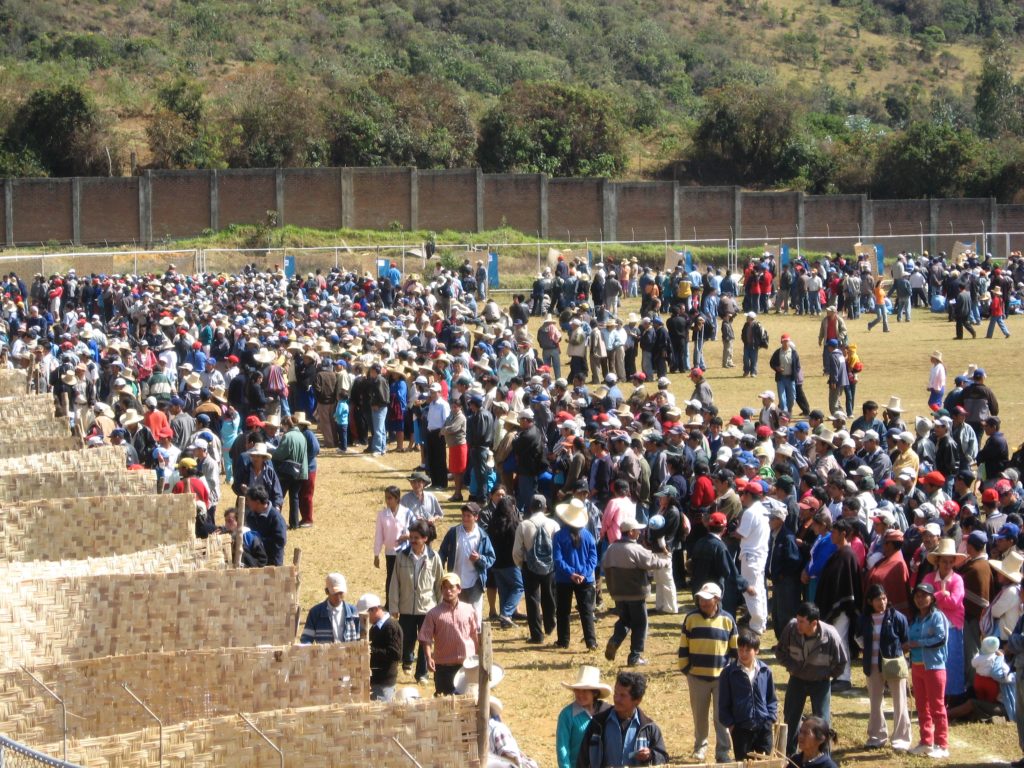
Over the last two decades, various consultation practices regarding extractive activities have emerged and been implemented throughout Latin America. Some practices adopt a completely autonomous and communitarian approach, some are based on alliances between civil society and local government, while others are also increasingly centred around national governments in connection with new legislation as per international standards on indigenous peoples’ rights.

These consultation practices come from two related sources. On the one hand, the long-standing struggle for the recognition of the collective rights of indigenous peoples led to International Labour Organisation (ILO) Convention 169 on the rights of indigenous peoples (ILO C169, signed in 1993) and the United Nations Declaration on the Rights of Indigenous Peoples (2007) that established indigenous peoples’ right to prior, free and informed consent (PFIC)[1] concerning the projects and policies affecting their lives.

On the other hand, extractivism has intensified and expanded into new territories (especially those under the control of indigenous and peasant communities), provoking resistance and social conflict. Social movements’ experimentation with new political practices and the emergence of new public policies on governing these disputed territories and populations have also exacerbated the situation.[2]

In response to intense protest over the impact of extractive projects, Peru’s nationalist government, led by Ollanta Humala (2011-2016), approved a law for prior consultation (Ley de Consulta Previa) when it came to power. This law was based on ILO C169, which Peru had signed in 1993 but had never implemented. The legal framework established through discussions on the implementation of the law has served as the cornerstone of government-led consultation on the exploitation of natural resources since 2013; no new grassroots-based consultations have taken place since.

Both the practice of social-movement-driven consultations on the exploitation of natural resources and the transition to state-led consultations offer an excellent opportunity to address one of the most intense debates in the Global Working Group Beyond Development regarding what democratic processes and institutions can allow with regard to the construction of alternatives to development and colonial-patriarchal capitalism, and what role the state can or cannot play in this connection.

Credits: Author’s personal archive

In this document we will examine the following questions: to what extent could social-movement-driven consultations influence decisions on territories and economic projects? How did the state-led institutionalisation of the right to be consulted affect people’s capacity to make decisions about their territories and lives? What lessons can we learn here with regard to i) the dynamics between autonomous institutional processes and state-led processes; and ii) the potential scope of institutional processes concerning the exercise of rights and the transition beyond development?

SOME NOTES ON THE STATE

Experience of consultation on extractive activities indicates that there are two major challenges facing contemporary liberal democracies, namely: how can we juggle cultural diversity, historical discrimination and, in particular, the place of indigenous peoples in our societies? And in what ways can democracy allow decision-making on economic models and processes, more specifically with regard to the exploitation of the commons? These questions are deeply intertwined, as indigenous peoples hold tenure rights over a large part of the world´s land surface, including particularly diverse ecosystems that are crucial to the future of mankind at a time of ecological crisis.

Within this document, I will consider two different theories of the state present in social movements, left-wing politics and the intellectual debate on emancipation in Latin America, as well as within the Working Group. Both perspectives would agree that the modern state in the Americas was built upon the exclusion, exploitation and dominion of the colonial elite over the indigenous peoples, Afro-descendants and women while simultaneously seeking to incorporate new territories into the global capitalism movement as providers of “natural resources”. However, the theories differ when it comes to the extent to which the fundamentally colonial and extractivist nature of the modern state can be transformed through the institutional processes of formal democracy.

On the one hand, thinkers like Leonardo Avritzer (2002) and Boaventura de Sousa Santos (2010) have analysed how social movement theories and practices can transform the state from below, leading to new participatory practices like participatory budgeting in Brazil or even the new constitutions of Ecuador and Bolivia that sought to build a plurinational state. They insist that the state is a heterogeneous network of relations and institutions that both reflects the correlation of forces in wider society and can be transformed and permeated by grassroots practices, becoming an instrument of change.

Others insist that the state is essentially limited when it comes to emancipation, based upon two crucial understandings. Michel Foucault explained that the state is a meditated social practice adopted to govern populations based on pre-existing instruments (like the police or fiscal systems). As such, the state is the result of historical practices of domination while at the same time forming part of a broader, continuously developing “field of practices of domination” (Foucault 2004: 291-339). Consequently, modern states in Latin America are deeply rooted in the “coloniality of power” that negates democratic and institutional practices rooted in other cultures, knowledge and political practices.

Furthermore, the so-called liberal democracies that guide these states are built upon “[…] a solid institutional separation —the technical term is differentiation— of the political system, from the general system of inequality in society” (Rueschemeyer 1992: 41). This separation results in a constitutive contradiction between the desire for self-government that sustains democracy and the logic of the accumulation of power and capital (i.e. capitalism).

In recent decades in particular, this contradiction has been resolved through neoliberal and technocratic reforms in favour of capitalism, which exclude the economic domain from the realm of democratic politics and prioritise transnational institutions and the corporate capture of the state over national political processes. Authors like John Holloway, Raquel Gutiérrez, Aníbal Quijano and Raúl Zibechi therefore assert that fundamental transformation can only happen through the construction of counterpower, autonomy or antipower that dismantles or socialises the power over the people that is institutionalised in the modern state.

STATE, DEMOCRACY AND EXTRACTIVISM IN PERU: BETWEEN CONFLICT AND CONSULTATION

The expansion of mining in Peru was facilitated by the neoliberal reforms first implemented by the authoritarian regime of Alberto Fujimori and then consolidated after the return to electoral democracy, during the presidencies of Alejandro Toledo, Alan García Pérez, Ollanta Humala, Pedro Pablo Kuczynski and Martín Vizcarra. These governments fostered legal, economic and political conditions that sought to reconstitute and reterritorialise the Peruvian State, economy, geography and society, further entrenching the country into the global economy as a primary exporter of natural resources.

As a result, mining concessions expanded considerably, growing from 2.26 million hectares in 1991 to 26 million by 2013, affecting twenty percent of the country’s territory (without taking into account other extractive activities like oil and gas exploitation or large-scale industrial agriculture) and covering around ninety percent of the territory in some of the country’s provinces. Consequently, large-scale mining projects spread throughout the country, without incorporating any consultation or territorial planning processes.

Due to the expansion of extractivist activities, the so-called socioenvironmental conflicts[3] (and particularly in the mining sector) became the main category of social conflict in the country. A wide array of motivations and demands sparked the mining conflicts, ranging from calls for a greater share in the distribution of profits and compensation for environmental damage to fundamental resistance among those communities potentially affected by such activities. The struggle between the mining companies and the communities over the control and management of the commons and the ways in which these are integrated into the local, national and global economies generally formed the focal point of the conflict.

***

At the start of the 21st century, opposition to extractive activities (mining in particular) became a subject of national public debate for the first time, after almost a decade of mining expansion (including the implementation of the huge Yanacocha and Antamina mines in the north of the country). In Tambogrande, a small town in the northern Department of Piura, local farmers in a relatively prosperous valley (thanks to an extensive irrigation project financed by the World Bank years before) saw a large-scale copper project as a threat to their economic model (which was based on the production and export of lemons and mangos). At the height of the conflict, protesters burned down the camp built by the mining company and one of the main leaders of the protests, engineer García Vaca, was murdered, presumably due to his opposition to the mining project.

The former president of the local civil-society movement (and later mayor of Tambogrande), Francisco Ojeda, explains how the idea of the consultations emerged in this context: “The conflict turned violent. The government did not want to listen to us anymore, and even talked about militarising the area. Therefore, in a meeting with the Technical Commission [confirmed by ally NGOs], we agreed to ask the government to take our perspective in account. As they told us no specific legislation existed for this, we had to create the consultation ourselves, obliging the local government to convoke it. It was not easy” (Ojeda 2009: 344).

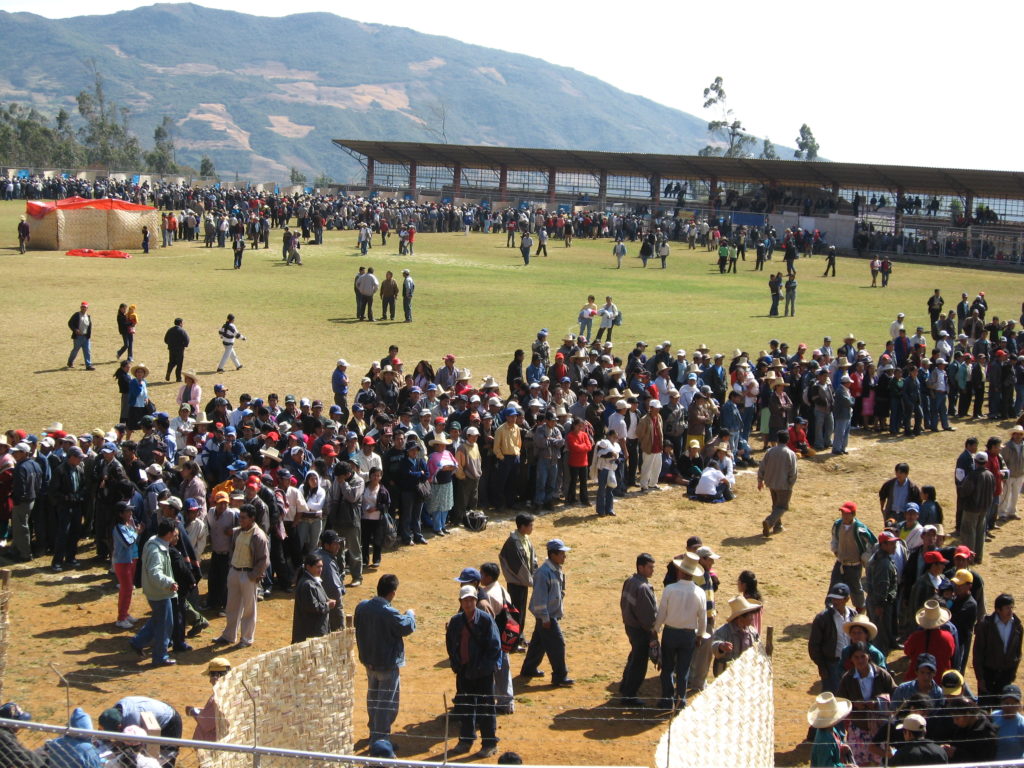
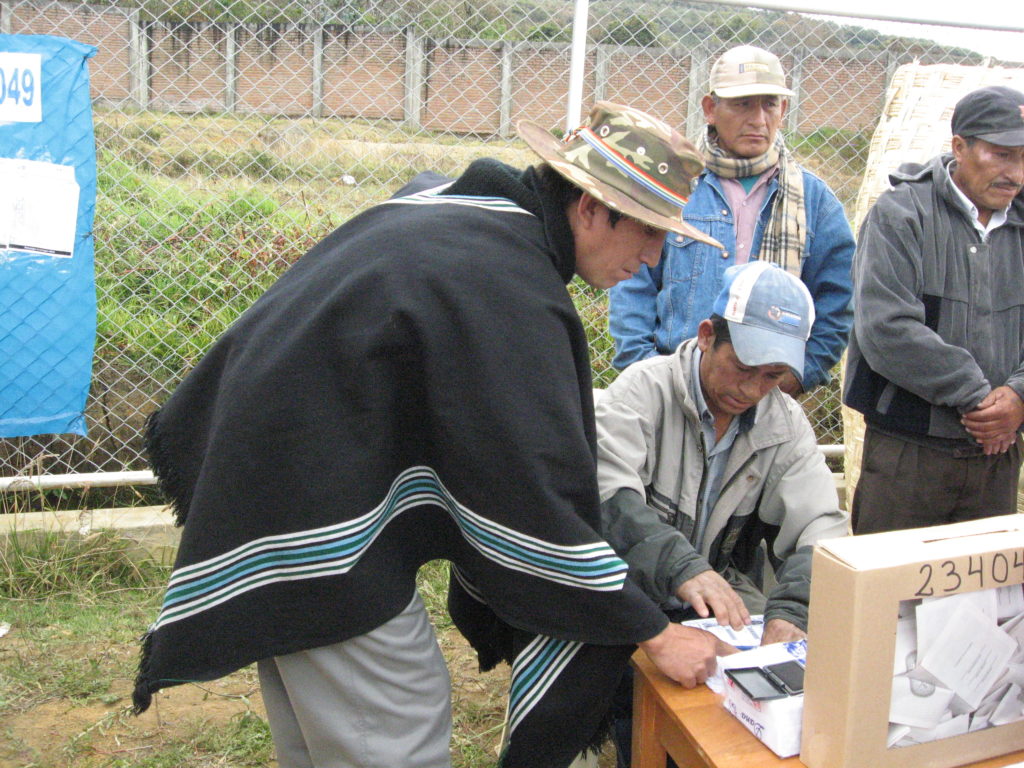
The first consultation was held in Tambogrande on 1 June 2002, involving almost 70% of the local population, close to 99% of whom opposed the mining project. Almost twenty years later, no further headway has been made on the mining project, although the concession is still held by another company[4]. The Tambogrande referendum inspired similar practices in Argentina, Guatemala and, later, Colombia and Ecuador. In Peru, other consultations were held in Ayabaca and Huancabamba (with the support of the same alliance involved in nearby Tambogrande) on the Rio Blanco project in 2007; on the Toquepala project’s expansion and use of water in Candarave in 2008; on the Tia Maria mine in Islay in 2009; and on the Cañariaco mine in the district of Cañaris in 2012.

Although participation has fluctuated (with between 43% and 71% of the local population getting involved at various times), all consultations resulted in over 90% of local voters rejecting the mining projects. Like in Tambogrande, Cañaris, Islay, Ayabaca and Huancabamba, this resulted in the indefinite suspension of the mining projects, although in all cases (especially in Islay) the mining companies continued their campaigns to get their projects off the ground. There have not been any new social-movement-driven consultations since 2012, when the Law on Prior Consultation effectively came into force.

DEMOCRACY AND INSTITUTIONS IN GRASSROOTS-LED CONSULTATIONS ON MINING: SELF-DETERMINATION THROUGH PRACTICE?

Social-movement-driven consultations on mining thus emerged from local discussions between social organisations, communities, local authorities and their civil society allies, who defined the scope, procedures, methodologies and objectives. The consultations were an effort to transform the logic and the balance of power in mining conflicts by channelling local energies through an institutional process like a referendum, which would constitute a “political event” that could not be denied by anyone (Vittor 2013).

On the one hand, this provided for the de-escalation of conflicts that were progressively becoming more polarised and violent. However, organising referendums also encouraged an intense process of mobilisation, information and political education through meetings, workshops, assemblies and communication campaigns. It forged deeper relations between different civil society actors and, in some cases, local governments, and inspired national and transnational networks that connected local communities with alternative media, environmental and human rights NGOs and international networks. Although there were disputes between various stakeholders regarding leadership and visibility, the referendums and their results subsequently became a shared point of reference for local politics in the respective areas.

It was precisely this diversity of stakeholders that transformed the organisation of the consultations into a process of democratic creativity and institutional experimentation. At the same time, these processes were fundamental to the establishment and expansion of the National Confederation of Peruvian Communities Affected by Mining (CONACAMI), the Muqui network (civil society alliance on mining) and international solidarity that would far outlast the practical experiences of the consultations.

***

The exact form of consultation varied depending on demographics, political leanings and the structure of the local conflict. Cañaris saw a communitarian consultation in the spirit of the ILO C169, with a clear message in favour of the indigenous self-determination of the local Quechua communities. In the coastal areas of Islay and Tambogrande, citizen consultations adopted liberal-democracy-style participation.

Ayabaca and Huancabamba saw intense debate among the peasant communities and with local government and civil society allies on whether a communitarian consultation should be held or if a citizens’ referendum would be more effective. Some community leaders argued that the referendum should affirm the right to self-determination in recognition of their status as descendants of indigenous peoples. Others stated that a “citizen participation” mechanism would have more of an impact on the national debate and government and would shore up alliances with urban populations in the provincial capitals.

The second argument would prevail, but this example makes it crystal clear that decisions on the form of consultation were based on i) what institutions and processes would best fit the local context and culture; and ii) what methods would be most effective in consolidating and communicating existing grassroots decisions to particular audiences (the state, media) and geopolitical scales  (i.e. national and international). The consultations were essentially efforts to translate processes of self-determination through assemblies, social organisation and popular mobilisation into the language of institutions, the state, media and formal democracy.

Much of that achieved was largely possible due to the lack of political frameworks for consultation. Although Peru ratified ILO C169, this was not implemented in any way until the Ollanta Humala government in 2011. The grassroots-led consultations were organised in this legal sphere of ambiguity that made space for experimentation and creation, giving life to flexible and embedded institutions and democratic practices. However, as the legal basis of the referendums was disputed (and in any case would not allow binding decisions), the various stakeholders in favour of and opposed to a given mining project would make great efforts to demonstrate the (il)legality and (il)legitimacy of the referendums respectively, by means of media campaigns, judicial procedures and national and international political advocacy. One of the main strategies adopted by the pro-referendum sector involved carrying out referendums to the letter, complying with most of the conditions and methods of formal elections (e.g. by using the official register of voters in their jurisdictions or by inviting international observers).

As such, social-movement-driven consultations are rooted in a profound understanding by local communities of democracy as the right to identity and self-determination for which the choice over their “development model” (as they would phrase it) and the use of their territory is essential. While the federal government and the company consider land an economic resource, for the local people it is a space that sustains social relations, economic practices and cultural traditions, all of which give meaning to the lives of those in the area and ensure their social reproduction. For Rosa Huaman (2013) from the Cañaris community: “Territory is happiness, as it gives life, gives birth, reproduces”.Community leader Magdiel Carrión (2009) from Ayabaca states: “For us, democracy is much more than only voting in elections. It is about our full participation in decision-making on every level; that is why we implemented the consultation, as an expression of real democracy”.

As such, discussions and decisions about who, how, when and what should be consulted were defined by the stakeholders, who would “exercise their right to be consulted” themselves. This also meant that stakeholders like the peasants from Ayabaca and Huancabamba, farmers from Tambogrande and Islay and indigenous peoples from Cañaris were at the centre of the debate on what democracy should look like, demonstrating the emancipatory nature of the democratic process itself. However, more analysis is needed into women’s participation in the consultations. Although male leaders were the main public protagonists of all consultations, there are signs that the consultations were empowering for women as well, as they opened up new spaces for deliberation and mobilisation where women’s organisations and female leaders and their views on mining played a crucial role (particularly in Tambogrande and Cañaris).[5]

INSTITUTIONALISING CONSULTATIONS: DISEMPOWERMENT BY DESIGN?

The right to be consulted has been a matter of much dispute throughout its creation and implementation, as it emerged from the negotiations and struggles between different visions of its significance and goals. For the corporate sector, multilateral institutions and most governments, consultations should integrate indigenous peoples more effectively in projects and policies of economic development, whilst indigenous organisations and their allies see consultation as a means of securing indigenous peoples’ right to self-determination.

ILO C169 resolved this issue by entrenching prior, free and informed consultation into economic projects and policies affecting indigenous peoples, whilst the United Nations Declaration on the Rights of Indigenous Peoples went further by insisting that consultations are intended “to obtain consent” from indigenous peoples (Rodríguez 2012). The right to PFIC would be expanded and amplified by national and international legislation (such as the Bolivian and Ecuadorian constitutions) and jurisprudence (by the Colombian constitutional court or the Inter-American Court and Commission on Human Rights).

César Rodríguez states that the emergence of PFIC is a crucial part of a broader set of institutional processes that sought to create better conditions of governance for indigenous territories and dynamics. However, this process seeks to slot indigenous struggles for self-determination within a scheme of “neoliberal multiculturalism” (Hale 2002). Rodríguez states: “as all legal norms, the effects of the PFIC regulations depend on two distinct factors: on the one side, the limitations and opportunities created by the norms themselves, and on the other, the interpretations and strategies of the actors who use the law” (Rodríguez 2012: 52).

***

In Peru, the conflict around extractivism and the defence of territories reached new heights during the Alan García government. The uprising of indigenous peoples (2009) against a series of decrees that sought to flexibilise the legal protection of their territories marked a turning point. Led by the national organisation Aidesep[6], the uprising lasted for several months and spread throughout Peruvian Amazonia, culminating in violent confrontations provoked by a police attack on a series of roadblocks near the northern town of Bagua that resulted in 31 deaths, including 21 police officers.

In the local and national elections (in 2010 and 2011 respectively), the issue of extractivism and human rights took centre stage like never before, and there were high hopes that the elected nationalist government of Ollanta Humala (who was elected on a progressive platform) would transform existing legal frameworks and state practices. During his first cabinet (which would turn out to be the only one with a reformist agenda), the adoption of the Law for Prior Consultation of Indigenous Peoples was approved and presented in Bagua as a gesture of reconciliation with indigenous peoples by the Peruvian government, which sought to forge a new relationship.

The law would be implemented through a regulation setting out the framework and conditions for official consultations. The Peruvian government, in line with its more general view of politics, opted to elaborate a rather bureaucratic and exclusive set of implementation rules intended to limit the scope and depth of consultations, rather than fostering conditions conducive to innovation and experimentation. Prior experience of grassroots-led consultations was not explicitly considered a basis for the regulation.

Although the indigenous organisations took part in this process by means of regional and national consultation spaces (including some who had participated in social-movement-driven consultations), they felt that their demands were only very partially met. Four out of the six main national indigenous organisations rejected the final regulation through a joint declaration.[7] The National Human Rights Coordinator working group on indigenous peoples’ rights deemed the process a “missed opportunity for genuine intercultural dialogue” and stated that the regulation does not guarantee the right to self-determination for indigenous peoples as recognised by international law. [8]

Some of the main decisions made during the process of legislation and the elaboration of implementation rules include the following[9]:

  • The Peruvian State would essentially decide which issues and projects would be consulted, not the indigenous peoples themselves.
  • Consultations would not include (or even address) the obligation to gain consent for extractive activities per se, and actually focus on relatively less significant administrative decisions (Leyva 2018; Hallazi 2018) instead of touching on major decisions like the approval of Environmental Impact Studies or the concession of mining rights.
  • The new law would not be retroactive, excluding all existing projects and concessions from consultation, even if C169 had been officially in force since it was signed in 1993.
  • The methodology and temporality of the consultations is set by the regulation and limits the time set aside for consultations to two months, suggesting a one-size-fits-all approach to very diverse contexts and cases.

***

However, the most sensitive question may have been: who should be consulted? For many reasons, indigenous identity in Peru is more complex than in neighbouring countries, as many people with the “objective characteristics” of indigenous peoples might not identify as such themselves, and people who do identify as indigenous (particularly in peasant communities in the north of Peru) are often considered non-indigenous as they do not speak an indigenous language due to historical de-indigenisation, mestizaje and migration in their areas. All of this turned the definition of who had to be consulted into an extremely sensitive exercise.

The definition of who exactly would be consulted (in other words: the definition of who is indigenous and who is not) was based on a database of indigenous peoples. Although the database was seen as a “living document” open to adaptation and updates from the outset, it was also a highly contentious process: the Ministry of Energy and Mines Minem (and presumably the extractive lobbies through Minem) in particular tried to influence the process and endeavoured to limit the number of Quechua communities in mining areas included in the process, as the former Vice-Minister of Interculturality Ivan Lanegra later declared.[10]

The publication of the final version of the database took much longer than originally planned, and there is evidence that communities included in initial versions of the database had been excluded from the final version, such as the Fuerabamba community that had to be relocated to allow the construction of the biggest mine in the country, Las Bambas.[11] The database also showed how at least 25 mining projects had moved forward in previous years without adequate consultation of the communities who were now on the list, despite the Peruvian State’s constitutional obligation to consult indigenous peoples.[12] The process was also criticised for the fact that the definition of who is indigenous and who is not was initially handled by Minem itself, through private consultants, without adequate supervision or methodological guidance. Although this has since been rectified, it did reflect a lack of genuine engagement on the part of the Peruvian government (Leyva 2018).

***

The disempowering nature of the process of the institutionalisation of the Law for Prior Consultation in Peru clearly reflects the general Latin American experience, as analyses from Ecuador, Bolivia, Colombia and Mexico show (Ecuador Debate 2019). Building on Marxist theory, Edwar Vargas identifies, in the case of Ecuador, the “devastation” of the right to consultation. Although the right officially exists, it is essentially destroyed by economic interests and existing power structures that instrumentalise the right for their own gain (Vargas 2019).

César Rodríguez states in summary that the institutionalisation of PFIC shifted the focus of social struggles from extractivism towards legal processes and negotiations on how to implement extractive projects: “with its power to transform substance in form; and its capacity to offer a space of contact between actors that defend radically different or even antagonistic positions (Rodriguez 2012: 57). However, Rodríguez says: “The replacement is only partial and temporal. Because in the diligences of the consultations, in every step, the substantial conflicts return, even if now in the form of procedural arguments(Rodriguez 2012: 23). In the final section, we will explore what results this has had in Peru.

STATE-DRIVEN CONSULTATIONS: IMPLEMENTING MULTICULTURAL EXTRACTIVISM?

As the institutionalisation of PFIC was far from a genuine intercultural process, there can be no surprise that its implementation has been full of challenges and contradictions. By the end of 2018, five national policies[13], twenty-five mining and oil operations, one hydropower project, one infrastructure project and seven natural reserves had been the subject of consultations in Peru. All but one of these consultations were promoted by the state; only the Hidrovia infrastructure project was imposed by a judicial ruling after indigenous organisations and human rights NGOs took legal action. However, other legal proceedings have started, resulting in the judicial ruling to consult on mining concessions.[14]

The analysis of the implementation of the law carried out by prominent human rights lawyers Ana Leyva (2018), Juan Carlos Ruiz (2019) and Alberto Hallazi (2019) coincide with the problematic logic of the institutionalisation of PFIC for the following reasons:

  • So far, it is the Peruvian State alone that defines which projects and policies are to be the subject of consultation, and through what means, with indigenous peoples. Although the fact that indigenous peoples did help define several policies that affect them is a step forward, in many other cases there has been no consultation, nor is there any body that allows indigenous peoples to define which policies will be the subject of consultation in dialogue with the state.

In the case of extractive projects, there have been consultations on relatively late and unsubstantial administrative measures (like the start of the project), rendering significant participation able to alter the substance of the project impossible (to not even speak of the ability to influence the decision on whether to move the project forward).[15]

However, indigenous organisations and civil society institutions have sought to utilise litigation and, in some cases, mobilisation to i) secure the right to consultation in cases initially neglected by the Peruvian State (successfully in the Hidrovia case); and ii) expand the scope of consultation by demanding consultation on mining concessions[16].

  • In terms of the consultation methodology, Juan Carlos Ruiz shows that the consultations under the law were generally realised in one to two days and lacked information and technical support.[17] In contrast to the grassroots-led processes, it is the state that controls the agenda, time and location, including issues like language and methodology. Again, in the cases where local organisation was stronger, the methodological control of the process was transformed through grassroots demands.
  • Unsurprisingly, none of the consultation processes resulted in an extractive project or a public policy being turned down, although in some cases communities and organisations left the process in protest against its direction or outcome. It is also significant that in the case of mining there were consultations on relatively small and lesser known projects, but not on any major projects, until the recently planned consultation on the Antapakay project, which resulted from the strong and insistent demand by the quite organized communities of Espinar. However, even when consultations resulted in agreements, these did not include tangible arrangements regarding access to the economic benefits generated by the projects, with the exception of Lot 192.[18]

Although it is true that the law provided for the relative generalisation of the right to be consulted, this happened in a disempowering way in which existing power imbalances were ignored, replicated and sometimes exacerbated. There are no indications that the processes sought to assure or promote the participation of indigenous women in the consultations, especially in consultations on national policies in which the two organisations of indigenous women participated directly. In contrast to social-movement-driven consultations, the institutionalised versions seek to limit deliberation, mobilisation and collective decision-making. The consultation on Lot 192 in Loreto shows that even in these circumstances consultation and its significance is under dispute.

***

Lot 192 is located in the Loreto region and was exploited for around forty years, resulting in widespread environmental, cultural and social damage to the territories of the Quechua, Kichwa, Kukama and Achuar peoples and a history of conflict and social struggle. As Pluspetrol’s contract to exploit its concession ended in 2015, the new auction required a process of consultation, which would involve indigenous federations with ample experience of dialogue with the Peruvian State and transnational companies, in addition to solid national and international alliances. From the outset, they demanded that all consultation and auctions would first have to deal with their historical agenda, as one of their leaders, Aurelio Chino Dahua, explains: “After all of the disasters you´ve done to my home, first you will need to assure my rights, and after you can consult me” (Zúñiga 2018: 10).

The political ability of the indigenous federations to negotiate the logic of the consultation meant that the state first had to satisfy predetermined conditions (more specifically taking into account environmental damage and associated health issues in their territories) and amplify the temporality of the process. This resulted in improved contracts for oil exploitation. Zúñiga and Okamoto, who served as advisors to the indigenous organisations, state: The indigenous peoples used the opportunity of the consultation to teach the Peruvian State to connect the consultation to the territorial memories of its realisation (Zúñiga 2018: 141). The federations also strengthened their alliances and boosted the profile of their struggles.

However, even in this case, consultation encountered considerable difficulty and was unilaterally declared concluded by the state after it had come to an agreement with only one out of the four indigenous federations involved. Once again, thanks to mobilisation this decision was partially reversed, when the government agreed on a new round of consultation before the conclusion of contracts on the Lot.

In other cases, the existence of a Law on Prior Consultation aided those at local level, who would demand their right to be consulted to open up debate on tangible projects, delay their implementation, foster better conditions for negotiation on the projects or deter strategies of repression. This, however, very much confirms that the Law`s ability to guarantee indigenous rights is incredibly contingent on the capacities of indigenous organisations to dispute the associated logic and integrate consultation into their broader fight for justice, instead of an intrinsic emancipatory logic of the institutional process.

FINAL THOUGHTS ON THE “DEMOCRATIC PRODUCTION OF DEMOCRACY”

The history of the right to be consulted in Peru clearly shows that institutions are never neutral and always under dispute. Their design distributes, reinforces or transforms power, and has to consciously be embedded in particular geographies, histories, rationalities and networks.

Democracy therefore depends on these broader elements and the way institutions interact with them. Considering events in Peru, we can draw the following conclusions:

  1. Social-movement-driven consultations on extractive projects emerged in Peru due to the combination of the following factors: i) intense conflict on mining in the country did not find institutional and democratic practices to be channelled and transformed; ii) the local communities in the cases specified were organised within strong local organisations and had already made their decisions through grassroots and autonomous institutions and democratic processes; iii) a strong alliances of civil society actors fostered political creativity and provided the necessary resources for the first two consultations (subsequent ones were mostly sustained by local actors); iv) alliances with local governments more receptive to local communities and civil society allowed the consultations to be entrenched in the local state and provided resources and institutional capacity; v) the design of the consultations could be flexible and dynamic due to the lack of formal policies and conditions, as it responded to rather ambiguous legal frameworks. These grassroots consultation processes took place within a wider landscape of self-determination and democracy, and even strengthened the local social network and created ties with national and international actors.
  • Although the consultations took place in this atmosphere of legal ambiguity and definitely did not have any formal mandate for political decision-making on extractive projects, they did contribute to the consolidation of de facto self-determination and decision-making on the future of territories and local populations that opposed mining projects. The Rio Blanco, Tia Maria, Manhattan and Cañariaco mining projects are among the seven major mining projects that have been paralysed indefinitely due to local organisation and mobilisation. In Colombia, Argentina, Ecuador and, to a lesser extent, Guatemala, these autonomous consultations have managed to thwart extractive projects. The consultations became a powerful tool for these processes of self-determination, as they highlighted local communities’ opposition to extractive projects and helped shore up alliances on different scales. However, these de facto decisions remain in dispute, as mining companies continue with their plans to move ahead with these projects.
  • Intense conflict over extractive projects formed the basis of a series of political innovations within the Peruvian State to find institutional ways to channel conflicts. The implementation rules of the law did not really consider the previous experience of grassroots-led consultations and only involved indigenous organisations in the substance of their design to a limited extent. The law has consequently been regulated and implemented more according to state rationality and practices than through intercultural and grassroots-led participatory processes of design, leading to a legal framework that seriously limits the scope, substance and depth of consultations and indigenous peoples’ right to self-determination.
  • It is true that the institutionalisation of the right to be consulted led to broader application of this right for indigenous peoples. Consultations took place on diverse national policies, and more consultations on extractive projects have taken place than ever before. It is also true that the existence of the law has given organised populations a new tool to defend their rights, particularly by demanding their right to consultation as a way to delay and possibly thwart mining projects. Current consultations could also allow better institutional spaces for negotiation on the benefits of projects, although this has not happened in practice.

However, the implementation of the law has taken place in a context of existing inequities and power structures, instead of through genuine engagement with intercultural transformational dialogue. As such, it has allowed the state to regain control over time, space and agendas by dissuading or channelling social conflicts in processes controlled by its rationality. Only where social mobilisation has been stronger and organisations sufficiently aware of this have the substance and scope of the consultation been deeper, as was the case for Lot 192. However, there is no case under the new law where an extractive project has been rejected due to consultation.

  • The implementation of the law therefore consolidated a series of shifts, which are summarised in the table below. The bottom-up processes embedded in local culture, which inspired flexible and adaptive methodologies for collective deliberation and the factual exercise by local populations of their right to choose their way of life, was transformed into a restrictive institutionality from above through which the state granted the right to participate in the implementation of development and extractive projects to certain populations (namely those who the state identifies as indigenous).
Table: Shifts in the logic of consultation
Social-movement-driven consultationsState-led consultations
Political logicSelf-determination and participatory democracyGovernance, participation and dialogue for development
Scope    Ways of life and/or development, which determine whether extractive projects are approved or rejectedConditions for the implementation of projects and policies  
Subjects  Defined by local communities and populations. Beyond indigenous communities    Indigenous communities identified by the state      
Political-economy embeddingSocial struggles in defence of territories, identity and ways of life, led by grass-roots organisations and civil society alliancesDevelopment programmes promoted by multilateral institutions, government and companies
Control over the process and institutionDecisions are made in networks rooted in the local context, which generally involve social organisations, communities, civil society and local government and their allies in national civil societyThe government, state institutions
Methodology and timeProcess of political education, deliberation and mobilisation, based on context and embedded in local (political) cultureFormal procedure defined by State regulation (in Peru’s case: four months), though disputed by local actors in some cases

Institutionalisation effectively sought to create a channel where the affectations and benefits of the economic model and its projects (but not the model itself) could be discussed. Consequently, the law really does not provide for the transformation of historical relations of domination over and marginalisation of indigenous peoples, as it at least indirectly pretended to do. As such, the process shows how the institutionalisation of the consultation process may have opened up opportunities for those fighting against these projects, but it also severely hampered the potential for self-determination and transformative processes afforded by social-movement-led consultations.

It is also significant that no new grassroots-led consultations have been held now that the law is in place, suggesting that the complementarity between grassroots and state processes poses a challenge. One hypothesis would be that the state centrism present in many organisations and civil society strategies seriously limits interest in autonomous processes of self-organisation. As such, the overall balance of the institutionalisation process resulted in disempowerment.

  • The history of consultation in Peru offers the following insights on democracy and institutions in the contemporary world:
    • Democratic decision-making (in this case, consultation) should be a community-driven, genuine process of self-determination before the start of any project, with sufficient time, information and resources.
    • Genuine democracy is only possible if it includes the economic realm, and allows collective decisions on ways of life, the economic model and the governance of territories.
    • It is the process of collective decision-making that ensures genuine democracy by creating spaces for political education, real deliberation and debate and mobilisation, which purposely transforms relations and patterns of exclusion and inequality (experienced by indigenous and peasant communities and women, for instance). Democracy should be a process of emancipation and empowerment, and not an act of election.
    • Local stakeholders should design democratic processes and institutions, and this process should be embedded in local cultures and practices, transforming the state from below.
    • Other institutional processes are needed to open up these spaces of local decision-making, allow decisions on bigger geographical scales and contest societal challenges and problems (e.g. with regard to territorial planning as well as broader economic and ecological policies).
  • There is still a huge question mark over whether this kind of democracy and institutions are viable in our current societies and political formations. Comparing the case in Peru with the very similar processes in Ecuador, Bolivia, Colombia and Mexico suggests that this requires a radical transformation of our current nation states and their role in mediating and protecting the fundamental processes and interests of contemporary capitalism and its interconnection with colonial and patriarchal elements. It would need what Aníbal Quijano called “the democratic production of a democratic society”. This might be easier at local level, as municipalities are entrenched in a web of different power relations and integrated in local culture and political practices, which makes them more permeable for experimentation.

Until we see this radical transformation, the history of this process demonstrates that it is driven by the need to defend and maintain autonomous, social-movement-driven spaces for genuine democracy, whilst at the same time disputing and resisting the disempowering logics of formal “democratic institutions” and making use of its internal contradictions, loopholes and flaws, understanding that both political logics need to be rooted in broader transformative strategies that cannot depend on the state as it is.

BIBLIOGRAPHY

Avritzer, L. (2002). Democracy and the Public Space in Latin America.Oxford, Princeton.

Calderón, F. (coordinator) (2012). La protesta social en América Latina.Buenos Aires, Siglo Veintiuno.

Carrión, M. (interview) (2009). La lucha no es solo por Ayabaca, es por el mundo en general, por la conservación de un ecosistema que produce agua y genera vida en todo el norte del país, in: De Echave, J./Hoetmer, R./Panéz, M. (2009). Minería y territorio en el Perú: conflictos, resistencias y propuestas en tiempos de globalización.Lima, 375-389.

Ecuador Debate 106, Consulta Previa, Libre e Informada (2019). Quito.

Foucault, M. (2004). Seguridad, territorio, población. Buenos Aires-Mexico DF: Fondo de Cultura Económica.

Hale, C. (2002). Does Multiculturalism Menace? Governance, Cultural Rights and the Politics of Identity in Guatemala. Journal of Latin American Studies xxxiv, 485-524.

Hallazi, A. (2019). El derecho a la consulta previa y su aplicación en el Perú. 30 años después del Convenio 169 – OIT, in: Ecuador Debate 106, Consulta Previa, Libre e Informada (2019). Quito, 111-127.

Hoetmer, R. (2017). “This is No Longer a Democracy…”: Thoughts on the Local Referendums on Mining on Peru’s Northern Frontier, in: Alvarez, S./Laó-Montes, A./Thayer, M./Rubin, J./Baiocchi, G. (eds) (2017). Beyond Civil Society: Activism, Participation, and Protest in Latin America. Durham, Duke University Press, 226-251. 

Huaman, R. (interview), El territorio es alegria, porque es quien reproduce y da vida, in: Hoetmer, R./Castro, M./Daza, M./De Echave, J./Ruiz, C. (2013). Minería y movimientos sociales en el Perú. Instrumentos y propuestas para la defensa de la vida, el agua y los territorios. Lima, Programa Democracia y Transformación Global, 309-315.

Leyva, A. (2018). Consultame de Verdad. Aproximación a un balance sobre la consulta previa en el Peru en los sectores minero e hidrocarburífero. Lima, CooperAcción and Oxfam.

Ojeda, F. (interview). Una de las debilidades de la empresa y del Gobierno fue que nunca dieron la cara. El pueblo se dio cuenta y se opuso colectivamente a los planes de la empresa, in: De Echave, J./ Hoetmer, R./Panéz, M. (2009). Minería y territorio en el Perú: conflictos, resistencias y propuestas en tiempos de globalización.Lima, 341-347.

Quijano, A. (2003). Colonialidad del Poder, Eurocentrismo y América Latina, in: Lander, E. (ed.) (2003). La colonialidad del saber: eurocentrismo y ciencias sociales. Perspectivas latinoamericanas. Buenos Aires and Caracas, 201-246.

Rodríguez Garavito, C. (2012). Etnicidad.gov: Los recursos naturales, los pueblos indígenas y el derecho a la consulta previa en los campos sociales minados.Bogota, Dejusticia.

Rueschemeyer, D./Huber Stephens, E./Stephens, J. (1992). Capitalist Development and Democracy. Chicago, University of Chicago Press.

Silva Santisteban, R. (2017). Mujeres y conflictos ecoterritoriales. Impactos, estrategias, resistencias. Lima.

de Sousa Santos, B. (2010). Refundación del Estado en América Latina. Perspectivas desde una epistemología del Sur. Lima, Programa Democracia y Transformación Global and Instituto Internacional de Derecho y Sociedad.

Vargas, E. (2019). Conflictos Sociales y Consulta Previa, Libre e Informada, in: Ecuador Debate 106, Consulta Previa, Libre e Informada. Quito, 41-55.

Vittor, L. (2013). Las consultas vecinales sobre la minería: experiencias y desafios, in: Hoetmer, R./Castro, M./Daza, M./De Echave, J./Ruiz, C. (2013). Minería y movimientos sociales en el Perú. Instrumentos y propuestas para la defensa de la vida, el agua y los territorios. Lima, Programa Democracia y Transformación Global, 503-511.

Zúñiga, M./Okamoto, T. (2019). Sinderechos, no hay consulta. Aproximación a las miradas indígenas sobre el proceso de consulta previa en el lote 192 de la Amazonía peruana. Lima, CooperAcción, Puinamudt and Oxfam.


[1] In Spannish a distinction is being made between “consentimiento” (consent) and “consulta” (consultation). Consent is a far bolder term, which refers to the active agreement with indigenous peoples prior to any extractive activities, which implicitly suggests indigenous peoples can also reject these activities. Consultation, on the other hand, refers tot he obligation to consult the opinion of indigenous peoples on any project, to inform decision making by the State. So, although the formal term used in international legislation is “Free, Prior and Informed Consent”, the Peruvian “Ley de Consulta” is far closer to promoting consultation then consent, as we will see in the article. Therefore I will generally use the term consultation, only referring to consent when this is pertinent.

[2] In a study conducted for the United Nations Development Programme, Calderón (2012) highlights that access to territories and natural resources is the main reason for conflict in the contemporary world. He also states that these conflicts are “bearers of democracy” as they pave the way to stronger democratic institutions that can in turn transform conflict.

[3] The Peruvian Ombudsman (Defensoria del Pueblo) uses this term in its monthly reports on social conflict in the country (see https://www.defensoria.gob.pe/documentos/, in Spanish). I prefer to speak of “eco-territorial conflicts” (Hoetmer 2013), as this is a more accurate reflection of the fact that these conflicts actually express clashes of “modes of living” or “ontologies”, not just a lack of social responsibility or environmental governance.

[4] The Buenaventura Mining Group, which is owned by one of the country’s richest and most powerful families.

[5] See Silva (2017) for more information on the role of women in disputes over territories and natural resources and the dual challenge they faced in participating in these disputes while fighting against patriarchal relations in their communities.

[6] Interethnic Association for the Development of the Peruvian Rainforest

[7] See https://www.servindi.org/actualidad/60457 (in Spanish)

[8] See http://www.servindi.org/pdf/DAR_Consulta_Previa.pdf (in Spanish)

[9] Human rights lawyer Ana Leyva (2018) conducted a comprehensive analysis of both the design and application of the law.

[10] See https://ojo-publico.com/46/como-decide-el-gobierno-quien-es-indigena-y-quien-no (in Spanish)

[11] See https://ojo-publico.com/1149/afirmacion-de-morales-acerca-de-que-mincul-quito-condicion-de-pueblo-quecha-fuerabamba-es (in Spanish)

[12] See https://ojo-publico.com/77/los-secretos-detras-de-la-lista-de-comunidades-indigenas-del-peru (in Spanish)

[13] The policy on intercultural health, the implementation rules for a law on indigenous languages, the national plan for intercultural and bilingual education, the implementation rules for the general law on climate change, and the implementation rules of the forestry law for flora and fauna

[14] See https://www.servindi.org/actualidad-noticias/27/06/2018/balance-del-litigio-constitucional-en-defensa-de-pueblos-indigenas (in Spanish)

[15] See http://cooperaccion.org.pe/wp-content/uploads/2018/07/Consultame-de-verdad.pdf (in Spanish)

[16] See https://www.servindi.org/actualidad-noticias/27/06/2018/balance-del-litigio-constitucional-en-defensa-de-pueblos-indigenas (in Spanish)

[17] See https://www.servindi.org/actualidad-noticias/06/11/2018/balance-de-los-procesos-de-consulta-en-mineria-y-petroleo-en-el-peru (in Spanish)

[18] See https://www.servindi.org/actualidad-opinion/28/07/2018/comunidades-no-se-benefician-de-actividades-extractivas-en-sus (in Spanish)


Raphael Hoetmer is a researcher, organizer and popular educator, based in Lima, specialized in social movement and democratic theory, political ecology, interculturality and indigenous rights, and in participatory and intercultural processes of (strategic) planning, learning, evaluation and research. Collaborated closely with the National Confederation of Communities Affected by Mining, and local communitarian organizations in Piura, Celendin, and Cotabambas in Peru.

by Neema Pathak Broome, Shrishtee Bajpai and Mukesh Shende

Introduction

Mainstream governance and development models – characterised by seemingly democratic but inherently centralised and top-down governance systems and extractive, commercially motivated, capitalist economic policies – have failed to achieve minimum levels of well-being for a very large part of humanity. They have in fact caused large-scale human and environmental injustice. However, there are also countertrends either resisting current models or developing and defending alternative forms of governance and well-being (Singh/Kulkarni/Pathak Broome 2018). In this paper, we explore and discuss the emergence of one such process towards direct democracy and well-being in Korchi taluka in the Gadchiroli district of Maharashtra state in India. We use Zografos’ definition of direct democracy as a “form of popular self-rule where citizens participate directly, continuously, and without mediation in the tasks of government” (Zografos 2019).

India has a federal democratic system that is decentralised in form but retains strong political and administrative centralisation in its spirit and functioning. The adivasi (tribal) and other traditional forest dwellers across much of India are dependent on forests for their subsistence, livelihoods, cultural and spiritual needs, yet historically have had little control over surrounding forests. These communities have resisted their systemic alienation from use, access, governance and management of their surrounding forests by colonial and post-colonial governments. A strong grassroots movement led to the enactment of the Scheduled Tribes and Other Traditional Forest Dwellers (Recognition of Forest Rights) Act, or the FRA, in 2006.This Act, along with another radical law for the tribal areas, the 1996 Panchayat (Extension) to the Scheduled Areas (PESA), has paved the way for transformative democratic processes to take shape for adivasi and other forest-dwelling communities in India. 

This discussion paper attempts to understand and analyse how these laws were used by an already mobilised community in Korchi taluka to move towards direct democracy and greater economic, social, ecological and political well-being. We discuss the model of democracy adopted by the Indian state and official processes of decentralisation; the emergence of alternative democratic processes in Korchi and what they hope to achieve; and factors that lead to the emergence of such processes and constraints and the hurdles that they face. An analysis of the process in Korchi helps foster a greater understanding of the interface between forms of representative democratic governance and direct democratic systems. 

Background and context

History and context of the Panchayati Raj System – for decentralised democracy in India

In 1947, at the time of India’s independence, there was an intense debate in the country about the form of democratic governance to be adopted: Gandhi’s gram swaraj or village self-rule (Gandhi 1962) or the Nehruvian envisioning of the British Parliamentary system. Gandhi suggested a system of governance based on village self-rule where the basic unit of decision-making would lie at the level of each village. This institution, a panchayat, would consist of five people, to be elected annually by the adult villagers, and would be subject to strong oversight or checks and balances by all residents. The panchayat was to be the legislative, judiciary and executive combined. They would also adopt local systems of economic benefit and livelihoods, education and health. The panchayats would cover the entire country and their representatives would ultimately govern the country. This model was heavily criticised by the likes of Dr B.R. Ambedkar on the grounds that traditional village systems are cesspools of caste, class and gender oppression and this model would continue and perpetuate the social, cultural, economic and political alienation and oppression of the mistreated castes and genders (Jodhka 2002).

Independent India opted for a federal system of governance based on electoral political democracy modelled after the British Parliamentary system (Ahmad 2017). Responsibilities for governance were divided between the central government and the state governments. Representatives to the central Parliament and state Legislature are elected once every five years by the people of India. In 1957, based on the recommendations of a government committee (the Balwant Rai Mehta Committee), democratic decentralisation in the form of a three-tier Panchayati Raj System (PRS) was envisioned, which was adopted by all states by the 1960s (Brahmanandam 2018). This meant that within the state the first level of decision-making would be a gram panchayat (village executive). A group of panchayats would form a panchayat samiti at the taluka level and zila parishad at the district level (see figure below).

Political and administrative structure in India

The PRS adopted by the federal states differed from that envisioned by Gandhi in his concept of gram swaraj but both were designed based on the local systems of governance customarily prevalent in the Indian subcontinent. The word panchayat literally means an “assembly of five wise and respected elders” chosen and accepted by the community. The traditional panchayats are also called the Jat Panchayatsor the Khap Panchayats (a panchayat of a specific caste or tribe or any other self-defined group of people). Traditional panchayats are largely known to exclude women and young people and discriminate against other castes. The PRS received constitutional backing in 1992 with the 73rd amendment to the Constitution of India. Some powers and responsibilities were devolved to the panchayats, including the preparation of economic development plans and social justice. The PRS, however, has been heavily criticised in recent years for its failure to secure meaningful democracy. Some of the reasons that lead to its decline include (Banerjee 2013):

  1. The most important reason for its decline is attributed to the otherwise centralised tendencies of operation in the country’s political and administrative system, meaning that the remaining financial and legal powers are largely centred in the state/central state institutions.
  2. Panchayats themselves were not seen as institutions of direct democracy, as the power of decision-making is in the hands of the elected representatives. Panchayats were often constituted at the level of a cluster of widely dispersed hamlets or villages, making it difficult for members of all constituent villages to participate in its general body meetings, which are held at least eight times a year.
  3. The PRS has seats set aside for women and members of disprivileged castes as office bearers, but in practice the participation of women (except in a few cases) has been symbolic, with their husbands assuming the actual power. The environment of panchayat general body meetings has been difficult and unsupportive of women’s participation, consequently limiting their involvement.
  4. Unaccountability, lack of transparency, inefficiency, corruption, nepotism, favouritism, uncertainty and irregularity have been intricately linked with the functioning of the panchayats across the country. 
  5. Panchayat elections have not been held in many states, and where they are held they are increasingly influenced by the national and regional political parties. It has become common practice for these parties to establish roots in a village through candidates standing for panchayat elections. This has created political divisions and factions within the villages and panchayats, often leading to murky politics of power rather than elections for this basic unit being based on issues of local significance.
  6. Panchayats are financially weak and dependent on the administration to implement village development programmes, functioning merely as agencies to implement predetermined and pre-financed government schemes.
  7. Continued colonial distrust of local institutions in independent India meant that there was limited devolution of power and responsibility to the panchayats. These were subsequently further curtailed due to the decline in the performance of the panchayats. Most of the development programmes are administered directly by the parallel administrative bodies. 

Intended as a means to achieve direct democracy, panchayats have been reduced to an extension of political parties, fuelled by nepotism and patriarchy in society and further fuelling it to enhance their own power and control. 

Extension of the Panchayati Raj System to the Scheduled V Areas and PESA

In 1992, the PRS was not extended immediately to areas that were tribal-dominated and enjoyed special constitutional protection. There are over 705 Scheduled Tribes in India (tribes or tribal communities or parts of or groups within such tribes or tribal communities as mentioned in Article 342 of the Constitution of India), occupying about 15% of India’s landmass and accounting for roughly 8.6% of the country’s population (MoTA 2013). Tribes or tribal communities or parts of or groups within such tribes or tribal communities as mentioned in Article 342 of the Constitution of IndiaRecognition of their unique socio-cultural practices, worldviews and self-governing social and political organisation (Von Fürer-Haimendorf 1982; Elwin 1964) led the colonial government to formulate policies of isolation and the enactment of special laws for their protection. Post-Independence, the policy of isolation was replaced with policies intended to integrate the tribal population into the rest of the population while continuing to afford them special status and protection. Article 244 of the Constitution provides for the creation of Scheduled V and VI areas in regions with higher tribal populations, called them Scheduled Tribes (STs) and granted certain privileges, benefits and protections.

Forests in India were taken over by the Colonial British government in 1865 by enacting the draconian Indian Forest Act and creating an elaborate and centralised forest bureaucracy. As it paved the way for the takeover of forests and other common property resources by the colonial government, recognised no use, access, management or governance rights of the local people, imposed heavy penalties for any customary or other use and access, which was criminalised under the law. Colonial interests in these forests were commercial in nature, and customary governance and use were considered an obstacle to maximising benefits for the colonial state (Guha 1994). The centralised political and administration system did not allow for local, traditional self-governing structures, which in turn were increasingly affected by internal rifts, patriarchy and social discrimination and injustice.

Despite enjoying constitutional protection since colonial times, post-Independence as well as now, adivasis face oppression and land and resource alienation through the forest policies, centralised governance and corporate land grabbing.

The adivasi, however, has consistently resisted such intrusions. In 1996, in the wake of strong grassroots movements, the government extended the 73rd Constitutional Amendment and the PRS to adivasi areas by enacting the Panchayat Extension to Scheduled Areas (PESA) Act (Bijoy 2012; Bhuria 2004). The PESA sought to enable the village gram sabhas (assembly of all adult members) to implement a system of self-governance. The Act empowered the gram sabhas to safeguard and preserve the traditions and customs of the people, their cultural identity, community resources and customary mode of dispute resolution, to, for instance, regulate the ownership of minor forest produce and control government plans and resources for such plans. Gram sabhasare to be consulted on the use of land for development and their recommendations are mandatory for any issue of prospecting licences or mining leases. Federal states were to make rules under the PESA to grant gram sabhas enough powers and authority to work towards self-governance. Soon after the enactment of the PESA, however, the Supreme Court of India passed a brave judgment using it. The Samatha case (Samatha 1997), as it was called, against the state of Andhra Pradesh challenged the state’s right to allow private mining companies in Scheduled V areas. The judgment upheld the contention, revealing the power that the PESA could yield in Scheduled V areas. This led to covert attempts by many state governments as well as central ministries to dilute, scuttle and underplay the implementation of the PESA. Most states didn’t draft the Rules and those that did ensure that the Rules removed or diluted the empowering provisions of the PESA. The immensely powerful potential of the PESA for self-rule and direct democracy in adivasi areas remained largely unused and ineffective.

English: Village assembly in Mendha(Lekha), Block Dhanora, Dist, Gadchiroli, Maharashtra, Indi मराठी: ग्रामसभा मेंढा (लेखा), तालुका धानोरा, जिल्हा गडचिरोली, महाराष्ट्र, भारत @Subodhkiran

The Scheduled Tribes and Other Traditional Forest Dwellers (Recognition of Rights) Act 2006 – Forest Rights Act (FRA)

In this context, there was another radical change in the legal environment in 2006. After a long-standing grassroots struggle waged by the forest-dependent adivasi communities across India, the Parliament of India enacted landmark legislation – the Scheduled Tribes and Other Traditional Forest Dwellers (Recognition of Forest Rights) Act 2006 (hereinafter referred to as the Forest Rights Act or FRA). The FRA, for the first time in the history of Independent India, acknowledged the historic injustice committed against adivasi and forest-dwelling communities in India and granted them forest rights over their traditional forests, which the Act emphasised as “already vested”. The FRA recognises14 pre-existing forest rights, including the right to gram sabhas of the tribal and other traditional forest dwellers to use, manage, and conserve their traditional forests (hereafter referred to as Community Forest Resources or CFRs) and protect them from internal and external threats. The Act also provides for the Free, Prior and Informed Consent (FPIC) of the gram sabhas before their traditional forests are diverted for development projects.  

Context of resource extraction and political alienation through democratic deficit in India’s Gadchiroli district

Severely affected by the centralised, top-down and oppressive forest policies and practices, the Gadchiroli district has seen a number of resistance movements demanding village self-rule. It has also seen strong movement among women both as part of their communities against external imperial and colonial forces but also against the systems of social discrimination within their own patriarchal societies, the most significant of the former movements being the “save people and save forests movement” of the mid-1980s, which demanded greater tribal autonomy, control over decision-making and rights related to forests and their resources. Slogans like Mawa Mate Mawa Sarkar (We are the government in our village) and “our representatives govern from Delhi and Mumbai but we are the government in our village” emerged from Gadchiroli, intensifying the self-rule movement in the district. Villages such as Mendha-Lekha declared de facto village self-rule, inspiring many others to follow suit (Pathak Broome 2018). Despite these resistance movements, control over forests has remained in the hands of the forest department and forest leases continue to be issued for commercial extraction (Pinjarkar 2013; Ali 2016), including for mining (Pathak Broome, N./Raut, N. 2017; Newsclick 2018) ina clear violation of the country’s legal provisions related to FPIC provided under the FRA 2006 and PESA 1996.

Zendepar villagers gathered to discuss and resist mining in their sacred forests in Gadchiroli District, Maharashtra. @Neema Pathak Broome

Moving towards direct democracy in Korchi

The FRA was enacted in 2006 and PESA Rules for the state of Maharashtra were finally drafted in 2014. Considering the potential of these two to secure self-governance and establishing gram sabhas’ rights and FPIC over forests (Padel 2014), they have faced stiff opposition from existing power centres including the forest department. Consequently, by 2016 (over a decade after its enactment) only about 3% of the FRA’s minimum potential had been unlocked throughout the country (CFR-LA 2016). Due to a range of factors, mainly the people’s movement, Gadchiroli has fared much better, having achieved over 60% of the FRA’s potential and bringing around 38% of forests in the district under the control of local gram sabhas (CFR-LA M 2017).

In the Gadchiroli district, the village of Mendha-Lekha was the first to file a CFR claim over the forests of which it had de facto taken charge. It became one of the first villages to receive a legal title over it and started to sustainably manage, conserve and earn revenue from forest produce (Das 2011). Many villages both within and outside the district went to Mendha-Lekha to learn from them, including the local leaders from Korchi taluka. By 2012, 87 of the 133 village gram sabhas in Korchi had claimed and received CFR Right titles over their traditional forests.  

The 2014 PESA Rules meant that village gram sabhas, rather than panchayats, became the first level of decision-making. The local social leaders in Korchi used this opportunity to initiate village and taluka level discussions on the concept of gram sabha and the implications of their empowerment, the role of the FRA and PESA in strengthening gram sabhas, mining as a means of development and the idea of development itself, among other things. The discussions on development were triggered by multiple proposals to begin mining operations within the customary forest boundaries of some of the villages, which they are collectively resisting. Over a period of time, multiple open and transparent public debates and discussions, including during cultural ceremonies and gatherings, influenced villages in Korchi to create gram sabhas, draw up rules and regulations and open bank accounts to allow the gram sabhas to become effective and empowered institutions of self-governance.

In 2016, after an intense taluka-level debate and discussion, it was felt that individual gram sabhas by themselves were not strong enough to prevent exploitation by the market forces as they ventured into the collection and trade of forest produce. A decision was made to establish a federation of all 90 gram sabhas, the Mahasabha Gramsabha (MGS), which would be more inclusive, fair and transparent than any of the existing traditional taluka-level bodies. By 2017, gram sabhas at village level and MGS at taluka level had emerged as institutions of self-governance. Individual gram sabhas began organising regular village-level meetings while the MGS started meeting once a month in Korchi town. Member gram sabhas formally wanting to join the MGS would pass a resolution to this effect after a detailed discussion within their village, before selecting two women and two men to represent them in the MGS general body and agreeing to pay an annual membership fee of Rs 5000 to cover the MGS’ operating costs (earned from the sale of non-timber forest products (NTFPs)). To facilitate greater interaction between neighbouring gram sabhas, 10-12 villages would meet in clusters. The MGS executive body comprises 15 members, including one woman and one man from each of the seven clusters and one person with disabilities. The 14 members represent all social groups (caste, class and gender) in accordance with their demographic structure in Korchi taluka. The MSG has since evolved into a taluka-level pressure group for oversight on all issues related to local well-being.

Addressing the limitations of the existing structures of decentralised governance

This socio-political three-tier structure of self-organisation in Korchi is helping foster greater direct democracy and local well-being in four major ways:

  1. Securing greater political autonomy by facilitating gram sabhas’ empowerment towards exercising direct democracy through self-rule, rather than decisions being made by elected representatives (as in panchayats), and organising higher levels of delegated democracy at cluster and taluka level.
  2. Strengthening autonomy by holding state and non-state agencies and actors accountable to the decisions of the gram sabhas.
  3. Gaining control over means of production (the forests in this case), strengthening the forest-based economy, and granting greater financial autonomy to the local gram sabhas, while ensuring ecological sustainability.
  4. Addressing inherent social caste, class and patriarchy based injustices.

Empowering grams sabhas to ensure direct democracy and self-rule at village level and the MGS for delegated democracy at higher levels

Panchayats still perform all government administrative and political functions at their level. The gram sabhas are empowered by the FRA and PESA to use, access, manage and govern forests within the traditional village boundaries. They are responsible for the conservation and protection of biodiversity and their natural and cultural heritage. An empowered and aware gram sabha provides for the right, ability and opportunity for everyone to take part in decision-making, including women. The community leaders have therefore placed great importance on ensuring that gram sabhas are empowered and well-informed. Such empowerment is attempted through discussions in the MGS and through regular training programmes. An important component of this is also the continuation of traditional peer-to-peer learning. Consequently, MGS and gram sabha members also visit other talukas where similar processes are unfolding. They stay connected with each other through social media and also use local media to spread awareness. Traditional religious and cultural ceremonies are also used for self-empowerment and knowledge-sharing. Empowered gram sabhas and their MGS take up issues of well-being discussed in the monthly meetings for further action including in the areas of health, education, culture, ecological sustainability, livelihoods and others.  

Ensuring transparent and open functioning 

Openness and transparency within the MGS was guaranteed from the outset by ensuring that monthly meetings are held regularly and that issues, concerns and updates are shared by the gram sabha representatives. Delegates present all MGS proposals and discussions to their own gram sabhas, while delegates inform the MGS about their respective gram sabha’s discussions of and decisions on new proposals. The financial details are also shared and discussed in monthly meetings at the gram sabha and during MGS meetings. Past expenses are shared and future budgets are prepared during these meetings. Any changes proposed at the MGS are passed on to the gram sabhas for discussion.

Addressing social discrimination and retaining adaptability

The processes in Korchi, though embedded in local socio-cultural values and principles, have also incorporated many modern and contemporary ideas of political economy, human ecology, equity and social justice. For example, while the principle of consensus-based, inclusive decision-making and collective community action are integral to adivasi culture, greater emphasis on gender participation in decision-making, women being equal or primary beneficiaries of local economic activities, inclusion of non-adivasis (particularly scheduled castes) in decision-making bodies, are new aspects. The MGS executive body provides for equal representation regarding scheduled tribes, scheduled castes and other disprivileged classes, women and persons with disabilities. During the evolution of the processes towards gram sabha empowerment and the constitution of the MGS, the local leaders demonstrated maturity and adaptability by transforming a potentially damaging conflict situation between different ethnic groups (adivasis and non-adivasis) into an opportunity for creating dialogue towards a more open and inclusive institutional arrangement. They did this by taking into account the concerns of the minority non-tribal groups while also addressing the fears of falling into insignificance expressed by the traditional leaders of majority tribal groups. The minority groups were economically and politically more powerful than the majority adivasis. Ensuring a balance in power and privilege was important. The wisdom lay in doing away with the limitations of both the traditional and non-traditional existing institutions, without fostering fears and ill will. It was therefore ensured that traditional adivasi leaders would be granted the traditional respect and be included in various capacities, like advisory elders, but without remaining the only voice of or for their community. At the same time, the traditional jat panchayats also continue to exist. They have not remained unscathed by the ongoing debates and discussions. Many of the local social leaders are also members of the jat panchayats. Jat panchayats have therefore made some significant changes in the oppressive, discriminatory socio-cultural practices. For example, women are now part of the decision-making process even here. Similarly, it was important to continue involving the leaders of the official panchayats as their skills and resourcefulness would be useful for the process, while their antagonism could destabilise it. This was a delicate balance between challenging traditional or conventional hierarchies and power relations within and between the communities while minimising isolation, exclusion and antagonism of those who have been in power. The MSG has been successful in achieving this balance thus far, acknowledging that this is a continuous process and challenges will need to be addressed as they arise.    

Gender-inclusive decision-making 

Women Parishad’s meeting, January 2018. @Neema Pathak Broome

The inclusion of women and their concerns in the processes has likewise been a unique feature of the democratic process in Korchi. This has been possible because of a fairly long history of women’s mobilisation in Gadchiroli through empowering women’s self-help groups (SHGs) and their federations, in which Amhi Amchya Arogyasathi (AAA) played a crucial and catalytic role. Small committees of 10-20 women and men initially set up in rural India for the financial support and empowerment of women which have in many cases evolved to become agents for change through the general empowerment of women. The federation works constantly to ensure that women do find space in all decision-making processes, including gram sabhas and the MSG, and receive equitable benefits. Since the gram sabhas now serve as the decision-making bodies, not the panchayats (far away from the village), there are many more opportunities for women’s participation. Some gram sabhas have also made special efforts to ensure that meetings are held at times when women are able to attend them. Few gram sabhas, if any, have female office-bearers; women are continuing their efforts to change this. The women’s SHG federation leaders have played an important role in training gram sabhas in bookkeeping and accounting procedures thanks to the leaders’ extensive experience in SHG accounting. Korchi gram sabhas are currently handling millions of rupees and maintaining the most transparent accounts (as also acknowledged by the local government agencies). In fact, one of the leaders, Kumari bai, has also been appointed an advisor and financial consultant to the MGS. This is in addition to other SHG members holding executive positions within the MGS. 

Youth-inclusive decision-making

With party politics exerting ever greater influence, many panchayats in India are increasingly drawing in young people to engage in divisive party politics, which focuses on individuals and their amassing of power. In Korchi, however, the gram sabha processes have inspired many youths, who are engaging in the harvesting of forest produce, forest management and conservation, resistance against mining, and in the administrative activities of the gram sabhas (which require skills in account keeping, record maintenance, networking and alliance building, among others). There are many others who are caught in a tussle between these unfolding local processes and the adivasi way of being on the one hand and the lure of the market, the glamour of the dominant outside society, and the pull of right-wing religious elements on the other. The more right-wing Hindutva outfits have long striven to have adivasis considered Hindus. With the right-leaning party in power in the country, such efforts have increased in recent times. This is more common particularly among those who have been through higher education outside the villages. The MGS is constantly thinking of ways to include such youths in local processes, by engaging in cultural activities, monitoring education institutions and establishing a library, among others.

Strengthening local livelihoods and financial stability for gram sabhas

The process of direct democracy in Korchi is closely linked to the local forest-based economic processes and gaining control over means of production. In many ways, the success of the processes in Korchi is dependent on the ability of the gram sabhas and the MGS to help sustain forest-based livelihoods and economy. The gram sabhas began collecting and selling tendu patta (leaves of diospyros melanoxylon used to wrap tobacco) and bamboo, two important forms of commercial forest produce in the region, in 2017 (this had previously been exclusively controlled by the forest department). By 2019, the gram sabhas collectively received about Rs 160 million (USD 2 million)from these forest products in addition to the daily wages paid to the collecting families. Different gram sabhas have retained differing shares of this total (ranging from 5% to 20%) to cover their administrative overheads while sharing the remaining amounts equally with all families who participated in the collection, including women. 

Taking over the sustainable harvest and sale of these forest products has brought about a 70-80% increase in income at the family level and, for the first time, income for gram sabhas (which up till then had no income or funds), empowering them financially to undertake activities for village well-being. In some villages, women are their family’s breadwinner, traditionally the role of the male head of the family. Directly participating in activities related to trading, marketing, record maintenance and other associated activities also meant increased awareness and skill enhancement among the gram sabha members (including women). The overall revival and localisation have reduced outmigration, which was rampant just a few years ago. Although outmigration continues, it is rarely as much of compulsion as it was before.

Greater control over the forest-based economy has also helped the MGS demystify the job and development promises being made by the mining companies. With generally declining employment rates in the country, the local leaders’ calculations have indicated that the current combination of options open to villagers best protects local livelihoods and well-being. Agriculture and the forests provide food, while the trade of forest produce and other associated activities provide cash, leaving villagers with ample time to participate in community and collective cultural and political activities. They claim that standing forests provide more for longer and without the destruction that mining would cause. Mining companies would employ a handful of local people, mainly men and largely in unskilled work, while destroying the forests and forest-based income, affecting agriculture, causing water and air pollution, and cultivating an insecure and unsafe environment for women and children and taking away their income.

Engaging with and addressing party politics 

In 2017, the MGS discussed and felt that elected panchayat representatives had failed them in their struggles and were instead representing the corporate-politician interests in the region’s political economy. The local gram sabhas, therefore, decided to participate in Panchayat Samiti and Zila Pachayat elections to help them gain political control over the three tiers of the PRS. The gram sabhas fielded candidates under an oath to follow ethical principles accepted by the gram sabhas but lost the elections. The results of the election and events during the election period were discussed, analysed and found to be divisive, corrupting and taking a heavy toll on the unity of the collective. They felt that it may be better to work as a pressure group from outside rather than trying to engage with electoral politics. An assessment of the historical events in the district also showed that the local leaders who engaged with electoral politics were co-opted and unable to achieve the objectives for which they engaged with this system.  

Towards ecological wisdom, integrity and resilience

The recognition of rights has revived a sense of belonging over the forests that had eroded over generations because of alienating colonial policies. Since forest-based livelihoods are now locally controlled, ensuring the ecological sustainability of the forests is also seen as a local responsibility. These once-rich forests, which have deteriorated over the years because of unregulated overuse and is divided up into individual plots of land, are now being viewed differently. After receiving rights under the FRA, many gram sabhas have started making rules and regulations regarding the management and protection of forests, including a system of regular forest patrols. Such protection and conservation systems are encouraged by the MGS. Controlling forest fires has resulted in greater regeneration and richness in forest biodiversity. The FRA requires all gram sabhas to formulate management plans and strategies, including for sustainable harvesting and sale of the commercially important NTFPs. Using funds from the Tribal Development Department, some gram sabhas have begun drafting formal management plans. With or without management plans, however, many villages have successfully planted diverse local species. In almost all cases, extraction of NTFPs is carried out on rotation (ensuring that not all parts of the forest are extracted in one go). Using the FRA’s FPIC clause, villagers have already registered their rejection of the mining proposals. The threat posed by mining is not over, however.

Enablers of Resistance and Transformative Processes 

The mere enactment of radical laws such as the FRA and PESA is not enough to bring about transformative alternatives. Multiple enabling factors ensure that such laws are used to create transformation. In Korchi these include the following.

Members of 70 village gram sabhas (village councils) gathered to discuss and resist mining in their sacred forests of Surjagad, Gadchiroli district, Maharashtra. @Neema Pathak Broome.

Social capital embedded in adivasi culture – collective actions and celebrations 

Setting aside time for common and collective action including community celebrations, festivities and community welfare activities is integral to tribal cultures. This community focus and culture of seeing the benefit of others intricately liked with your own leads to people coming together for collective causes. As such, even though mining proposals would only directly affect a few villages, all 90 villages resist mining collectively. Regular community gatherings and celebrations (yatrasor annual community celebrations) have been crucial forums to discuss and develop collective strategies. Needless to say, the leaders of the transformative movement built upon existing traditions and systems to transform them into forums of socio-political discourse on conventional notions of centralised governance and politics, patriarchal systems, social discrimination, mining and resistance to it. These gatherings were also key to fostering awareness about laws like the FRA and PESA, among others. The culture of respect for elders combined with the presence of unique social leaders has played a critical role in this movement. Such leaders and elders have guided the processes and movements but often stayed away from formal positions of power, material gain and party politics. These social mobilisers invest their personal time and resources into the process without expecting a personal gain.

Continuous frictional confluence and dialectics of different socio-political ideologies – Resistance and state repression 

The continuous presence of different ideologies and strong proponents thereof has led to an uncomfortable co-existence between the socialist, Gandhian, leftist, Maoist and, more recently, Hindu right-wing ideologies. There has been a constant interplay, covert struggle for dominance and resultant dialectics among these ideologies. The upside of this has been greater political awareness, providing space for debate and allowing resistance and transformation to emerge. However, this does have a downside, namely the state repression of those who have dissenting views and are opposed to mining, with the state labelling them anti-state and anti-nation and imprisoning or harassing them. This political awareness has historically led to many resistance movements in the region.  

District-level study circle and peer-learning and support processes

One of the key factors of the effective and successful implementation of the FRA in the district as a whole has been the district-level study circle initiated by some civil society actors historically involved in processes intended to strengthen gram sabhas. Study circles provide a forum to understand local contexts, learn from each other and deliberate upon issues. They helped create a district-wide campaign calling for the implementation of the FRA as soon as it was introduced and led to Gadchiroli becoming the only district in the country where over 60% of the potential of the FRA had been realised by 2016. In addition to the district study circle, gram sabhas have also created means of exchange and learning among themselves across the district, as mentioned above. 

Role of Amhi Amchya Arogyasathi (AAA) 

Amhi Amchya Arogyasathi (AAA), a local NGO, has been active in Korchi for several decades and has worked towards improving health, forest management and women’s empowerment. The AAA has also supported local social leaders, including women as karyakarta (village activists), in a range of projects and has provided them with opportunities to interact with actors at district, state and national level and be part of various discussions and debates. This has helped enhance their existing levels of awareness, information and leadership skills and gain respect and acceptance within the larger community. The AAA has also provided timely help in accessing information and building capacity through various training programmes. This NGO has played a unique supportive role by implementing projects but not imposing and taking control of the local processes.

Jeevanshalas: a school with a difference

One such significant project was a unique education programme called the jeevanshalas (school of life), which was implemented for three years in the aforementioned villages. The concept of jeevanshalas was based on the Nai Talim (Gandhi1962) system of education, which was particularly important for the tribal children, who tuned into their forests, often found the classroom- and alphabet-based education system of regular government schools constraining and uninspiring, resulting in huge numbers dropping out. As two of the local leaders said: “We were able to be what we are because we didn’t go to the formal school after an initial few years. The school was oppressive, difficult to understand and nothing much to learn. On the contrary, when we roamed the forests we learnt so much more. We also had time to be part of the collective community activities”. Jeevanshalas envisioned education differently, where learning from the local surroundings and ecosystem was key. Those influenced by its philosophy are among the main leaders of both resistance against mining as well as the movement in support of transformation processes. 

Conclusion

The gram sabhas in Korchi are at different stages of empowerment. While some gram sabhas have established systems of equitable, transparent and inclusive decision-making and benefit-sharing, others are striving to reach that stage. The MGS is also continuously evolving in its structure and operation. Gram sabhas and the MGS face numerous internal and external challenges, the most significant among them being existence within the nation-state and its adopted exploitative capitalist model of economy and representative electoral democracy. Party politics, having entered all other levels of governance, now strives to control the gram sabhas. The PRS institutions at all levels are beginning to feel threatened by the emerging power of the gram sabhas, creating friction with the MGS. Religious right-wing (Hindu in this case) and cultural right-wing tribal outfits are using identity politics for political gain, some of these are supported by the mining companies and often create hurdles for the MGS and gram sabhas opposed to mining. Many local activists, including one of the core team members of this study, have been imprisoned under the Unlawful Activities Prevention Act (UAPA), which gives the state draconian powers to arrest without a warrant or evidence and keep people in police custody without bail for a certain period of time. While the state accused said team member of having connections with the armed Maoist movement in the district, it is widely understood that he was arrested for his support for the local anti-mining resistance movement and for exposing the corporate and political nexus leading to land and resource grabbing and the disempowerment of the local people.

Despite these challenges, focusing on strengthening the smallest unit of direct decision-making and ensuring that these are inclusive, transparent, financially strong and fair structures has influenced nearly all spheres of social organisation, including economic, political, ecological, cultural and social elements in Korchi. The government’s decentralisation efforts are different from the people’s movement towards self-rule and direct democracy in that the former remains fixated on the external structure rulebooks at the cost of the spirit of decentralisation, while the latter focuses on the spirit by constantly adapting and evolving strategies, structures, rules and operations to address the opportunities and challenges encountered while ensuring that the core principles of transparent dialogue, consensus-based decision-making and equity are not compromised. As a Gondi proverb says, Changla Jeevan Jage Mayan Saathi Sapalorukoon Apu Apuna Jababdarita Jaaniv Ata Pahe (“to achieve well-being, everyone needs to know what their responsibility is”). The MGS members believe that to be more effective politically, different taluka-level collectives need to come together to form a district-level federation and must also have their delegates in the state legislature, which is yet to be achieved. They hope to slowly move in that direction. 


Abbreviations

CFR: Community Forest Resource Rights or the Right to use, conserve and sustainably manage forests over which rights were granted under the FRA 2006

FPIC: Free, Prior and Informed Consent

FRA: Forest Rights Act, also called the Scheduled Tribes and Other Traditional Forest Dwellers (Recognition of Forest Rights) Act 2006

GS: Gram sabhas or village assemblies

MGS: Maha Gramsabha or federation of gram sabhas in Korchi

NTFP: Non-Timber Forest Product

PESA: Panchayat (Extension to Scheduled Areas) Act 1996

PRS: Panchayati Raj System

SHG: Self-Help Group

Glossary

Gram panchayat: The elected village executive committee forming the smallest unit of decision-making within India’s PRS. A panchayat could cover one or more villages.

Gram swaraj: Village self-rule (or village republic)

Panchayat samiti/Mandal parishad/Panchayat samiti: The PRS has three levels, gram panchayat at village level, with Panchayat samiti/Mandal parishad/Block samiti at the higher level called the Mandal/Taluka/Block, which constitutes a cluster of villages.

Panchayati Raj System: System of governance adopted by India in which the gram panchayats are the basic unit of local administration and governance.

Sarpanch: Elected head of a panchayat

Taluka: An administrative unit at the level of multiple villages

Zila parishad: This is the third tier of the PRS. This tier covers a district, which constitutes multiple Talukas/Blocks. Multiple districts constitute the state.

Acknowledgement

This discussion paper builds upon a report of a study carried out by Kalpavriksh, with Amhi Amchya Arogyasathi (AAA) and members of the Korchi Maha Gramsabha (federation of village assemblies) as part of an ACKnowl-EJ (Academic-Activist Co-Produced Knowledge for Environmental Justice) project. ACKnowl-EJ is a network of scholars and activists engaged in action and collaborative research that aims to analyse the transformative potential of community responses to extractivism and alternatives emerging from resistance (http://acknowlej.org/

The authors would like to thank all gram sabha, Maha Gramsabha and Mahila Parisar Sangh members from Korchi, in particular G. Kumaribai Jamkatan, Ijamsai Katenge, Zhaduram Salame, Siyaram Halami, Govind Hodi, Sheetal Netam, Nandkishore Varagade, Hirabhau Raut, Bharitola, Lalita Katenge, Suresh Madavi, Dashrath Madavi, Sundar bai, Indirabai, Kamala bai, Manbai, Dev Sai, Deepak Madavi, Sumaro Kallo, Sunul Hodi, Narobai Hodi, Amita Madavi, Ramdas Kallo, Makau Hodi, Rameshwari Bai and Babita Bai. Zendepar, Salhe, Bodena, Phulgondi, Padyal Job, Kodgul and Tipagarh village gram sabhas for their kind hospitality and conversations. Subhadha Deshmukh and Satish Gogulwar from Amhi Amchya Arogyasathi for support and guidance during the study. Ashish Kothari, Mariana Walter, Iokiñe Rodriguez, Jérôme Pelenc, Madhu Ramnath and Suraj Jacob for their valuable comments on the original report. Special thanks to Mahesh Raut, who is one of the co-authors of the original report but could not contribute to this paper because of extraneous circumstances.

Bibliography

Ahmad, T. (February 2017). National Parliaments: India. [email protected]; http://www.law.gov: The Law Library of Congress, Global Legal Research Center.

Ali, M. (2 June 2016). Available at: http://timesofindia.indiatimes.com: http://timesofindia.indiatimes.com/city/nagpur/Chanda-villagers-refuse-to-withdraw-Chipko-movement/articleshow/52544294.cms. Retrieved 14 December 2019

Banerjee, R. (2013). What Ails Panchayati Raj? Economic and Political Weekly 48 (30).

Bhuria, D. (2004). Report of the Scheduled Areas and Scheduled Tribes Commission Vol -1. Government of India, Scheduled Tribes Commission. Government of India.

Bijoy, C. (2012). Panchayat Raj (Extension to Scheduled Areas) Act 2006- Policy Brief. UNDP.

Brahmanandam, T. (2018, February 15). Review of the 73rd Constitutional Amendment: Issues and Challenges. Indian Journal of Public Administration.

Census (2011). Gadchiroli population, Maharashtra. Gadchiroli: Government of India.

CFR-LA M (2017). Promise and Performance: Ten Years of the Forest Rights Act in Maharashtra. Citizens’ Report on Promise and Performance of the Scheduled Tribes and Other Traditional Forest Dwellers (Recognition of Forest Rights) Act, 2006. India: Community Forest Resource Rights Learning and Advocacy Process Maharashtra.

CFR-LA (2016). Promise and Performance: Ten Years of the Forest Rights Act in India. Citizens’ Report on Promise and Performance of The Scheduled Tribes and Other Traditional Forest Dwellers (Recognition of Forest Rights) Act, 2006, after 10 years of its Enactment. India: Community Forest Resource Rights Learning and Advocacy Process (CFR-LA).

Das, D. (24 April 2011). Mendha Lekha is first village to exercise right to harvest bamboo. Times of India. New Delhi, India: Times of India.

Elwin, V. (1964). The Tribal World of Verrier Elwin: An Autobiography. India: Oxford University Press.

Gandhi, M. (1962). Village Swaraj. Ahmedabad 380014: Navjivan Mudralaya.

Guha, R. (1994). Colonialism and Conflict in the Himalayan Forest, in: Guha, R.(1994) (ed.), Social Ecology. Delhi, Oxford University Press, 275-302.

Jodhka, S. (2002). Nation and Village: Images of Rural India in Gandhi, Nehru and Ambedkar. Economic and Political Weekly37 (32), 11.

Mining Operations in Gadchiroli Face Stiff Resistance from Villagers (28 August 2018). Available at:https://www.newsclick.in/mining-operations-gadchiroli-face-stiff-resistance-villagers. Retrieved 14 December 2019.

MoTA (2013). Statistical Profile of Scheduled Tribes in India. Government of India, Ministry of Tribal Affairs. Government of India.

Padel, F. (24 July 2014). The Niyamgiri Movement As a Landmark of Democratic Process. Available at:http://vikalpsangam.org/article/the-niyamgiri-movement-as-a-landmark-of-democratic-process/. Retrieved 14 December 2019. 

Pathak Broome, N. (2018). Mendha-Lekha- Forest Rights and Self-Empowerment, in: Lang, M./ Konig, C./Regelmann, A. (eds.) (2018). Alternatives in a World of Crisis. Brussels and Ecuador: Global Working Group Beyond Development. Rosa Luxemburg Stiftung, Brussels Office and Universidad Andina Simon Bolivar, Ecuador.

Pathak Broome, N./Raut, M. (17 June 2017). Mining in Gadchiroli – Building a castle of injustices. Available at: http://www.countercurrents.org/2017/06/17/mining-in-gadchiroli-building-a-castle-of-injustices/. Retrieved 14 December 2019.

Pinjarkar, V. (21 August 2013). Forest Development Corporation of Maharashtra seeks 630 sq km new forest area for operations. Available at: http://timesofindia.indiatimes.com/city/nagpur/Forest-Development-Corporation-of-Maharashtra-seeks-630-sq-km-new-forest-area-for-operations/articleshow/21945126.cms. Retrieved 14 December 2019.

Samatha (11 July 1997). Samatha vs State Of A.P. And Ors. Available at: informea.org/en/court-decision/. Retrieved 14 December 2019 from InforMEA – Access information on Multilateral Environmental Agreements

Singh, N./Kulkarni, S./Pathak Broome, N. (eds) (2018). Ecologies of Hope and Transformation: Post-development alternatives from India. Pune, India: Kalpavriksh and SOPECOM.

von Fürer-Haimendorf, C. (1982). Tribes of India: The Struggle for Survival. Berkeley, University of California Press.

Zografos, C. (2019). Direct Democracy, in: Kothari, A./Salleh, A./Escobar, A./Demaria, F./Acosta, A. (eds.) (2019). Pluriverse – A Post-Development Dictionary. Delhi, India: Tulika Books, 154-157.


Neema Pathak Broome is a member of KALPAVRIKSH, based in Pune, India.

Shrishtee Bajpai is a member of KALPAVRIKSH, based in Pune, India.

Mukesh Shende is a member of Amhi Amchya Arogyasathi,based in Nagpur, India.